Captures the hydrocarbon vapour pushed out of a tanker’s tanks while it loads. Activated carbon holds the vapour, vacuum pumps strip it off, and it goes back as liquid product.
What a VRU does
When a tank fills with liquid, the vapour above the liquid has to go somewhere. With volatile cargo such as gasoline, crude or some chemicals, that vapour contains volatile organic compounds (VOCs). Released to air, VOCs contribute to ozone and smog, and they are lost product.
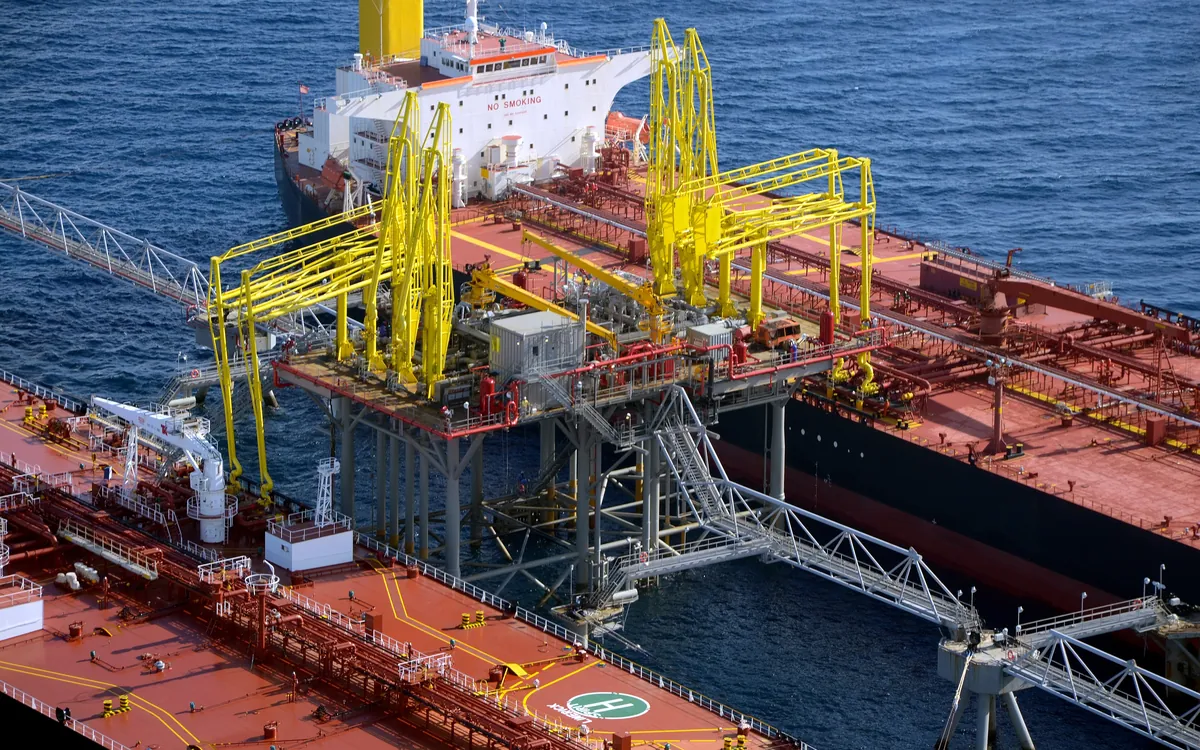
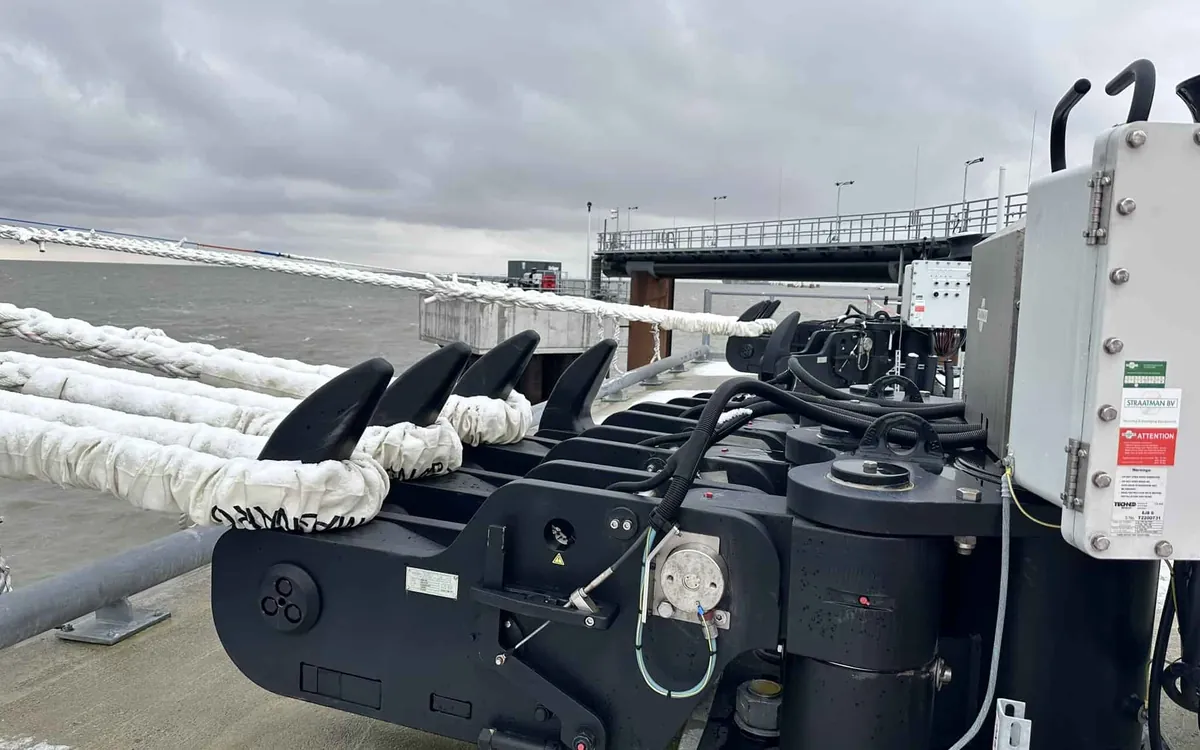
At a terminal with vapour control, the ship's vapour line is connected to shore by a hose or a vapour return arm. The vapour then goes either to a vapour recovery unit (VRU), which returns it as product, or to a vapour combustion unit (VCU), which burns it.
How it works
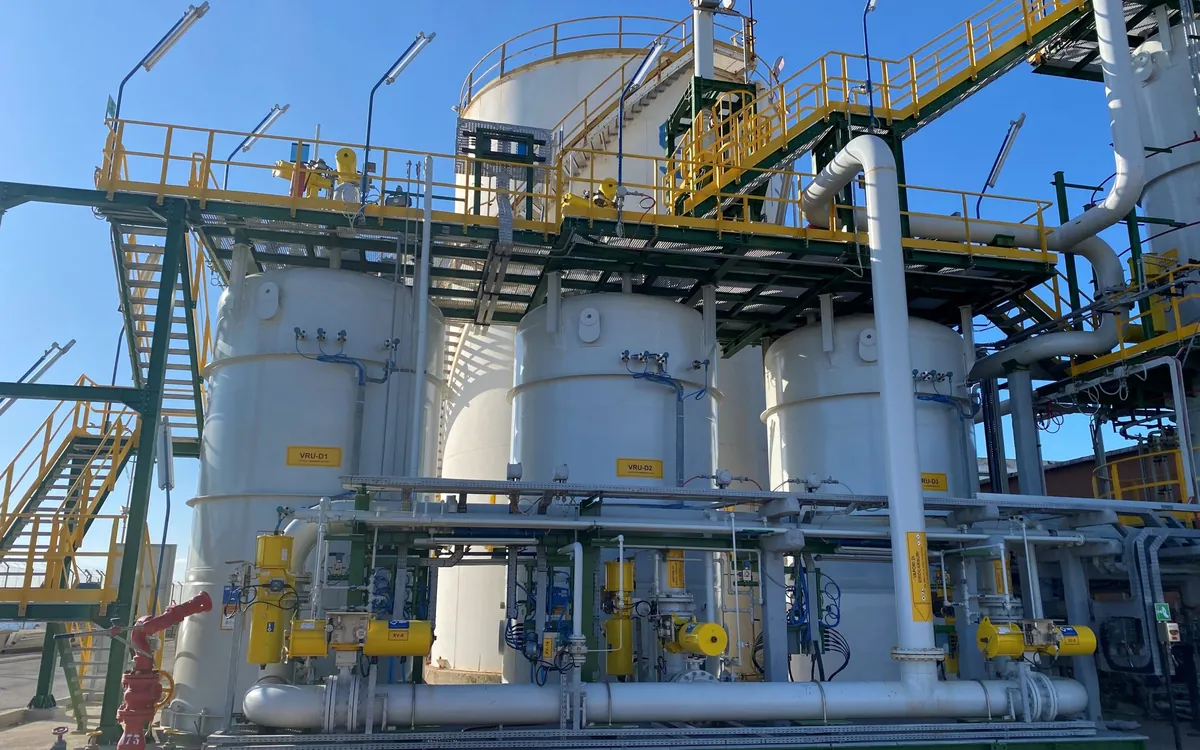
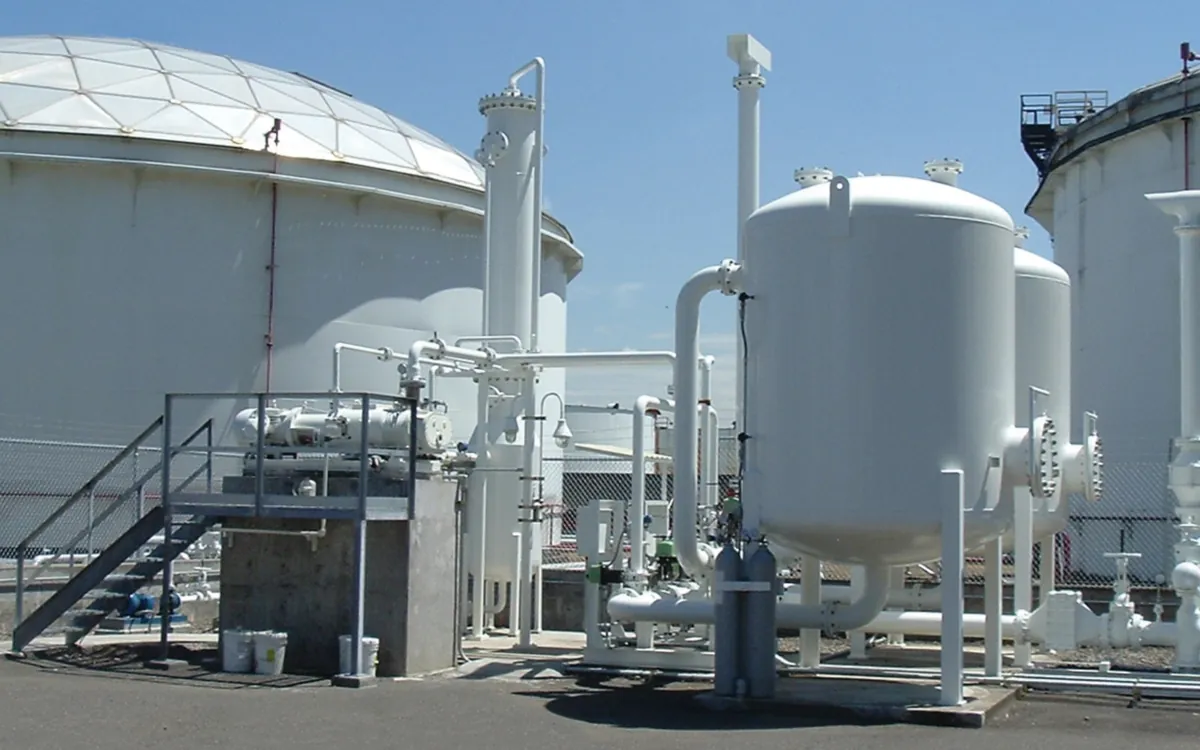
The common design uses two vessels filled with activated carbon. Vapour flows through one vessel, the carbon holds the hydrocarbons, and cleaned air leaves through the vent. Meanwhile the second vessel regenerates.
Regeneration uses vacuum pumps. John Zink offers dry vacuum pumps (DVP) and liquid ring vacuum pumps (LRVP). Lowering the pressure releases the hydrocarbons from the carbon as a rich vapour stream. That stream goes to an absorber column where it contacts a liquid product, usually the same gasoline or crude, and dissolves into it. The recovered product is pumped back to storage. The two vessels switch roles on a cycle, so the unit runs continuously during loading.
In John Zink's ADAB design the vacuum pump pulls concentrated vapour off the carbon bed and sends it into a vertical packed absorption column. There a liquid absorbent, usually product from storage, takes up the hydrocarbon and returns to the tank with it. The unit runs close to ambient pressure and temperature, with no vapour holder and no refrigeration, and its only utility is electricity.
The maker lists the advantages of a dry vacuum pump over a liquid ring pump as lower power use, no ethylene glycol system, lower maintenance cost, no contamination of the product and more flexibility in which products can be sent to the VRU.
Key figures and regulation
John Zink states 99% recovery efficiency in typical installations for truck, rail and marine loading. Actual performance depends on vapour composition and flow.
For ships, MARPOL Annex VI Regulation 15 lets a state regulate VOC emissions from tankers in its ports or terminals. It must notify the IMO of the size of tankers to be controlled, the cargoes requiring vapour emission control systems and the date the control starts, at least six months in advance. Where control is required, terminals must provide approved vapour emission control systems. In the United States, EPA rules for bulk gasoline terminals also set vapour control limits.
Where it is used and what cargo
VRUs are installed at product terminals, refinery jetties and tank farms where gasoline, crude and other volatile hydrocarbons are loaded. At a marine terminal the unit usually sits on land and is connected to the jetty by a vapour header, with safety equipment such as detonation arrestors and pressure controls between ship and shore.
The same unit often serves truck and rail loading racks at the terminal as well as the jetty. Freight rates for cargo through these terminals can be compared at rates.navo24.com.
John Zink's list of controlled compounds runs from crude oil and gasoline components such as butane and cyclohexane to chemicals such as benzene, chloroform and dichloroethane. It also offers engineering for the German TA Luft emission rules.
VRU or VCU
John Zink frames the choice around throughput. A VRU earns back its cost from the product it recovers, so it pays off faster at high-throughput sites. A VCU is simpler and copes with a wider and more variable mix of products, because it only has to burn the vapour.
VRUs can have restrictions on which products they handle, since the recovery process depends on the vapour chemistry. Sites with mixed or changing cargo often choose combustion, or combine the two.
How to choose, strengths and limits
Size the unit for the peak vapour flow, which follows from the loading rate, and for the vapour composition. Check what liquid is available as absorbent and where the recovered product goes. Choose the vacuum pump type for the products and maintenance regime.
VRUs return product to the tank and avoid combustion emissions. They need more equipment and control than a VCU, the carbon must be replaced over time, and they suit a narrower range of products.
Variants
Questions shippers ask
What is a vapour recovery unit?
A system that captures hydrocarbon vapour displaced when tanks are filled and turns it back into liquid product instead of venting or burning it.
How efficient are vapour recovery units?
John Zink quotes 99% efficiency in typical truck, rail and marine loading installations.
What is the difference between a VRU and a VCU?
A VRU recovers the vapour as product. A VCU burns it. VRUs pay off at high throughput; VCUs are simpler and handle more varied products.
Are vapour recovery systems required for tankers?
Under MARPOL Annex VI Regulation 15, states may require vapour emission control at designated ports and terminals, and they notify the IMO which tankers and cargoes are covered.