General cargo ship
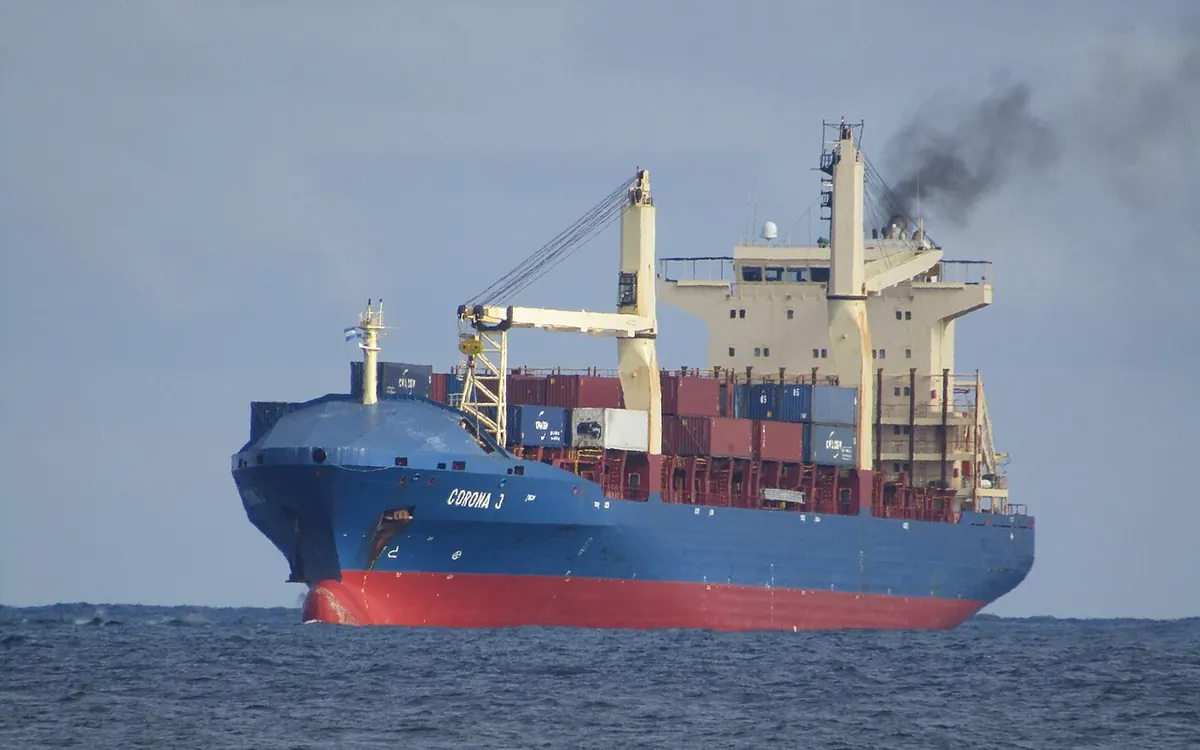
Carries break-bulk goods: cargo stowed in individually counted units such as bags, cases, drums, coils and machinery. Most ships have their own cranes, so they can work ports without shore gear.
19 merchant ship types in 4 groups, each with a photo and a Navo drawing, then the size classes. Container ships are counted in TEU, bulk carriers and tankers in deadweight tonnes. Many class names come from the largest ship a canal, strait or port accepts; those limits are listed in metres.
Packaged, unitised and bulk dry cargo, live animals and wood chips.
Carries break-bulk goods: cargo stowed in individually counted units such as bags, cases, drums, coils and machinery. Most ships have their own cranes, so they can work ports without shore gear.
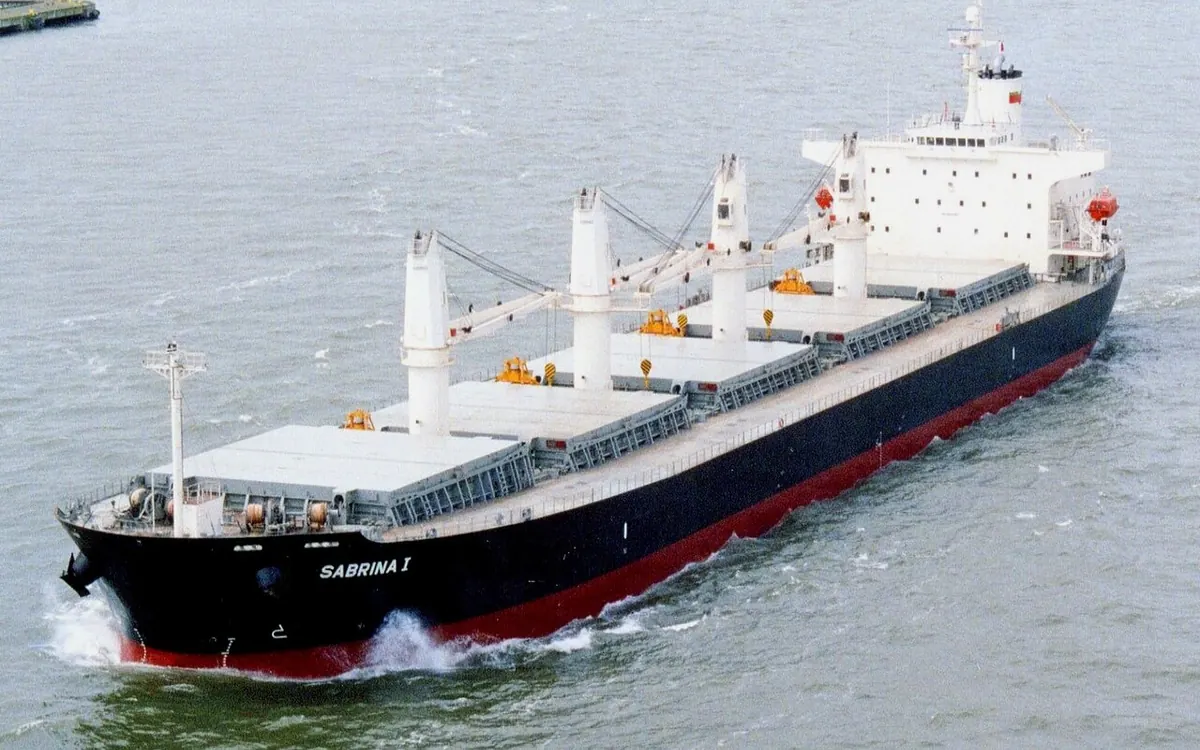
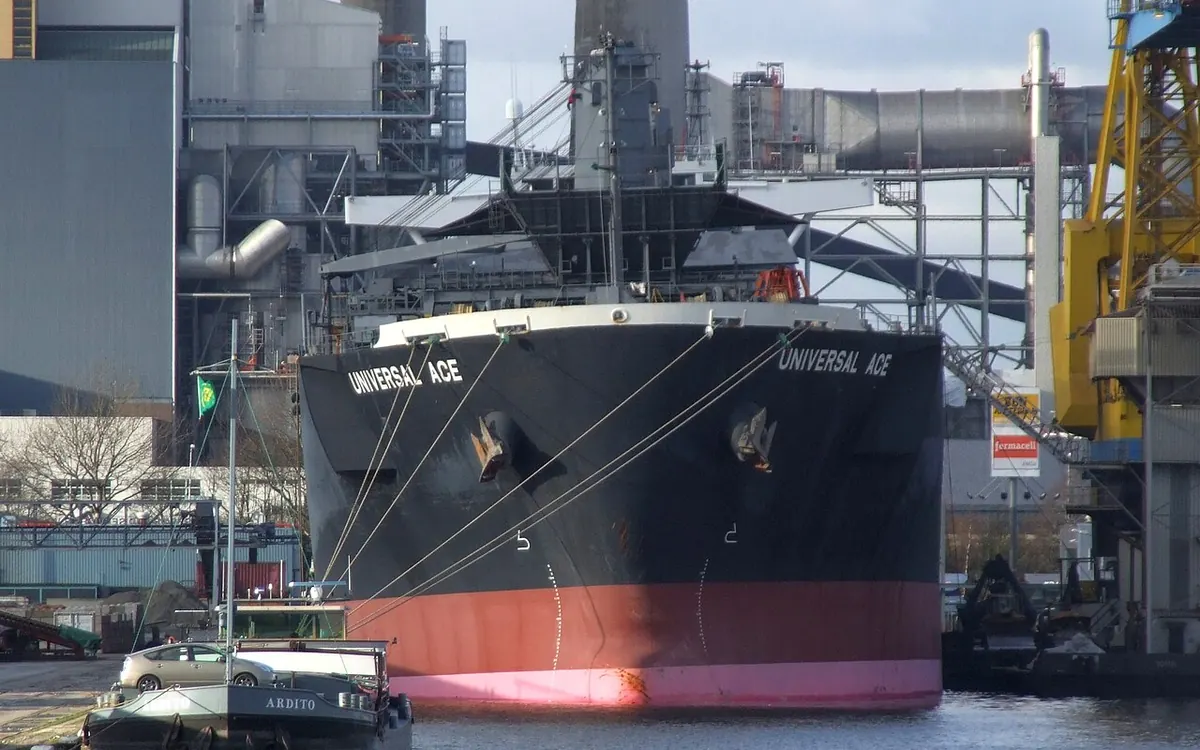
Single-deck ship with large hatches for unpackaged dry cargo in volume. Small classes are geared, Capesize and larger need shore loaders. The largest ore carriers reach 400,000 DWT.
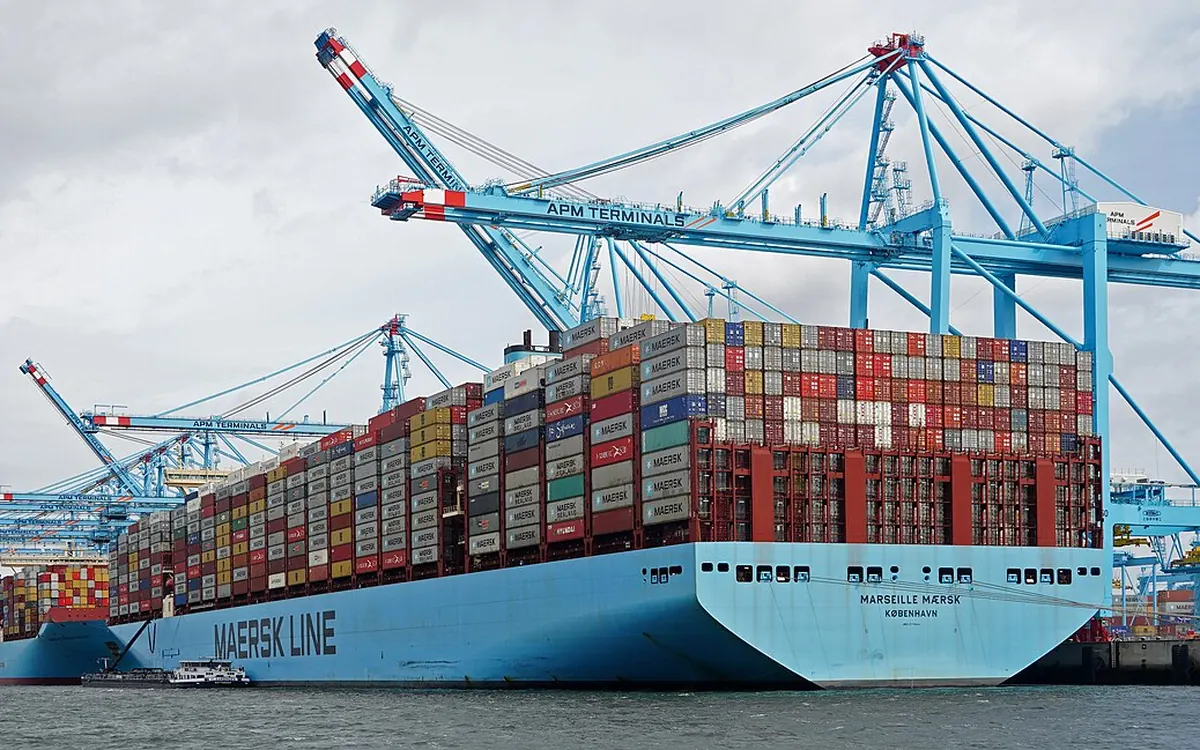
Cellular ship for ISO containers, sized in TEU. About 90% of non-bulk cargo moves on container ships; since 2023 the largest carry over 24,000 TEU.
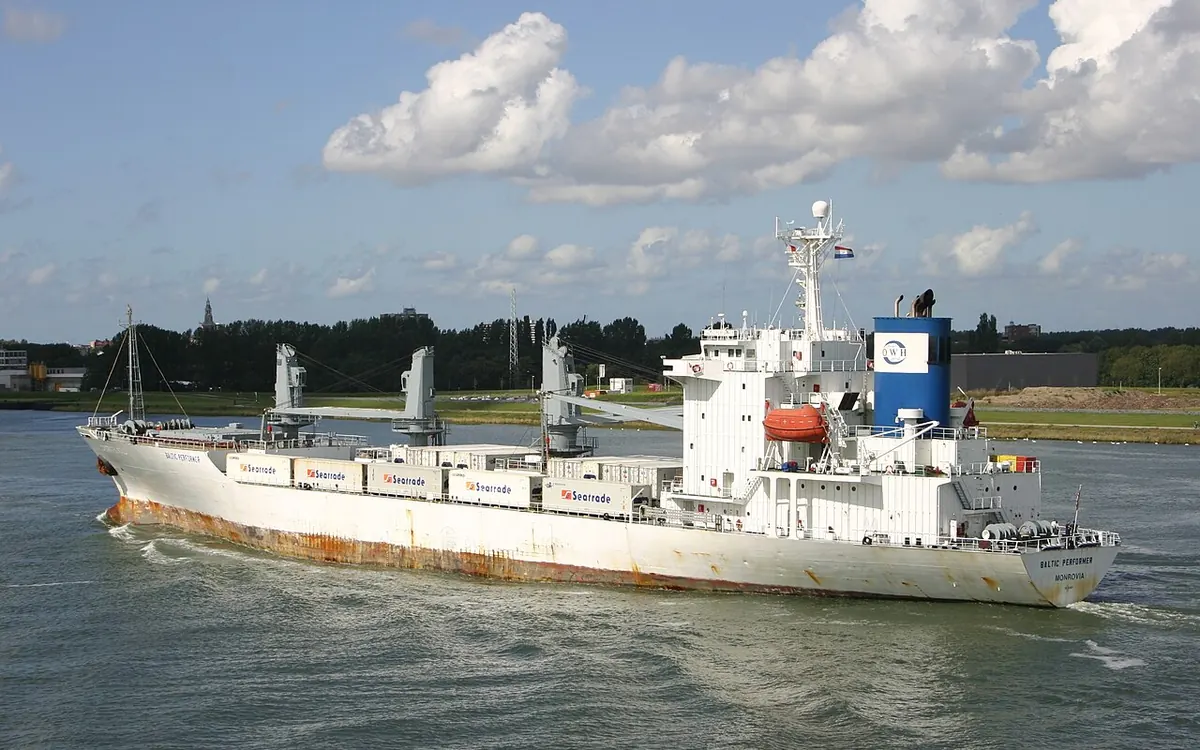
Cooled holds for perishables. Palletised cargo goes in through side doors and pallet lifts; refrigerated container ships instead power a cooling unit on every reefer box.
Wood chips, the raw material for paper, are light for their volume, so the hold is widened sideways as far as possible and ballast sits only in the bottom of the hull. Cargo is handled by grab cranes and belt conveyors.
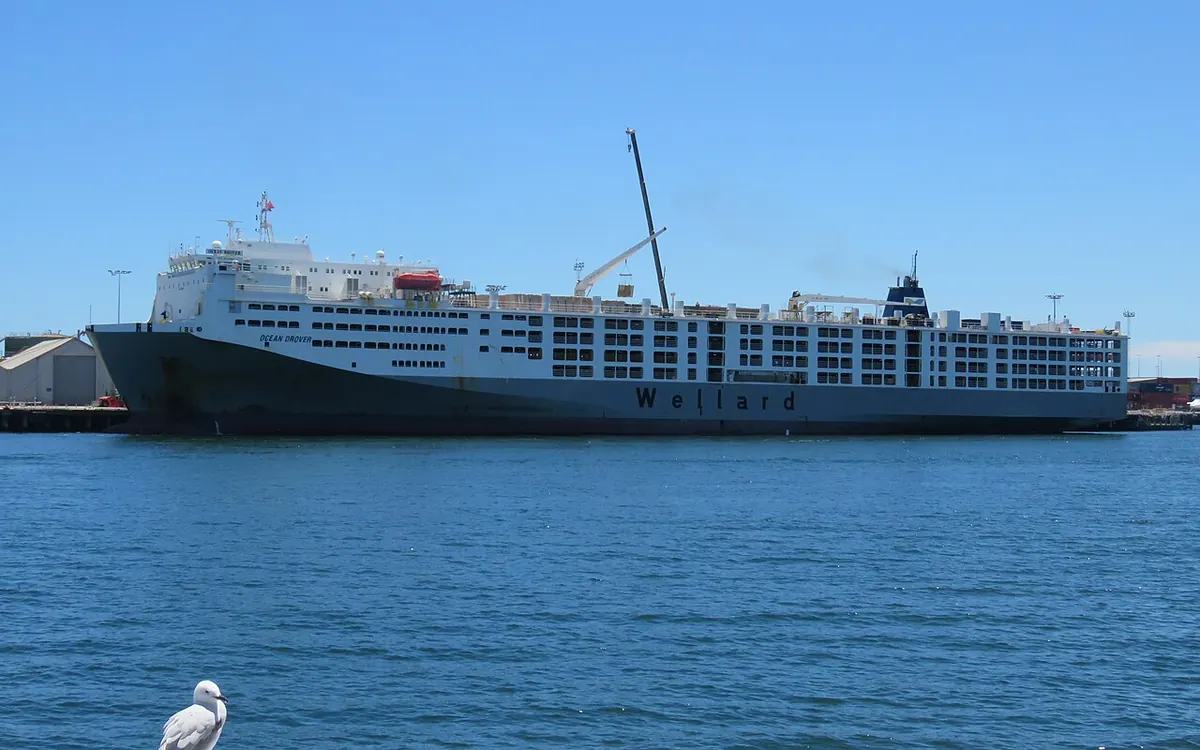
Large ship for the live export of sheep, cattle and goats, built new or converted from a container ship. Pens sit on open decks or inside closed holds; ventilation is the key design factor.
Liquid cargo in bulk: crude, products, chemicals, hot bitumen, LPG and LNG.
Moves large quantities of unrefined crude oil from where it is produced to refineries. Crude tankers are the largest tankers afloat: a VLCC carries about 2 million barrels.
Carries refined petroleum products such as gasoline, diesel and jet fuel. Product tankers are generally much smaller than crude carriers, from well under 10,000 DWT up to about 80,000 DWT Panamax ships.
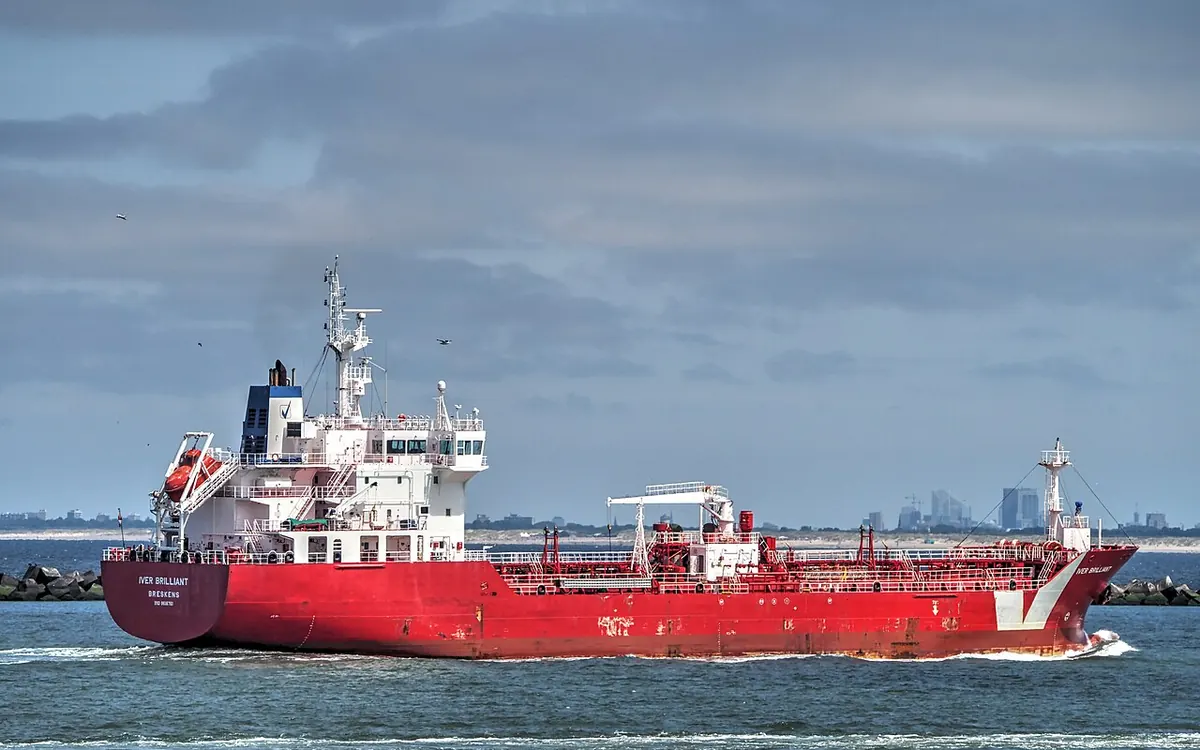
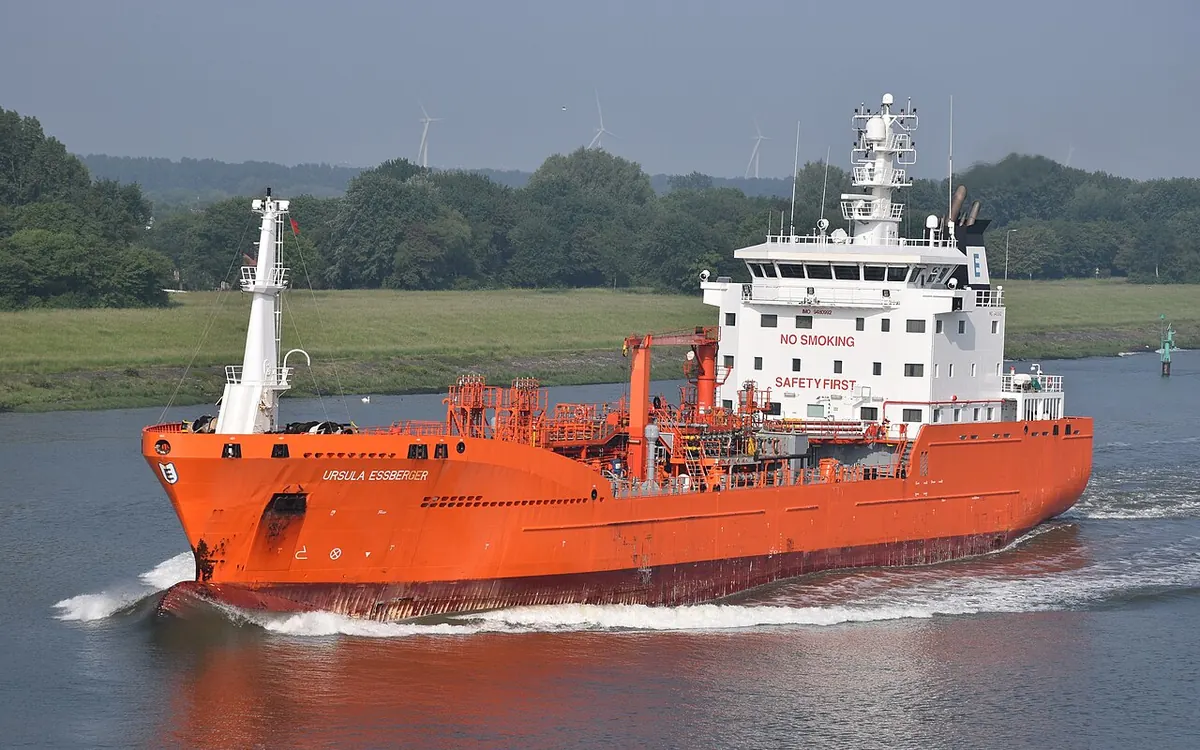
Built for liquid chemicals listed in chapter 17 of the IBC Code (MARPOL Annex II). Tanks are coated (phenolic epoxy or zinc) or stainless steel and segregated so several cargoes travel at once.
Carries bitumen and asphalt hot, up to 200 °C, in independent cargo tanks. Heat makes the tanks and pipes expand, so the design is built around thermal expansion.
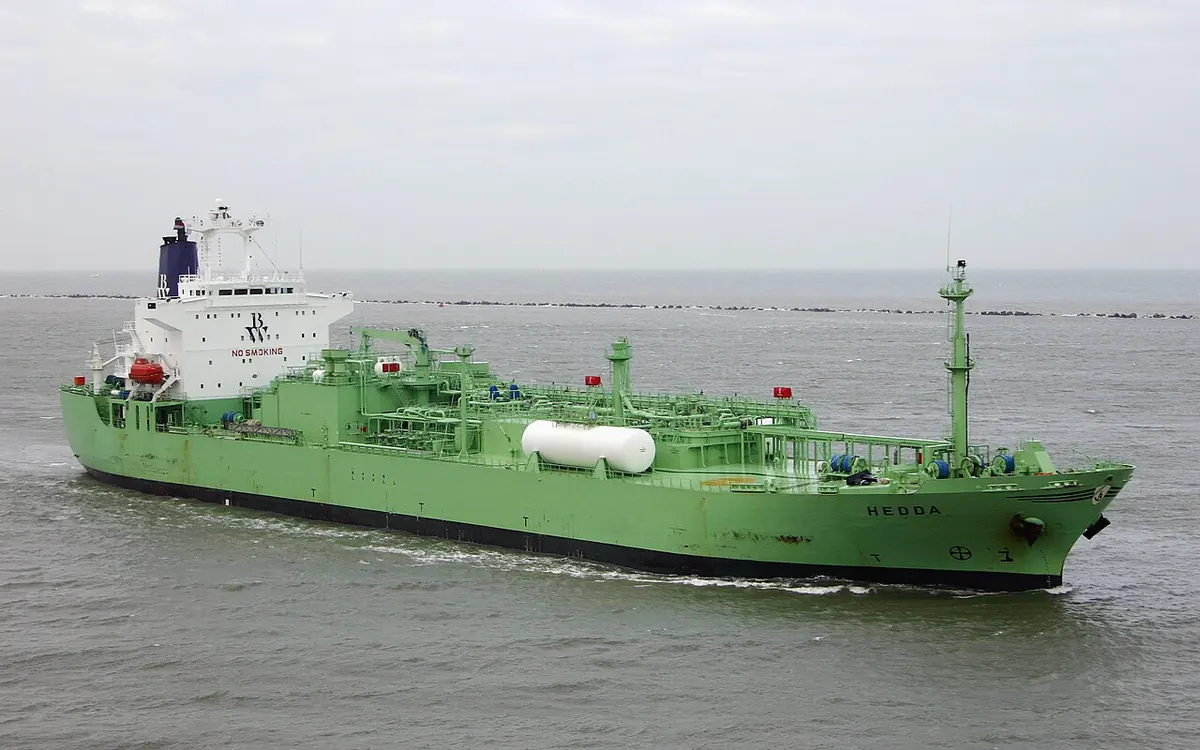
Liquefied petroleum gas is kept liquid by pressure, by cooling, or both. Most oceangoing fully pressurised LPG ships have 3 to 5 spherical or cylindrical tanks.
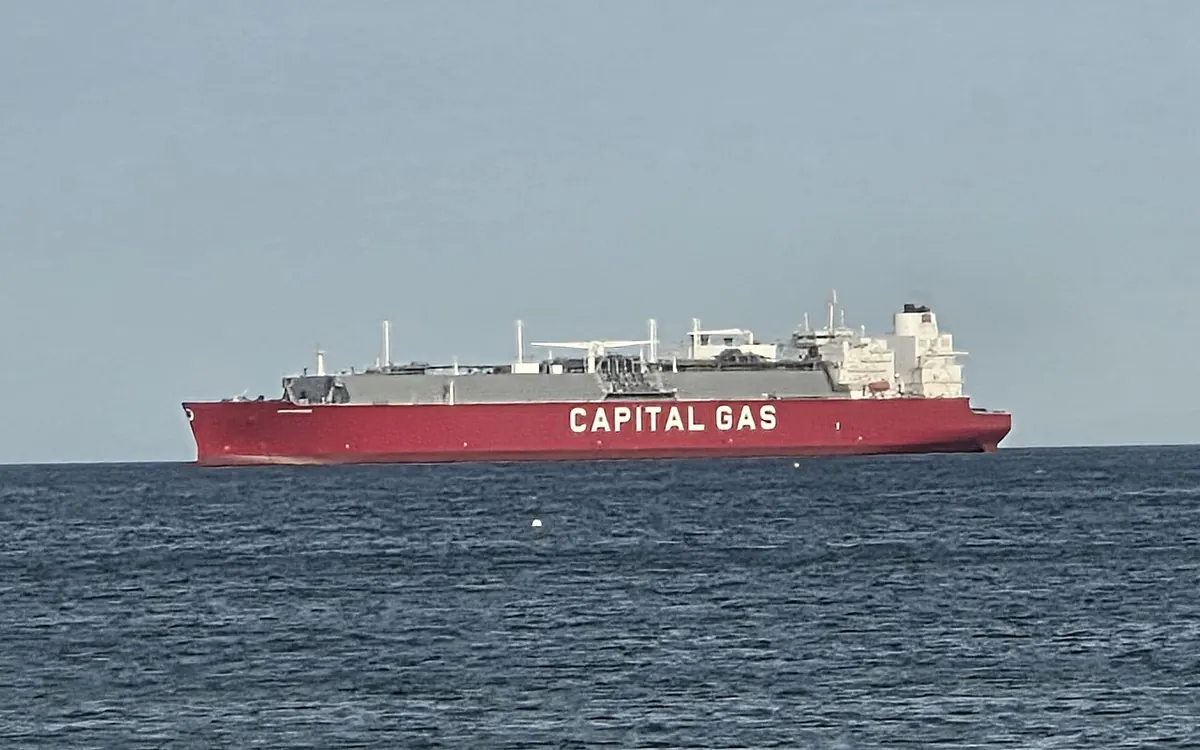
Natural gas is carried as a liquid at about -162 °C, which shrinks it about 600 times, in insulated membrane or spherical (Moss) tanks.
Cargo driven on and driven off: Ro-Ro freighters, RoPax ferries, ConRo ships and car carriers.
Wheeled cargo is driven on and off over ramps at the stern, bow or side. The hold is laid out like a multistorey car park.
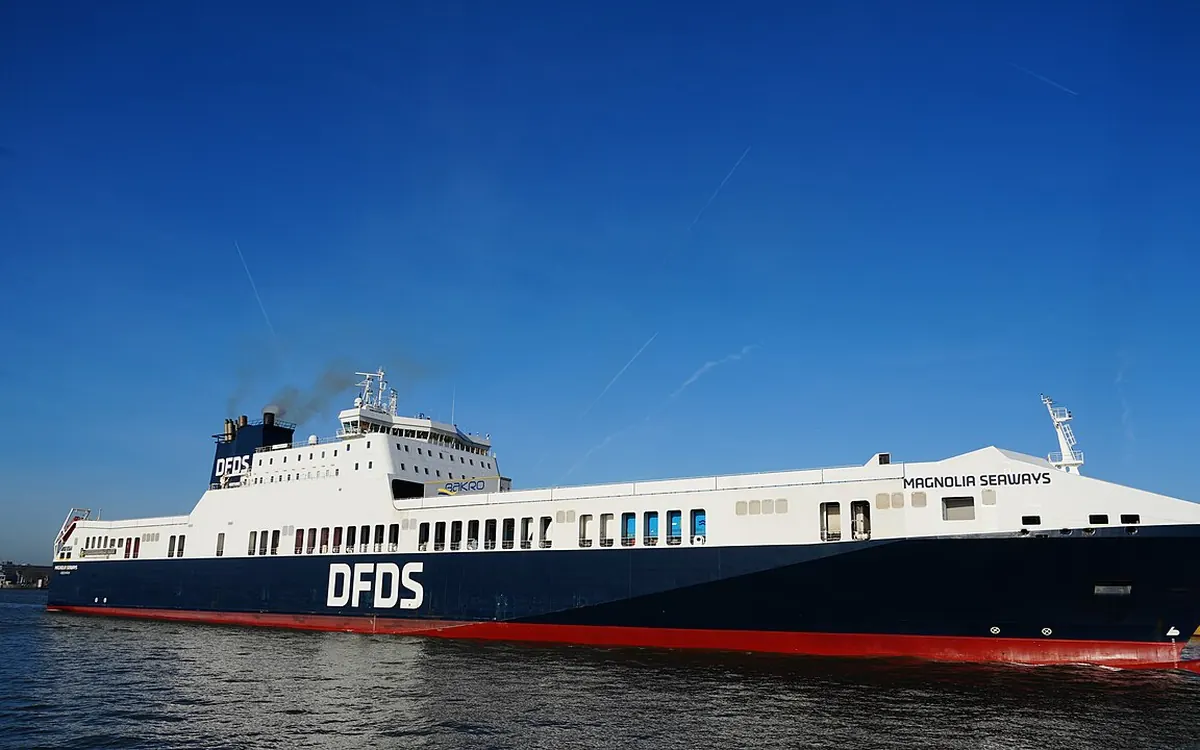
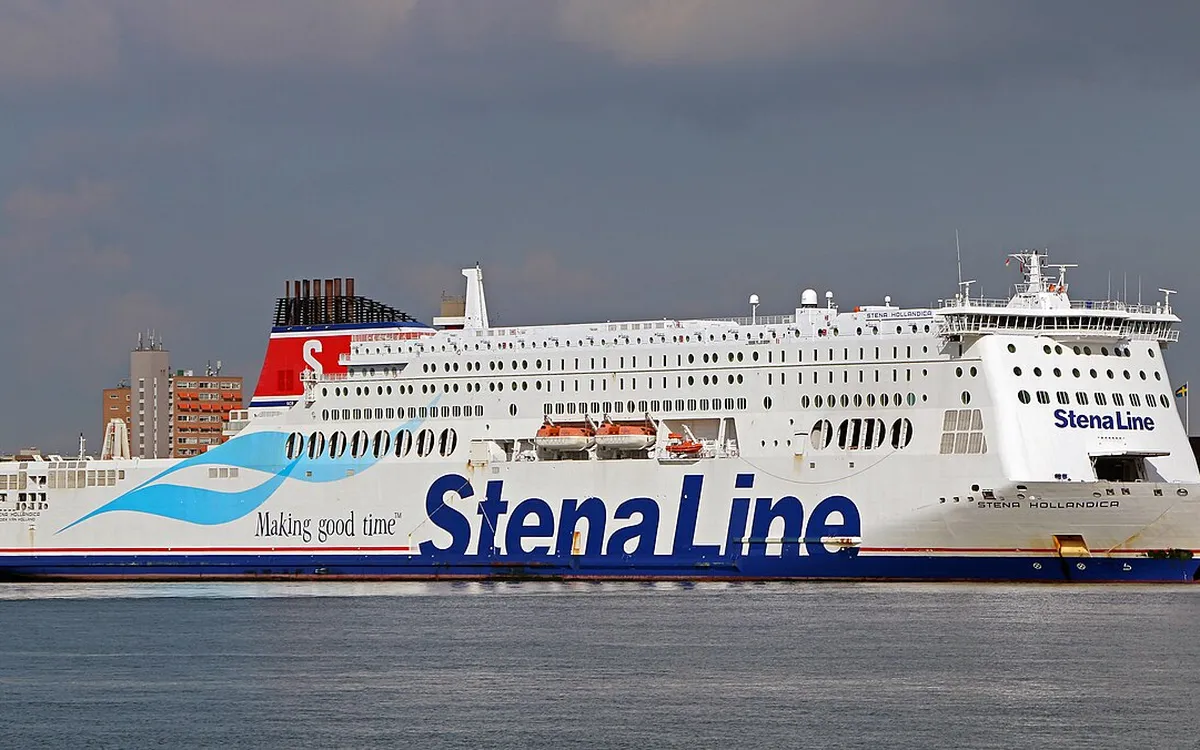
A Ro-Ro with passenger decks (roll-on/roll-off passenger). Trucks, trailers and cars drive onto the vehicle deck, passengers and drivers ride above it. Runs to a timetable on short-sea lines, so it moves much of the trailer freight across the Baltic, the English Channel, the North Sea and the Mediterranean.
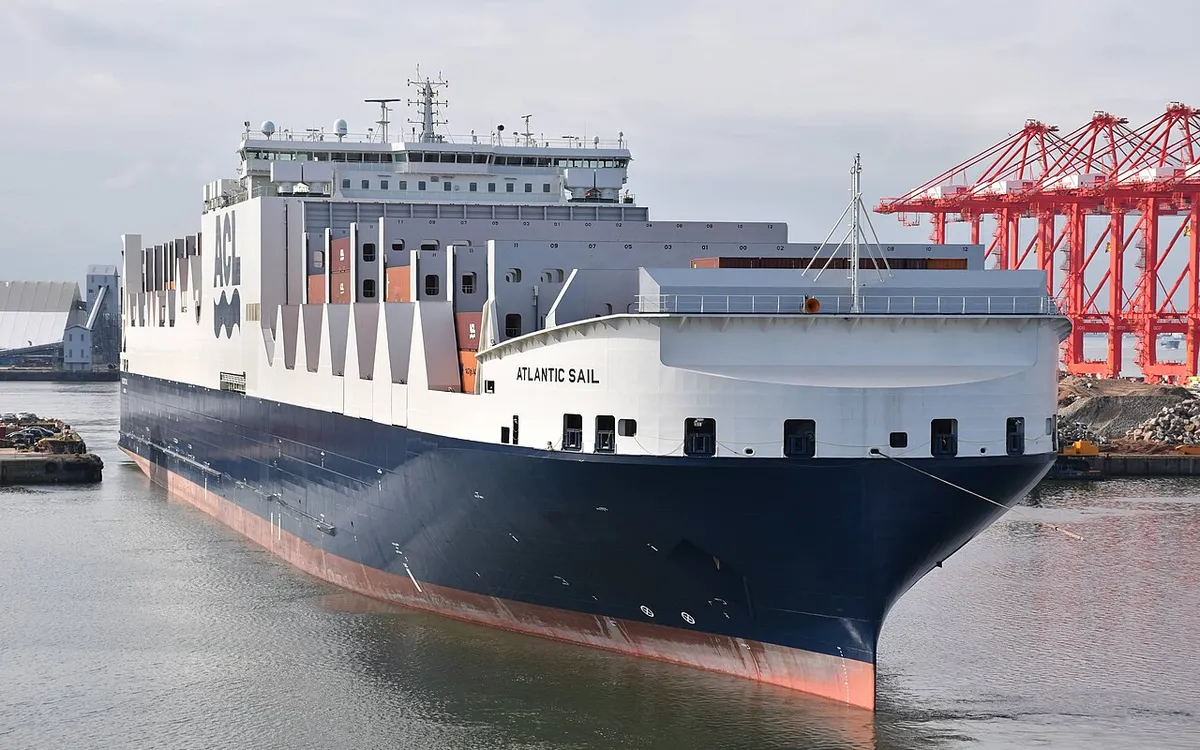
A hybrid of a Ro-Ro and a container ship: vehicle decks inside the hull, containers stacked on top or in cells. Carries containers, heavy equipment, oversized cargo and cars on one sailing. Atlantic Container Line's G4 class (296 m) has 5,270 lane metres on seven Ro-Ro decks and 3,807 TEU.
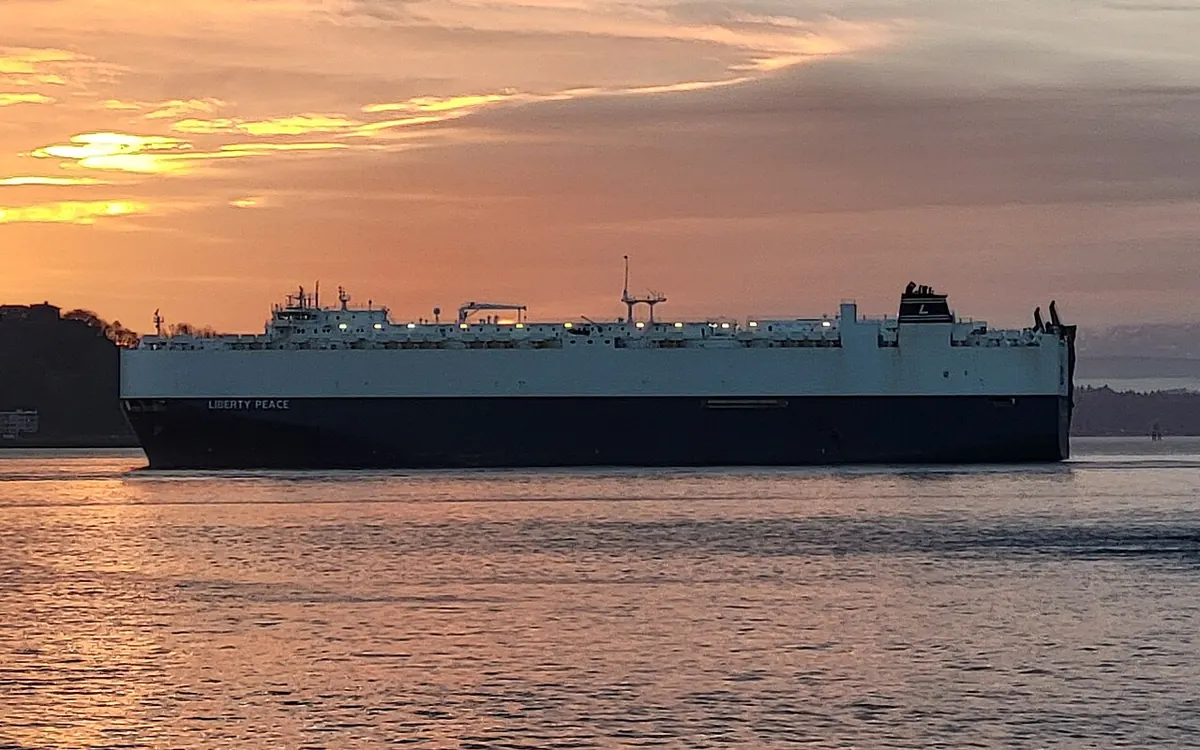
A Ro-Ro built for new vehicles. The pure car and truck carrier (PCTC) has liftable decks for taller units and stronger decks for high-and-heavy cargo; a 6,500-unit car ship can have 12 decks.
Project cargo, float-on / float-off, and ships serving offshore platforms.
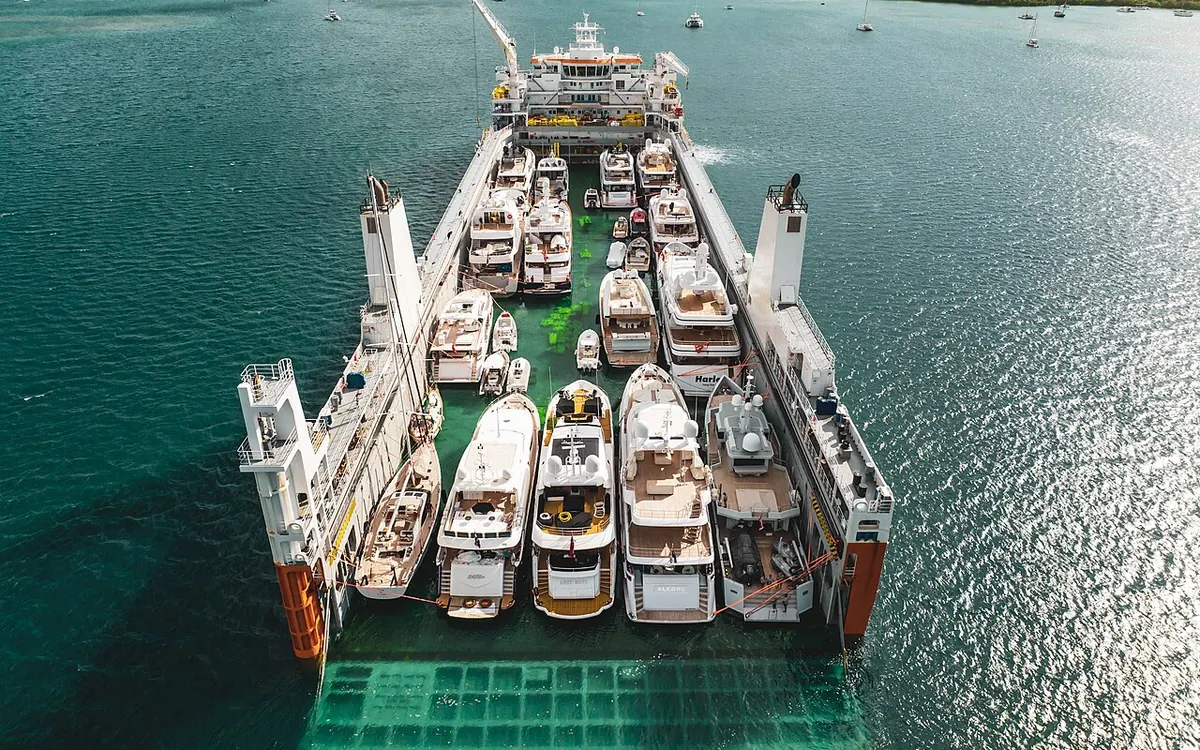
Project cargo ships load very large, heavy items with their own cranes, typically 13,000 to 19,000 DWT. Semi-submersible ships flood ballast tanks to sink the deck, float the cargo over it, then pump out and lift it.
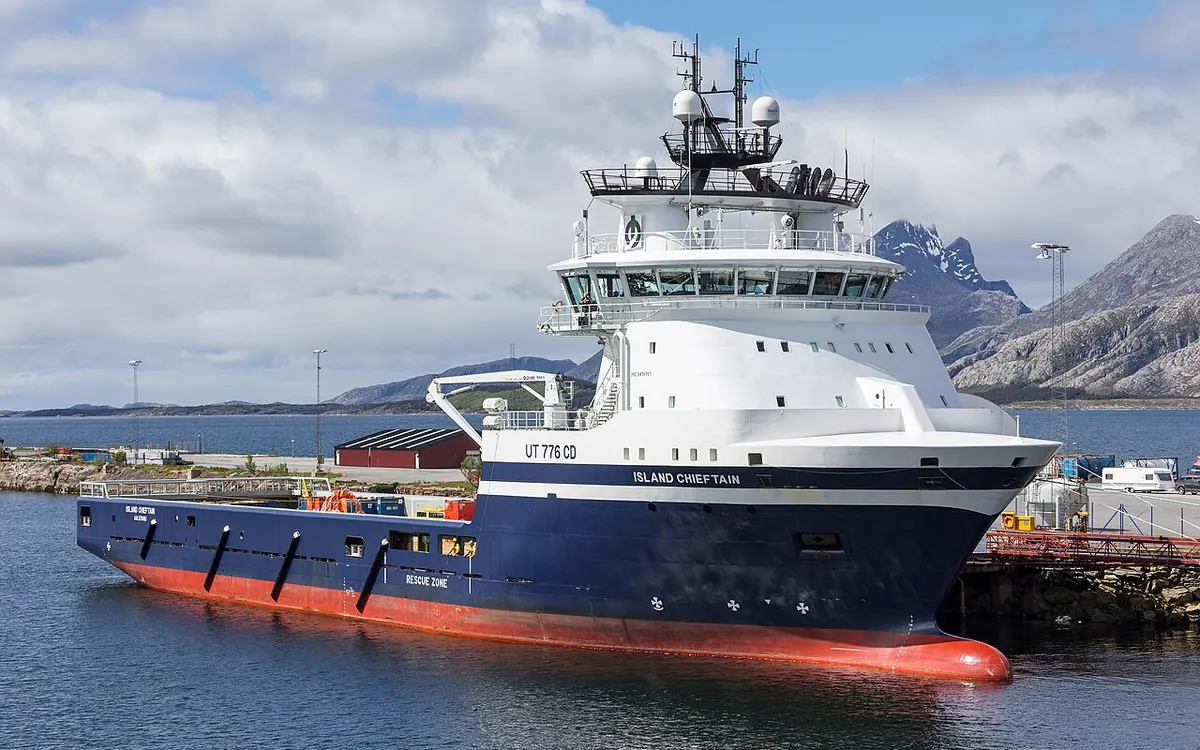
Supplies offshore oil and gas platforms and brings cargo back to shore. Cargo tanks hold drilling mud, pulverised cement, diesel fuel, water and drilling chemicals; the family also includes AHTS and other offshore support ships.
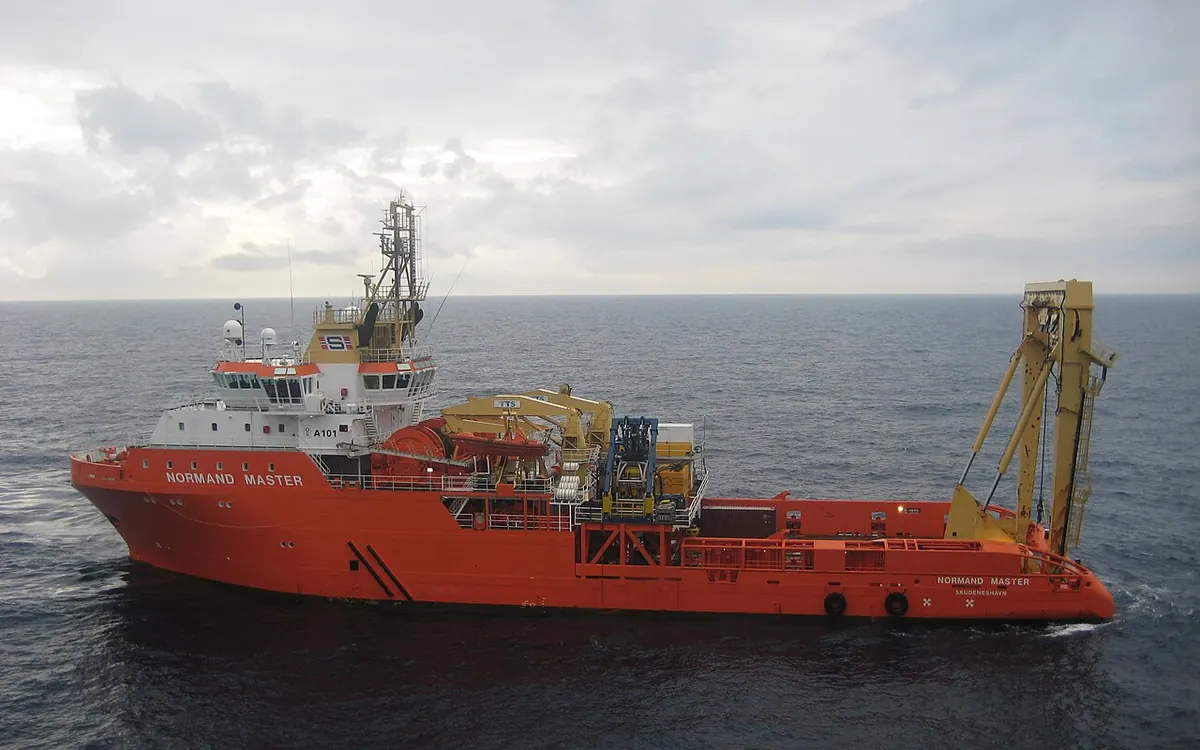
Handles anchors for oil rigs, tows the rigs to location and secures them. Also does supply runs between land bases and drilling sites and assists tankers while loading.
Container ships by TEU, bulk carriers and tankers by DWT, gas carriers by m³, coasters by the ports they serve. DWT bands are market conventions and differ between sources; canal and berth limits below are exact.
| Class | Size | Notes | Source |
|---|---|---|---|
| Container ships · TEU · Containers of every type: dry, reefer, tank, open top, flat rack. | |||
| Small feeder | up to 1,000 TEU | Container ship | |
| Feeder | 1,001 to 2,000 TEU | Container ship | |
| Feedermax | 2,001 to 3,000 TEU | Container ship | |
| Panamax | 3,001 to 5,100 TEU | LOA up to 294.13 m, beam 32.31 m, draft 12.04 m | Container ship |
| Post-Panamax | 5,101 to 10,000 TEU | Beam over 32.31 m | Container ship |
| New Panamax | 10,000 to 14,500 TEU | Container ship | |
| ULCV (Ultra Large Container Vessel) | 14,501 TEU and more | About 366 m and longer, 49 m and wider. Maersk Triple E: 400 m, 59 m beam, 14.5 m draft, 18,270 TEU | Container ship |
| Bulk carriers · DWT · Iron ore, coal, grain, bauxite, fertiliser, cement, steel products, logs. | |||
| Handysize | 10,000 to 35,000 DWT | Typical modern ship: about 32,000 DWT, 10 m draft, 5 holds, four 30 t cranes | Bulk carrier; Handysize |
| Handymax | 35,000 to 59,000 DWT (bulk carrier table); 40,000 to 50,000 DWT (Handymax article) | Typically 150 to 200 m long | Bulk carrier; Handymax |
| Supramax | 50,000 to 60,000 DWT | Five holds, four cranes of about 30 t | Handymax |
| Ultramax | 60,000 to 69,999 DWT | Indicative band (Drewry, used by USDA since April 2020): a larger Supramax | USDA AgTransport, Bulk Vessel Fleet Size and Rates |
| Panamax | 60,000 to 80,000 DWT | Bulk carrier | |
| Kamsarmax | LOA 229 m max | Port Kamsar berth length | Bulk carrier |
| Post-Panamax / Kamsarmax | 79,000 to 99,999 DWT | Indicative band (Drewry, used by USDA) | USDA AgTransport, Bulk Vessel Fleet Size and Rates |
| Capesize | 80,000 DWT and over (bulk carrier table); about 170,000 DWT typical | About 290 m long, 45 m beam, 18 m draught | Bulk carrier; Capesize |
| VLOC / VLBC | over 200,000 DWT | Very large ore and bulk carriers, a subset of Capesize | Bulk carrier |
| Valemax | 380,000 to 400,000 DWT | 360 to 362 m long, about 65 m beam, 22 to 23 m laden draught | Valemax |
| Oil tankers · DWT · Crude oil, refined products (gasoline, diesel, jet fuel), vegetable oils on product tankers. | |||
| General Purpose (GP) | 10,000 to 24,999 DWT | Oil tanker | |
| Medium Range (MR) | 25,000 to 44,999 DWT | Oil tanker | |
| Long Range 1 (LR1) / Panamax | 45,000 to 79,999 DWT (AFRA); 60,000 to 80,000 (market) | Oil tanker | |
| Aframax / LR2 | 80,000 to 120,000 DWT (Aframax); LR2 80,000 to 159,999 | About 600,000 barrels | Aframax; Oil tanker |
| Suezmax | 120,000 to 200,000 DWT | About 160,000 DWT typical | Oil tanker |
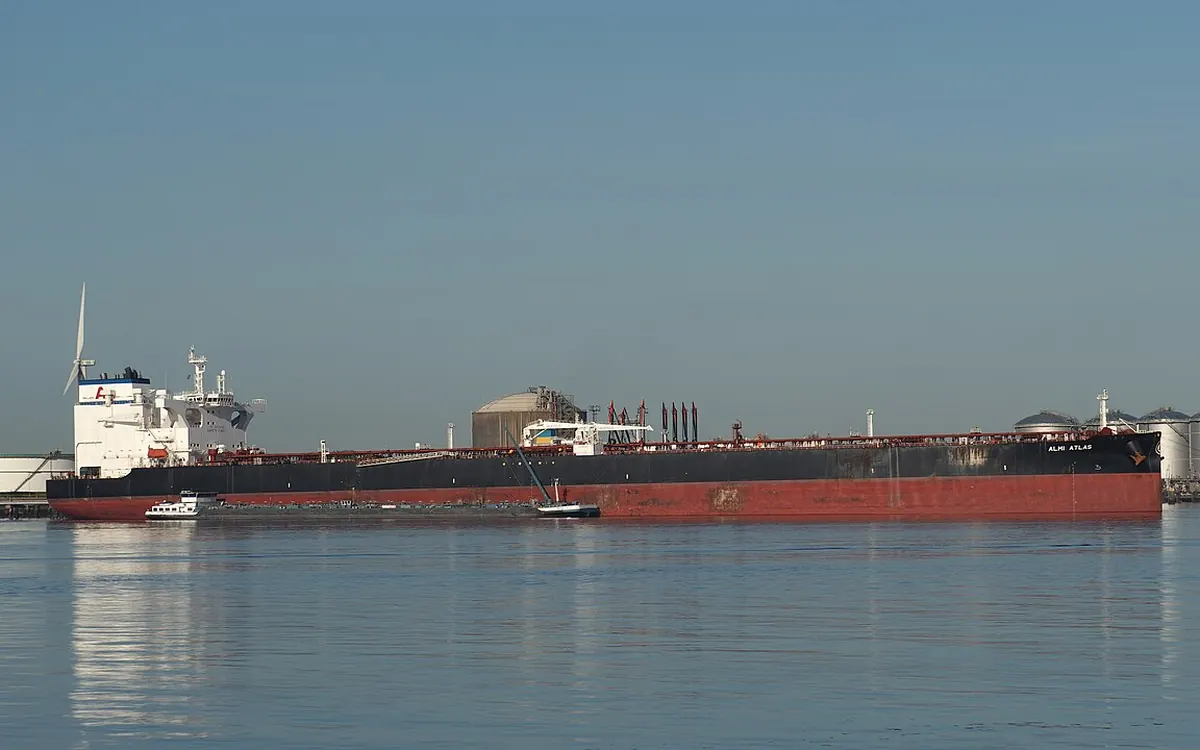
| VLCC | 160,000 to 319,999 DWT (AFRA); 200,000 to 320,000 (market) | About 2 million barrels | Oil tanker |
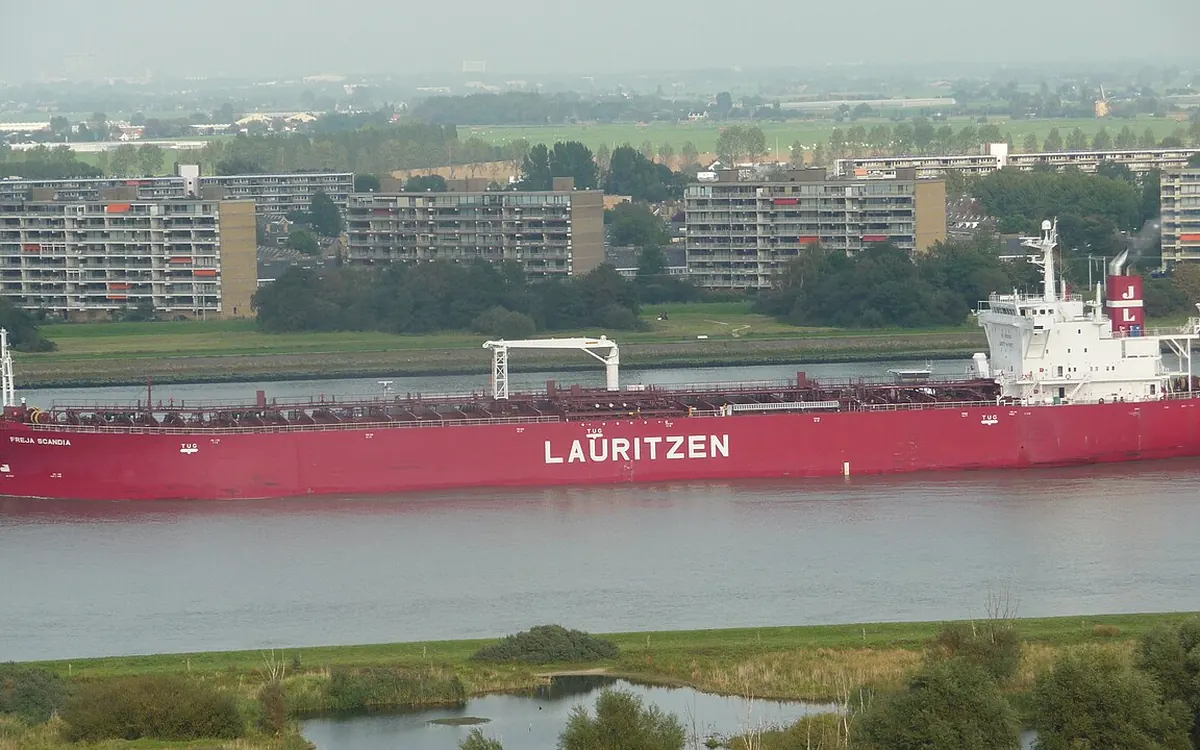
| ULCC | 320,000 to 549,999 DWT | Oil tanker | |
| Gas carriers (LPG and LNG) · m³ · LPG, liquefied chemical gases, LNG. | |||
| LPG, fully pressurised | typically 20,000 to 90,000 m³ | 3 to 5 spherical or cylindrical tanks; typically 140 to 229 m long | Gas carrier |
| LNG, conventional | about 143,000 m³ | The size at which Moss Rosenberg and Technigaz membrane designs took over | LNG carrier |
| Q-Max | 266,000 m³ | 345 m × 53.8 m, about 12 m draft, first delivered 2008 | Q-Max |
| RoRo, ferries and car carriers · lane m / RT43 · New cars, trucks, trailers, machinery, project cargo on rolling platforms (mafi). | |||
| RoRo cargo | lane metres | Roll-on/roll-off | |
| RoPax ferry | lane metres + passengers | Ferries for more than about 500 passengers are often called cruiseferries | Roll-on/roll-off |
| ConRo | lane metres + TEU | ACL G4 class: 5,270 lane m and 3,807 TEU, 296 m × 37.6 m, 11.6 m draft | G4-class freighter |
| PCC / PCTC | RT43 car units | Roll-on/roll-off | |
| Short-sea and coastal ships (coasters) · by port and waterway · Any cargo: general cargo, dry bulk, oil and chemicals, reefer cargo, containers. | |||
| Coaster | No fixed DWT band | Shallow hull for small ports; size is set by the ports and waterways on the route. Sea-river versions also go upriver. | Coastal trading vessel |
| Freycinet gauge (French waterways) | 38.5 m long, 5.05 m beam, 2.5 m draft | Example of a waterway limit that caps inland and river-sea ships | Coastal trading vessel |
Length overall of well-known classes on one scale, from the St. Lawrence Seaway limit to a 400 m container ship.
The largest ship each waterway or berth accepts. LOA is length overall, air draft is height above the waterline.
| Class | Where | LOA | Beam | Draft | Air draft | Source |
|---|---|---|---|---|---|---|
| Panamax | Panama Canal, original locks (1914) | 294.1 m | 32.3 m | 12.04 m | 57.9 m | Panamax |
| Neopanamax (New Panamax) | Panama Canal, third set of locks (26 June 2016) | 366 m | 51.25 m | 15.2 m | 57.9 m | Panamax |
| Suezmax | Suez Canal (no locks) | no limit | 77.5 m | 20.1 m | 68 m | Suezmax |
| Malaccamax | Strait of Malacca (25 m deep) | 333 m | 60 m | 20.5 m | no limit | Malaccamax |
| Seawaymax | St. Lawrence Seaway locks (Great Lakes to the Atlantic) | 225.55 m | 23.8 m | 8.08 m | 35.5 m | Seawaymax |
| Chinamax | Ports able to take a fully laden ship (not a canal) | 360 m | 65 m | 24 m | no limit | Chinamax |
| Kamsarmax | Port Kamsar, Guinea (bauxite berth) | 229 m | no limit | no limit | no limit | Bulk carrier |
| Newcastlemax | Port of Newcastle, Australia | 300 m | 50 m | no limit | no limit | Bulk carrier |
| Dunkirkmax | Eastern harbour lock, Port of Dunkirk | 289 m | 45 m | no limit | no limit | Bulk carrier |
| Q-Max | LNG terminals of Qatar | 345 m | 53.8 m | 12 m | no limit | Q-Max |
Drawings are by Navo, schematic, not to scale except in the size ladder. Photos are from Wikimedia Commons under the license shown on each card.
All sources (pinned revisions): Wikipedia, Panamax (citing Panama Canal Authority, Vessel Requirements); Wikipedia, Suezmax (citing Suez Canal Authority); Wikipedia, Malaccamax; Wikipedia, Seawaymax; Wikipedia, Chinamax; Wikipedia, Bulk carrier (size table citing MAN Diesel 2005, UNCTAD 2006); Wikipedia, Q-Max; Wikipedia, Container ship (size table citing MAN Diesel 2009); Wikipedia, Feeder ship; Wikipedia, Handysize; Wikipedia, Handymax; Wikipedia, Capesize; Wikipedia, Valemax; USDA AgTransport, Bulk Vessel Fleet Size and Rates (Drewry size bands); Wikipedia, Oil tanker (AFRA scale citing ABS Surveyor 2002); Wikipedia, Aframax; Wikipedia, Gas carrier; Wikipedia, LNG carrier; Wikipedia, Roll-on/roll-off; Wikipedia, G4-class freighter (citing Shippax Guide 2016); Wikipedia, Coastal trading vessel; Wikipedia, Cargo; Wikipedia, Cargo ship; Wikipedia, Reefer ship; MOL, Woodchip Carrier (ship type museum); Wikipedia, Oshima Shipbuilding; Wikipedia, Livestock carrier; Wikipedia, Chemical tanker (citing MARPOL Annex II, IBC Code); FKAB, I15 Bitumen Carrier 20,000 m³ (design sheet); Wikipedia, Heavy-lift ship; Wikipedia, Platform supply vessel; Wikipedia, Anchor handling tug supply vessel.
Container, B/L or booking number. 240+ carriers, live status and ETA.