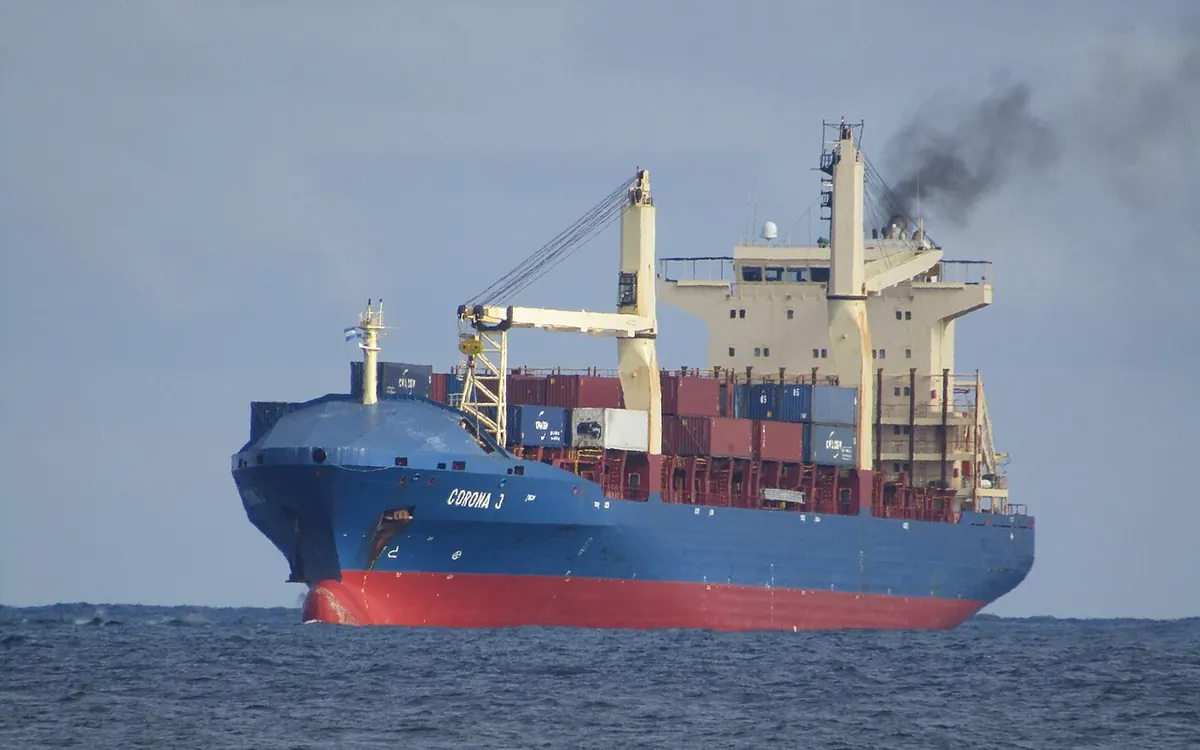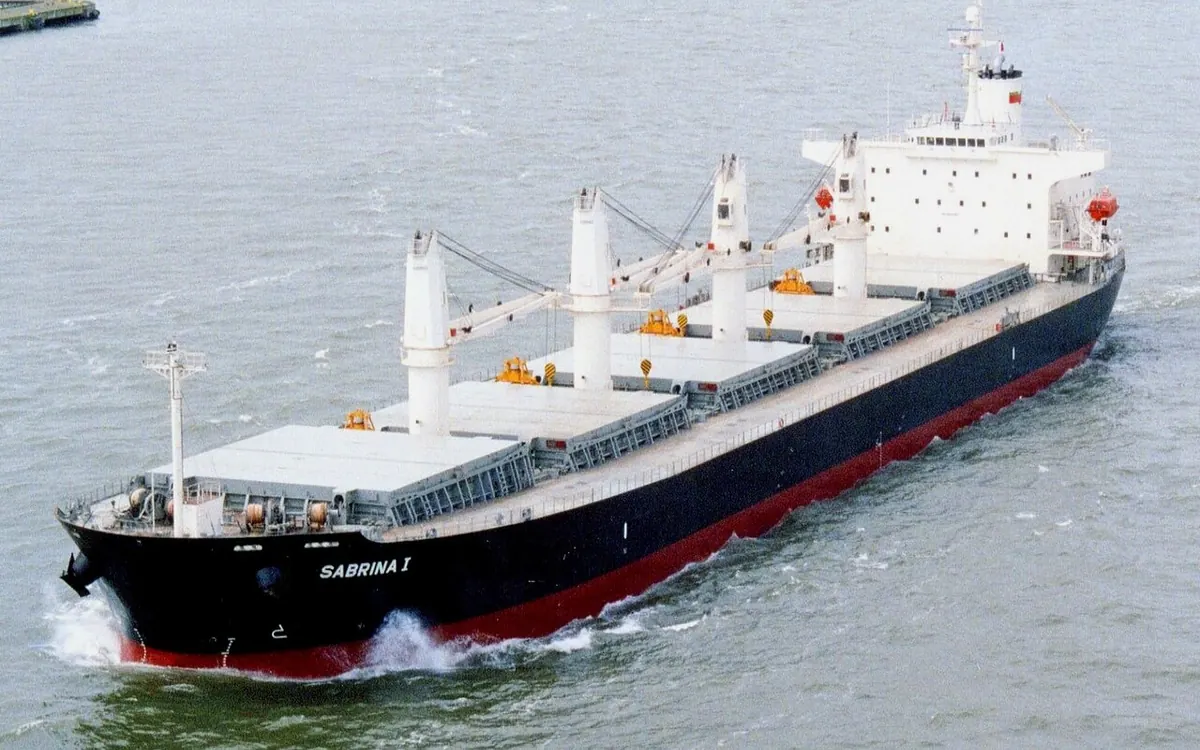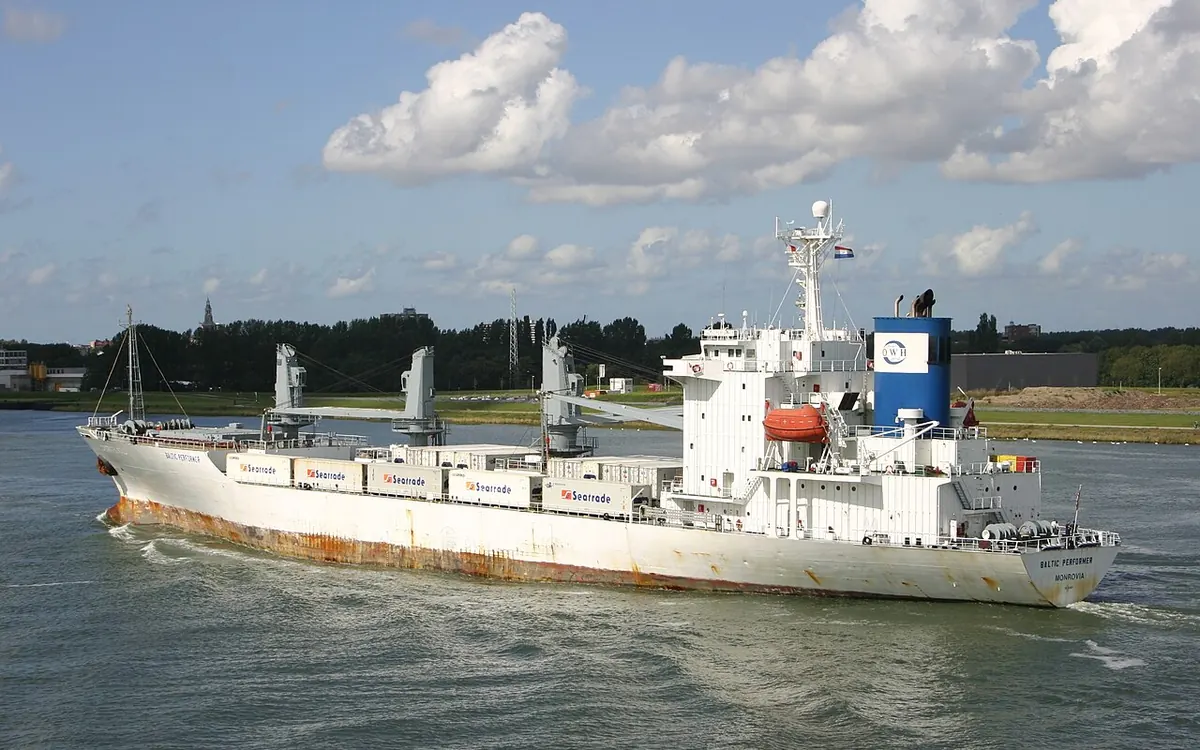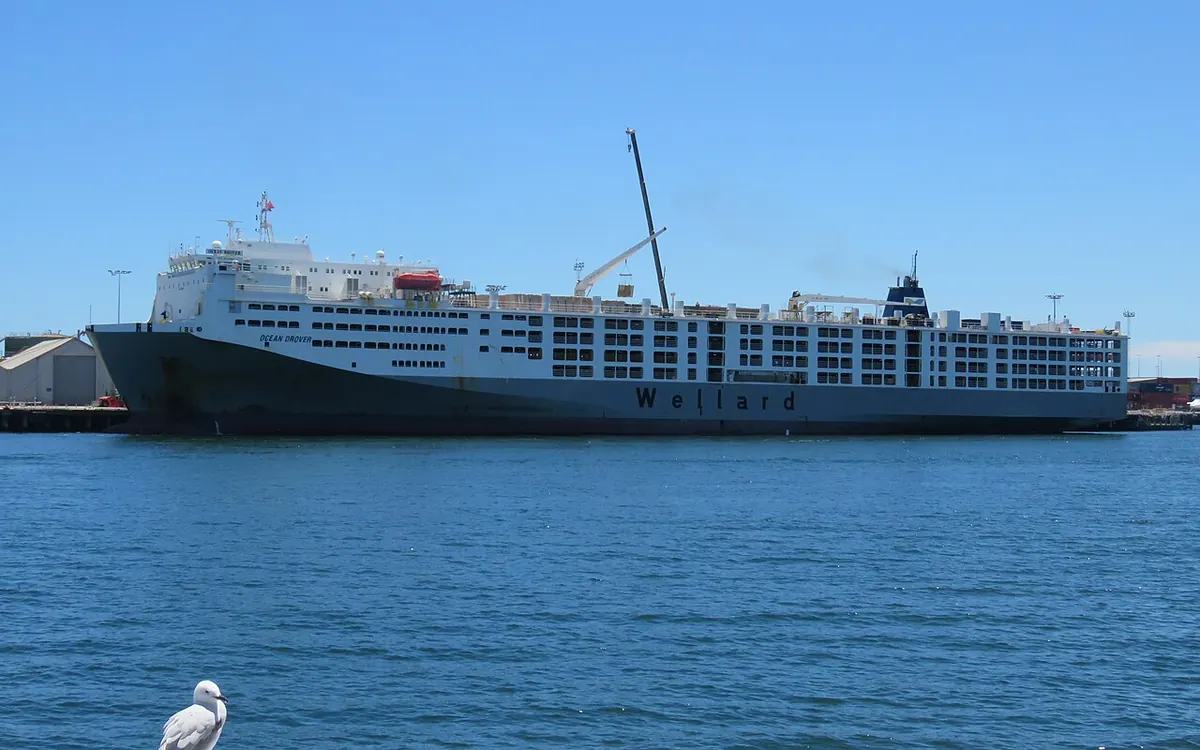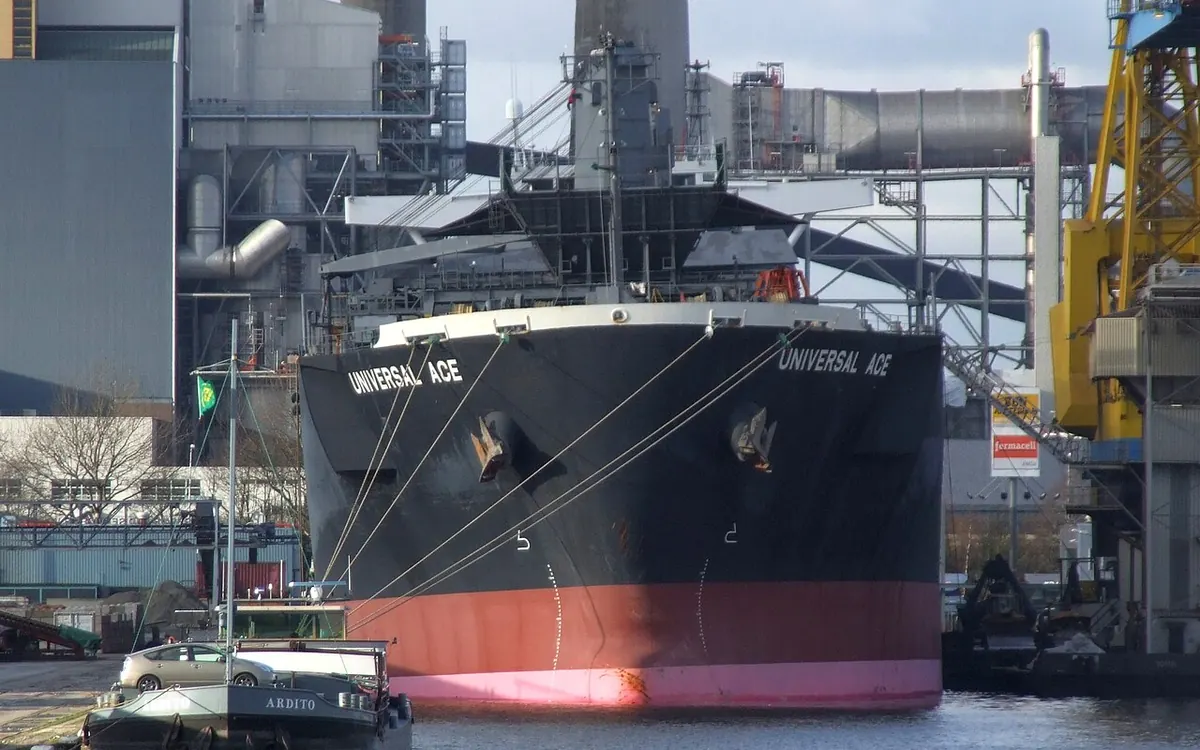
Wood chips, the raw material for paper, are light for their volume, so the hold is widened sideways as far as possible and ballast sits only in the bottom of the hull. Cargo is handled by grab cranes and belt conveyors.
What a wood chip carrier is
Wood chips are the raw material for paper. They have a low specific gravity, so a full hold weighs far less than one filled with grain or ore. A wood chip carrier is designed around volume rather than weight.
To fit as much cargo as possible, the hold is extended sideways as far as the hull allows. Ballast tanks sit only in the bottom of the hull, leaving the sides free for cargo. The ship belongs to the dry bulk family, alongside bulk carriers for forest products.
How chips are loaded and discharged
The ship carries its own cargo gear: cranes with grab buckets and belt conveyors. The grabs lift chips out of the hold, and the conveyors move them ashore, so the ship can discharge at mill berths without heavy shore equipment.
On bulk carriers in general, a crane's discharge rate is limited by the grab, which holds 6 to 40 tons, and by the time for each cycle. Shore conveyor belts load at standard rates of 100 to 700 tons per hour.
Builders and design
Oshima Shipbuilding of Saikai, Nagasaki, founded in 1973, lists wood chip carriers among its ship types. The yard specialises in Handymax and Panamax bulk carriers of 33,000 to 82,000 DWT and builds about 25 ships a year.
The same yard also builds self-unloading bulkers, car carriers, oil tankers and submersible heavy-lift ships. Its Hy-Con bulker design, from 52,000 to 82,000 DWT, has double hulls at the forward and aft holds. Chip carriers share this bulk carrier background but trade cargo weight for hold volume.
Cargo and trades
Wood chips are made from pulpwood, waste wood and residues from agriculture, landscaping, logging and sawmills. They feed pulp mills and are also used as biomass fuel.
Japan uses wood chips for its paper industry and imports large supplies of softwood chips from countries such as the United States and Australia. Chips wait for loading at export ports such as Albany in Western Australia.
Cargo properties to know
Chips vary by size, moisture and raw material. For fuel use, one European grade requires moisture between 10 and 30%. Chips for chemical pulp must be relatively uniform in size and free of bark, and bark chips are often handled separately because of their different chemical properties.
Because the cargo is light, a chip carrier fills its hold by volume long before it reaches its weight limit. This is why the design keeps ballast low and pushes the hold out to the sides.
What to know when booking
Plan chip cargoes by volume as well as weight, since the hold fills by space long before the ship is down to its marks. Agree in advance how the quantity will be measured and on which terms the ship is chartered, by voyage or by time.
Check that the discharge berth can take the ship's grabs and conveyors, and give the carrier the chip type, raw material and moisture so the cargo can be stowed and declared correctly. Chips for pulp should be uniform in size and free of bark.
Variants
Questions shippers ask
Why can't a normal bulk carrier carry wood chips efficiently?
Chips are light for their volume, so a normal hold fills before the ship reaches its weight capacity. Chip carriers widen the holds and keep ballast in the bottom to gain space.
Does a wood chip carrier need shore cranes?
No. It carries cranes with grab buckets and belt conveyors for its own cargo handling.
Where do chip cargoes go?
Mainly to pulp and paper mills. Japan, for example, imports softwood chips from the United States and Australia.
What should I tell the carrier about the chips?
Chip type, raw material, size and moisture content, plus quantity by weight and volume.