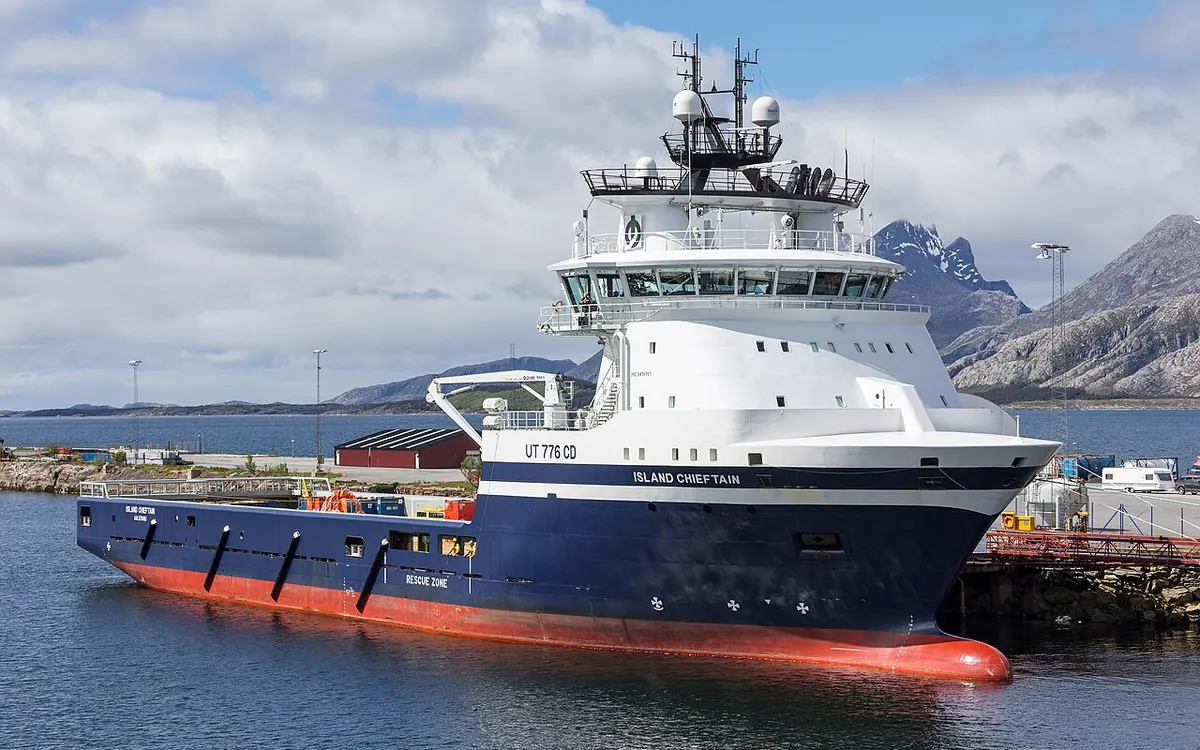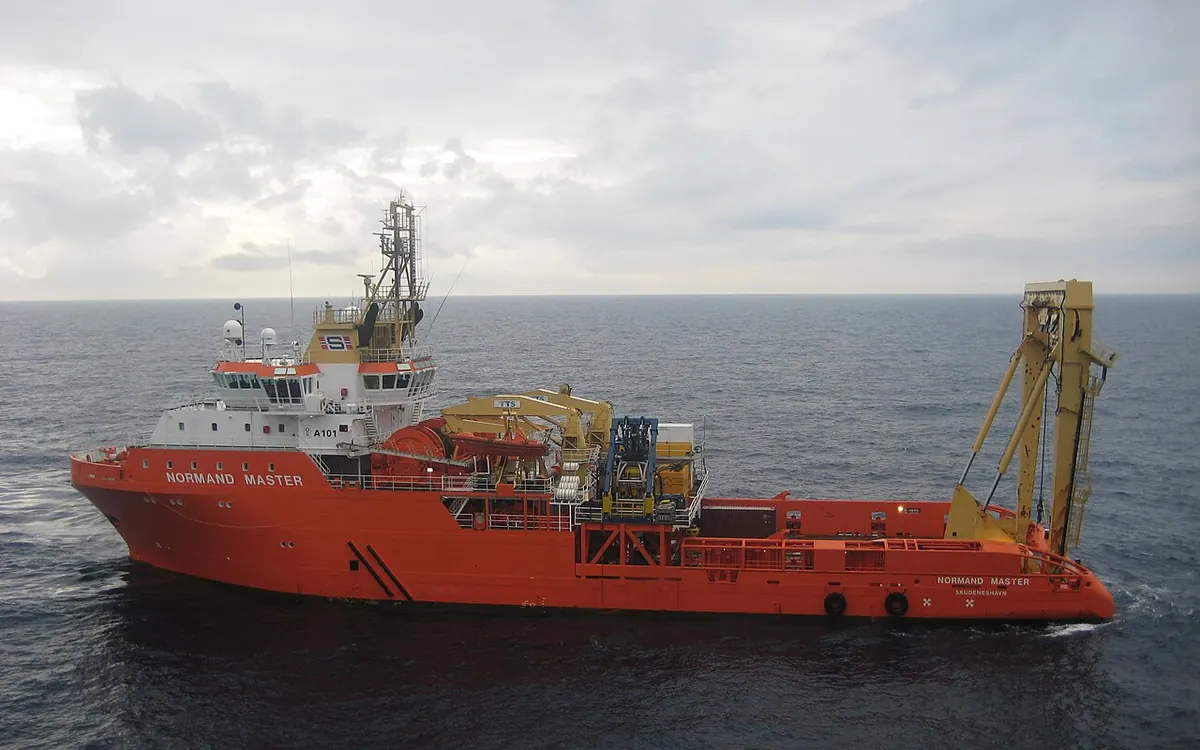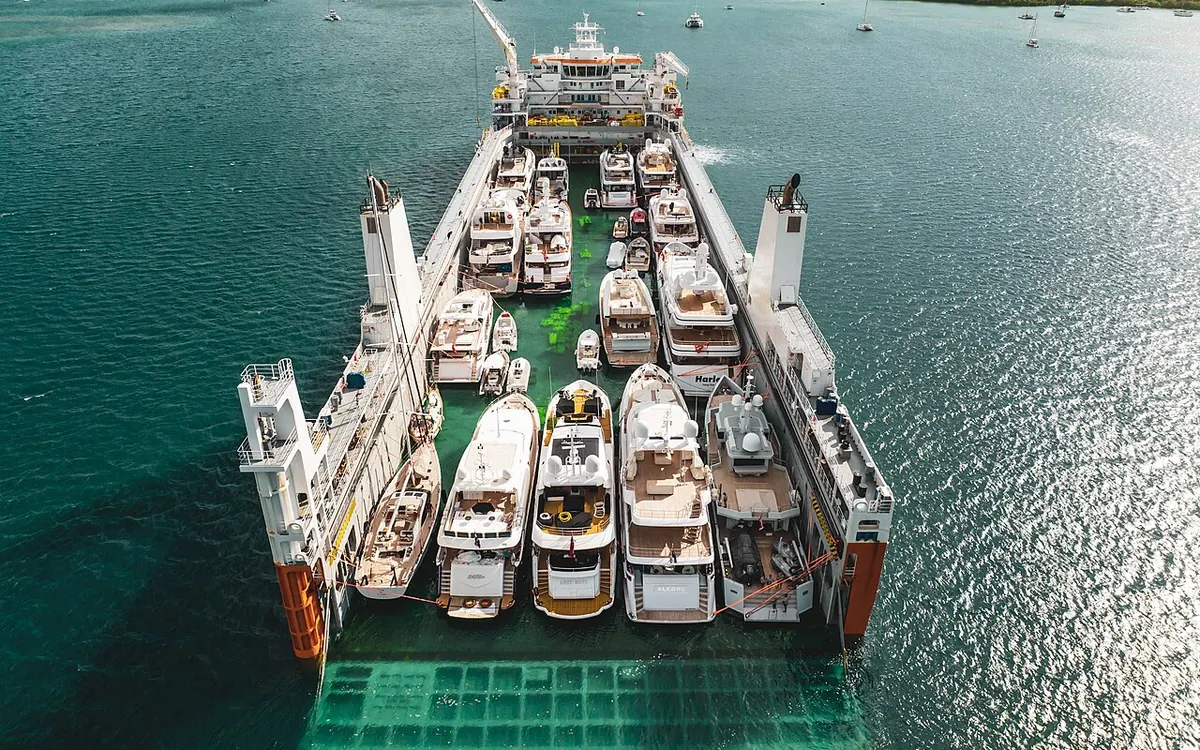
Project cargo ships load very large, heavy items with their own cranes, typically 13,000 to 19,000 DWT. Semi-submersible ships flood ballast tanks to sink the deck, float the cargo over it, then pump out and lift it.
What a heavy-lift ship is
Heavy-lift is a family rather than one design. The two main types are project cargo ships, which lift cargo aboard with their own cranes, and semi-submersible ships, which sink their deck and float the cargo over it.
Project cargo ships are non-submersible and have at least one on-board crane plus enough ballast for stability and seakeeping. They typically measure 13,000 to 19,000 DWT. Semi-submersibles have a long, low well deck between a forward pilot house and an aft machinery space, and look a little like a bulk carrier or tanker.
How cargo is loaded
On a project cargo ship the cranes lift the item from the quay or a barge and set it on deck or in the hold. The ship carries enough ballast to stay stable and seaworthy with heavy items on board.
A semi-submersible floods its ballast tanks until the well deck is below the surface. Platforms, vessels or other floating cargo are moved over the deck, and the tanks are pumped out so the deck rises and carries the load. This is called float-on/float-off. Tanks can be pumped unevenly to balance the cargo.
Size and capacity
Blue Marlin is a good example of a large semi-submersible. After a 2003 upgrade it carried the 60,000 t oil platform Thunder Horse PDQ from South Korea to Texas. Its maximum sailing draft is 10 m and its submerged draft 29.3 m, with 16 m of water over the deck aft and 12 m forward.
Blue Marlin has two retractable propulsors of 4,500 kW each and cabins for 60 people. Dockwise Vanguard, launched in 2012, took over as the largest heavy transport ship. Cosco Shipping runs 16 semi-submersibles of different sizes, and ZPMC's shipping arm operates over 20 large deck carriers.
Cargo and trades
Project cargo ships carry container cranes, bridge sections, suction piles and other large items. Semi-submersibles move drilling rigs, oil platforms, yachts and damaged ships. They can carry a rig from the yard to the drilling site about three to four times faster than a rig can move itself.
Navies use them too. Mighty Servant 2 carried the frigate USS Samuel B. Roberts home after a mine hit in 1988, and Blue Marlin carried USS Cole from Aden in 2000. In 2005 Blue Marlin moved the Snøhvit gas plant from Cádiz to Hammerfest in 11 days.
History and main operators
The first heavy-lift ship was SS Lichtenfels, built in the 1920s for DDG Hansa of Bremen to ship assembled locomotives to British India. It had a 120 t derrick. DDG Hansa later became the largest heavy-lift company and in 1978 fitted the bulk carrier Trifels with two 320 t Stülcken derricks.
DDG Hansa went bankrupt in 1980. After that, Dutch firms Jumbo, BigLift Shipping (Mammoet Shipping until 2001) and SAL Heavy Lift remained as specialists. Royal Boskalis owns Mighty Servant 1, Blue Marlin and Black Marlin after taking over Dockwise in 2013.
What a shipper should know
Heavy-lift cargo is usually booked as a single project rather than a standard freight unit. Give exact weight, centre of gravity, dimensions and lifting points for each item, because the crane plan, sea fastening and ballast plan depend on them.
Decide early whether the item will be lifted or floated. Lifting needs a ship with enough crane capacity at the needed outreach. Float-on/float-off needs sheltered water deep enough for the ship to submerge. Check port draft, quay strength and how the cargo will be taken off at destination.
Variants
Questions shippers ask
What is float-on/float-off?
The ship floods its ballast tanks to sink its deck, the floating cargo is moved over it, and pumping out the tanks lifts the cargo clear of the water.
How big are project cargo ships?
Typically 13,000 to 19,000 DWT, with at least one on-board crane.
What is the heaviest load carried this way?
Blue Marlin carried the 60,000 t oil platform Thunder Horse PDQ in 2004.
What information do I need to book heavy-lift?
Exact weight, dimensions, centre of gravity and lifting points for each item, plus the port conditions at both ends.