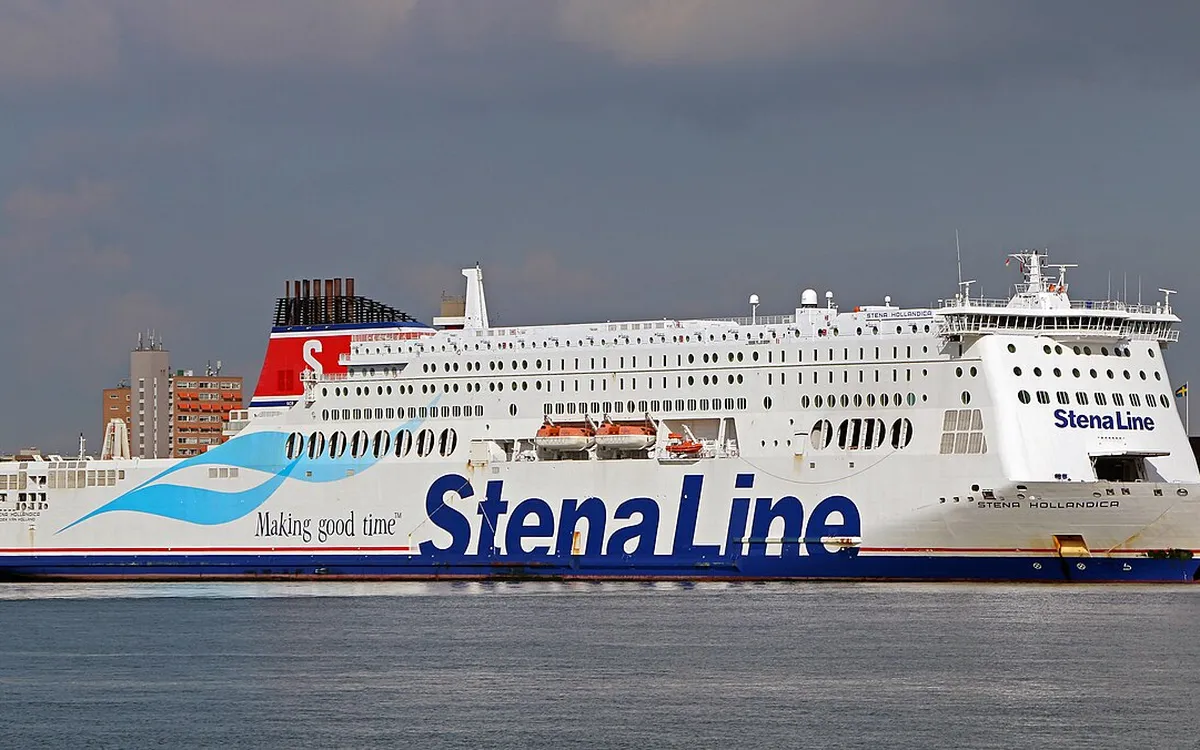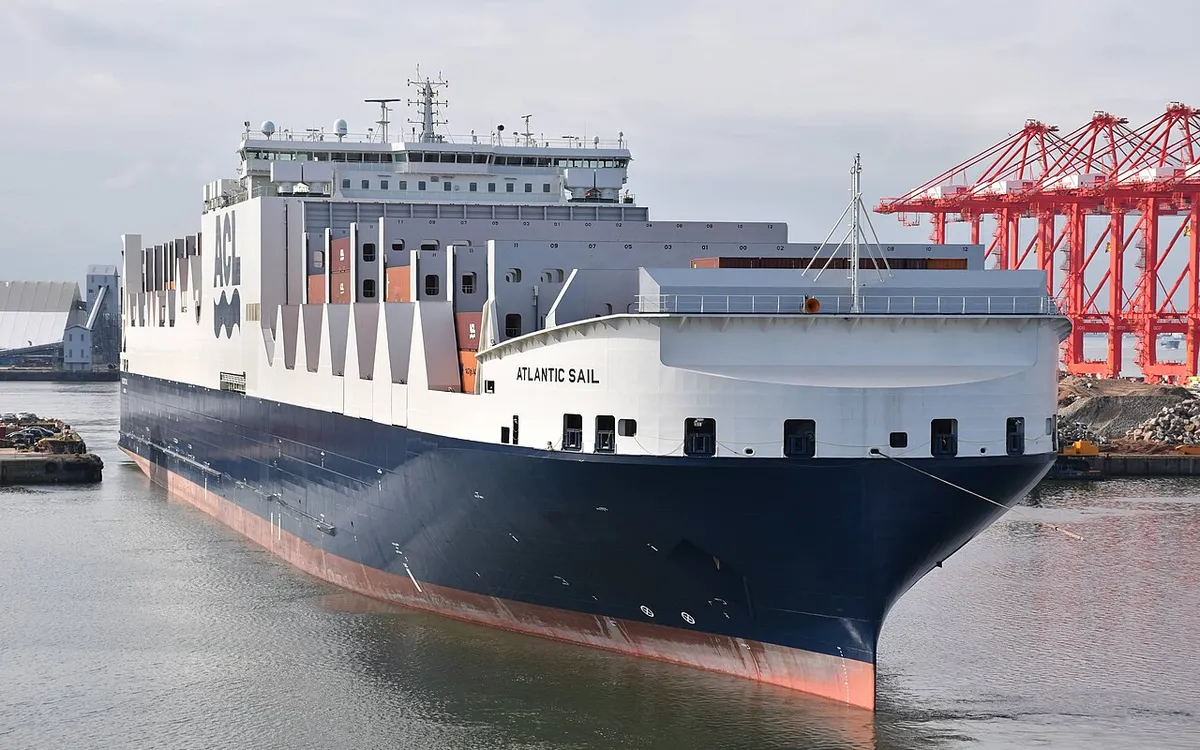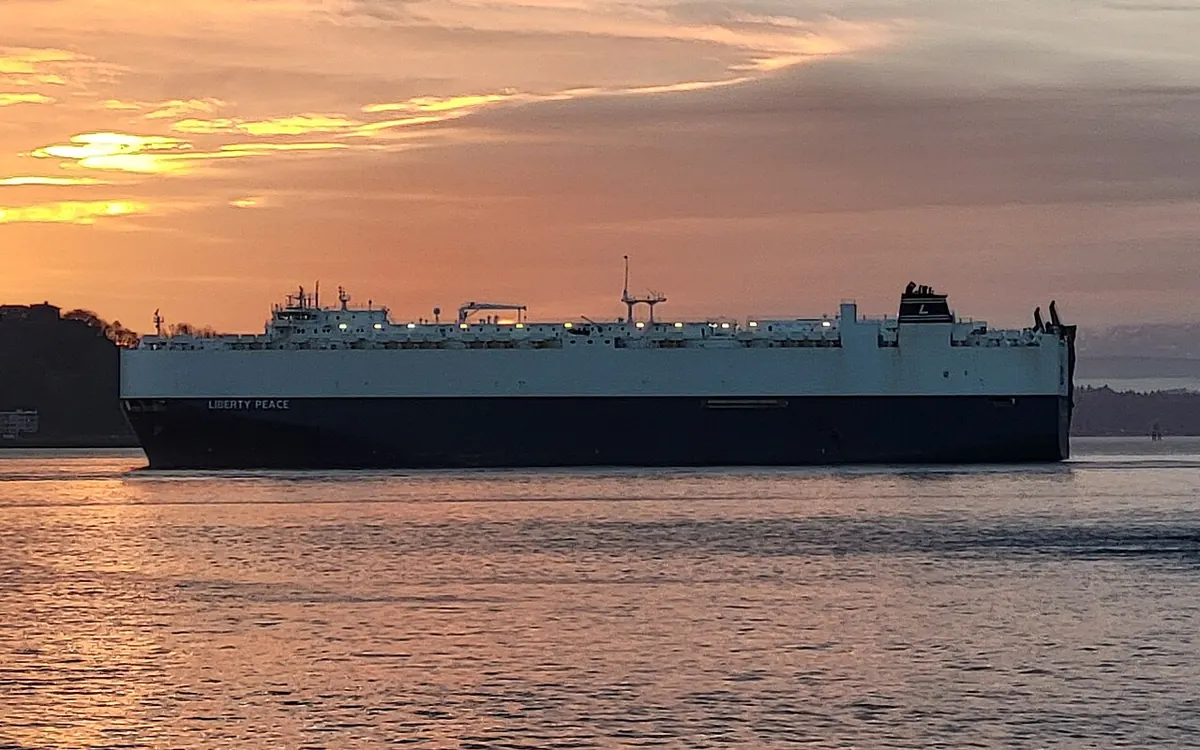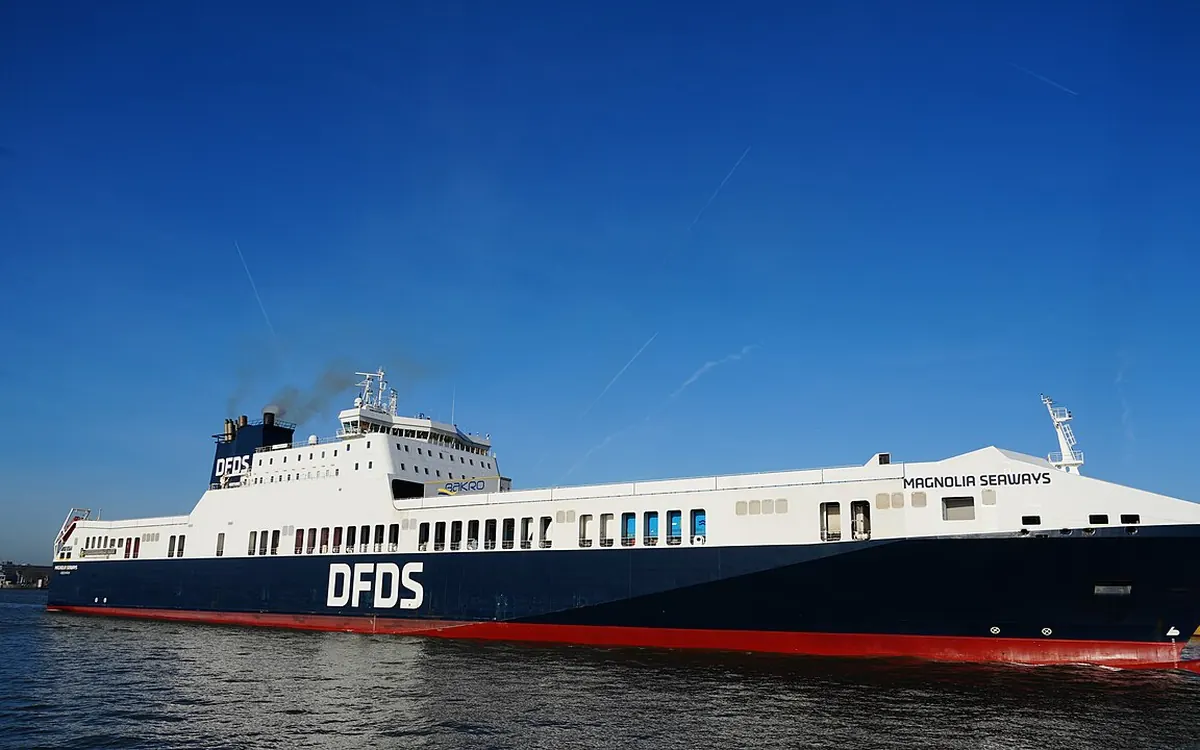
Wheeled cargo is driven on and off over ramps at the stern, bow or side. The hold is laid out like a multistorey car park.
What a Ro-Ro ship is
Roll-on/roll-off (Ro-Ro) ships are cargo ships built for wheeled cargo such as cars, motorcycles, trucks, semi-trailers, buses, trailers and railway cars. The cargo moves on and off on its own wheels, or on a platform vehicle such as a self-propelled modular transporter.
That is the main difference from a lift-on/lift-off (LoLo) ship, which relies on cranes. Inside, a Ro-Ro looks like a multistorey car park. Types include ferries, cruiseferries, cargo ships and barges, and the large car carriers used for new vehicle exports belong to the same family.
How cargo is loaded
Loading runs over ramps, either built into the ship or provided by the port as linkspans and ferry slips. The doors and ramps can sit at the stern, the bow, the side, or any combination, so the same ship can work different berths.
Cargo that cannot drive itself, such as break-bulk or heavy machinery, is often placed on Mafi roll trailers and towed aboard. Vehicles are lashed and chocked on deck. The open vehicle decks have few internal bulkheads, so correct lashing and closed, secured doors matter for stability. Water on the car deck caused the capsize of TEV Wahine in 1968, and an open bow door sank Herald of Free Enterprise in 1987.
Capacity: lane metres instead of tonnes
Most cargo ships are measured in tonnes. Ro-Ro capacity is measured in lane metres, often written LIM. A lane metre is a strip of deck one metre long, and a lane is conventionally 2 m wide, so one lane metre equals about 2 m² of deck. Total capacity is the lane length multiplied by the number of lanes and decks.
As a rule of thumb, a car on a ferry needs about 6 lane metres and a European semi-trailer about 18. Lane width differs between ships and there are several industry standards, so the same cargo can need slightly different space on different vessels. Car carriers often use car equivalent units (CEU) or RT43 units instead.
Cargo and trades
Typical Ro-Ro cargo is accompanied and unaccompanied trailers, new and used cars, buses, construction and farm machinery, tracked units and project items on roll trailers. Military forces use the type too: the US Military Sealift Command runs Large, Medium-Speed Ro-Ro ships (LMSR) for military cargo.
The term Ro-Ro usually means large seagoing ships. Smaller river and fjord ferries also have ramps but are rarely called Ro-Ro in trade. Short-sea routes often use Ro-Ro and RoPax ferries, while deep-sea routes rely on car carriers and ConRo ships.
History in brief
The idea started with railways. A wagon ferry ran on the Forth and Clyde Canal in 1833, and the train ferry Leviathan opened "The Floating Railway" across the Firth of Forth on 3 February 1850. In 1918 train ferries from Richborough shipped wagons, tanks and guns to France, and by the end of that year nearly 261,000 tons had crossed.
Landing ships (LST) in the Second World War were the first purpose-built seagoing ships that let road vehicles drive on and off. On 11 September 1946 the converted LST Empire Baltic sailed from Tilbury to Rotterdam with 64 vehicles, opening commercial Ro-Ro service. Searoad of Hyannis (1956) was the first built for loaded semi-trailers, and USNS Comet (1957) added a stern ramp, internal ramps and exhaust ventilation.
What to know when booking Ro-Ro
Give the length, width, height and weight of every unit, and say whether it drives, is towed or needs a roll trailer. Freight is normally quoted per lane metre or per unit, so an accurate length is the main cost driver. Over-height and heavy units need a deck with enough clearance and strength.
Check how the unit is unloaded at destination: a ship with its own stern ramp can work more berths than one that needs a shore linkspan. Ask about lashing points, whether the unit may carry fuel, and whether the cargo must be accompanied by a driver or can travel unaccompanied.
Variants
Size classes
All size classes and canal limits
Questions shippers ask
What is a lane metre?
A strip of Ro-Ro deck one metre long, with a lane conventionally 2 m wide. A car needs about 6 lane metres and a European semi-trailer about 18.
What is the difference between Ro-Ro and LoLo?
On a Ro-Ro the cargo drives or is towed on and off over ramps. On a LoLo ship it is lifted by cranes.
Can non-wheeled cargo go on a Ro-Ro ship?
Yes. Machinery, steel and other break-bulk is placed on a roll trailer such as a Mafi trailer and towed aboard.
How is Ro-Ro freight usually charged?
Usually per lane metre or per unit, based on the unit's length, with extra attention to height and weight.