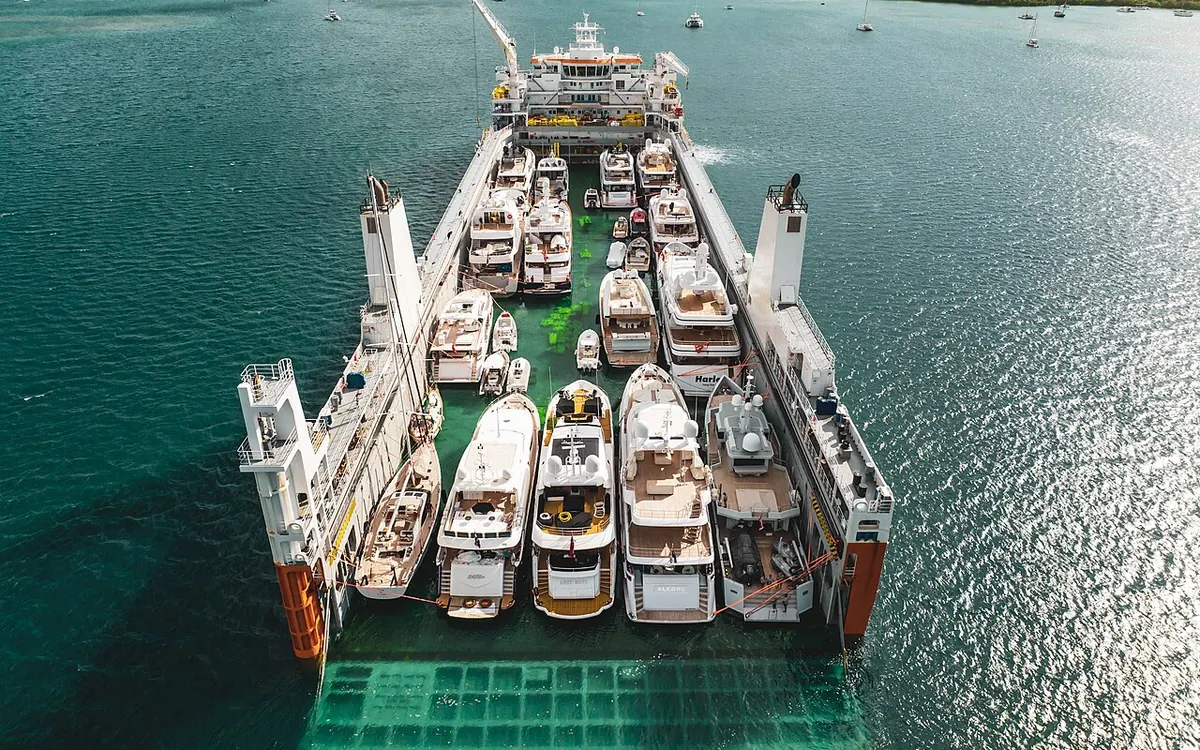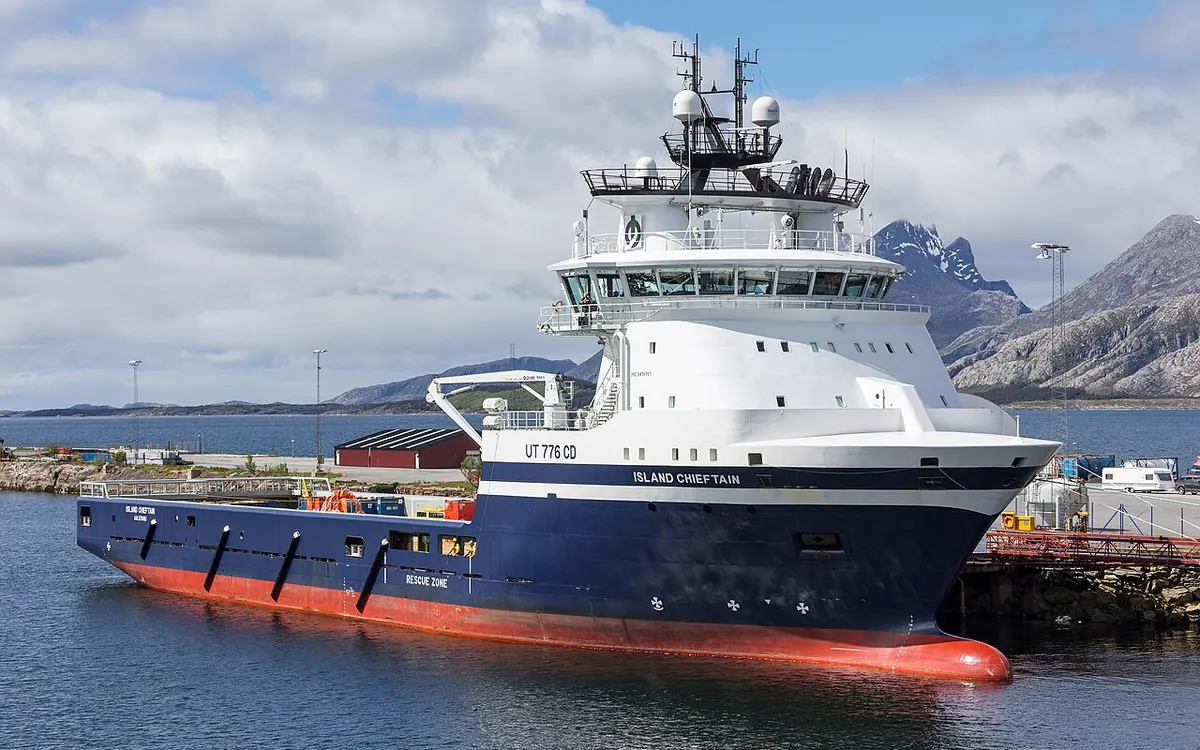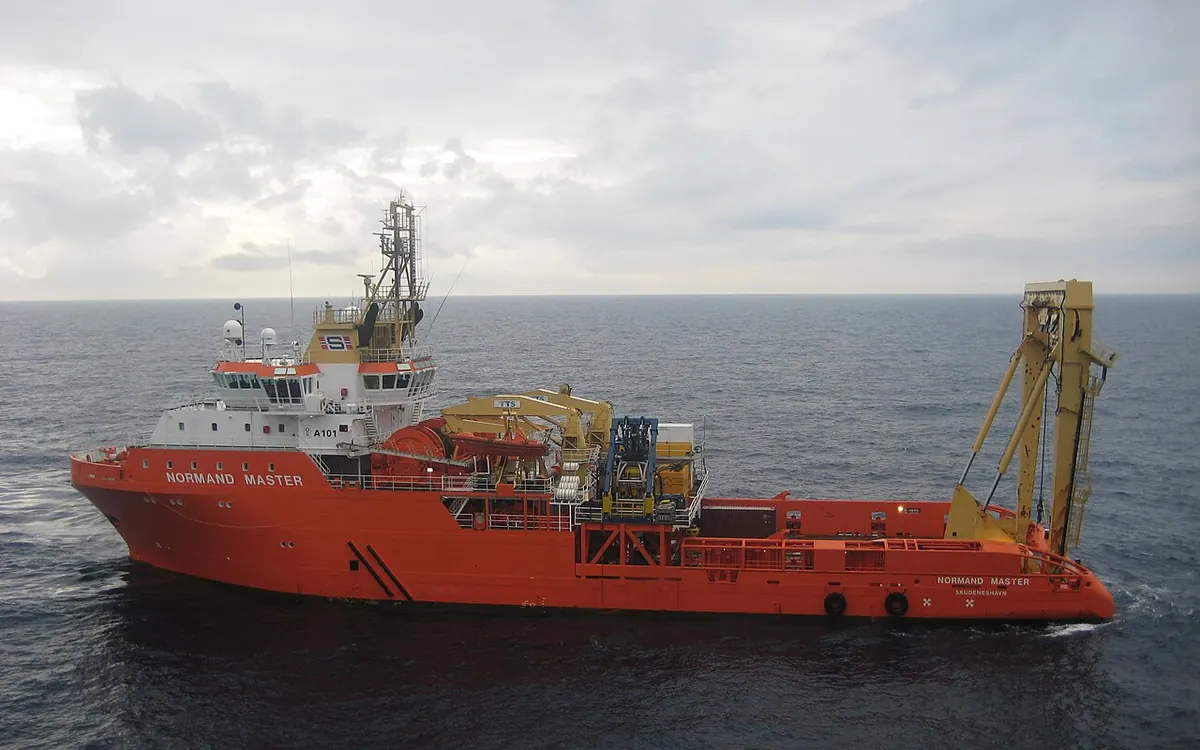
Handles anchors for oil rigs, tows the rigs to location and secures them. Also does supply runs between land bases and drilling sites and assists tankers while loading.
What an AHTS vessel is
AHTS vessels are built mainly to handle anchors for oil rigs, tow the rigs to location and use the anchors to secure them. They can anchor and tow both jack-up and semi-submersible rigs, and in deep water the anchor work itself becomes a large part of the job.
The type sits between a tug and a platform supply vessel (PSV). It also runs supply trips between land bases and drilling sites, and many ships are designed for the harsh conditions of the North Sea.
How it differs from a PSV
An AHTS has winches for towing and anchor handling, an open stern so anchors can be pulled onto the deck, and more engine power for higher bollard pull. Its machinery is designed around anchor handling, so the deck, winches and propulsion are all sized for pulling and holding heavy loads.
It also has quick-release gear for anchors, operable from the bridge or another manned station in direct contact with the bridge. The towing winch is designed and tested against a reference load of twice the static bollard pull.
Bollard pull: the key figure
Bollard pull is the force a vessel exerts at full power on a tow line fixed to a shore bollard, measured in calm water. It is given in tonnes-force or kilonewtons, either as the static (maximum) figure or as the steady figure averaged over a period such as 10 minutes.
For scale, the largest harbour tugs of the 2000s and 2010s had about 60 to 65 short tons-force. The strongest tug since 2020 is the AHTS Island Victory (Vard Brevik 831) of Island Offshore, with 477 tonnes-force, or 4,680 kN.
Tasks and trades
Besides rig moves, AHTS vessels assist tankers with towing while they load at offshore terminals, handle anchors in deep water, and tow away objects that threaten installations.
They also do ROV (remotely operated underwater vehicle) work, safety and rescue duty, and supply runs. Some serve as emergency response and rescue vessels (ERRV), standing by near installations.
Variants
AHTS vessels range from supply-focused ships with modest pull to very large units built for deepwater anchor work, such as Island Victory. Some are built as icebreakers, such as Balder Viking.
Other members of the offshore fleet overlap with the AHTS. The PSV carries supplies without heavy winches, and the multipurpose supply vessel adds a crane of 100 t or more for maintenance work.
What a shipper or project team should know
The main figure to specify for a tow is the required bollard pull, which depends on the size of the rig or structure, the route and the expected weather. Rated bollard pull is an ideal test number, so allow for real conditions.
State the job clearly: a rig move, an anchor job, a tow of a barge or floating unit, or supply work. Ask about winch capacity, deck space for anchors and chain, dynamic positioning class, and whether ROV or rescue capability is needed for the operation.
Variants
Questions shippers ask
What does AHTS stand for?
Anchor handling tug supply. The ship handles rig anchors, tows rigs and carries supplies.
What is bollard pull?
The towing force a vessel exerts at full power on a fixed bollard, given in tonnes-force or kilonewtons.
What is the most powerful AHTS?
Island Victory of Island Offshore, delivered in 2020, with 477 tonnes-force of bollard pull.
Can an AHTS carry cargo?
Yes. It does supply runs between land bases and offshore sites, though it has less cargo space than a PSV.