





















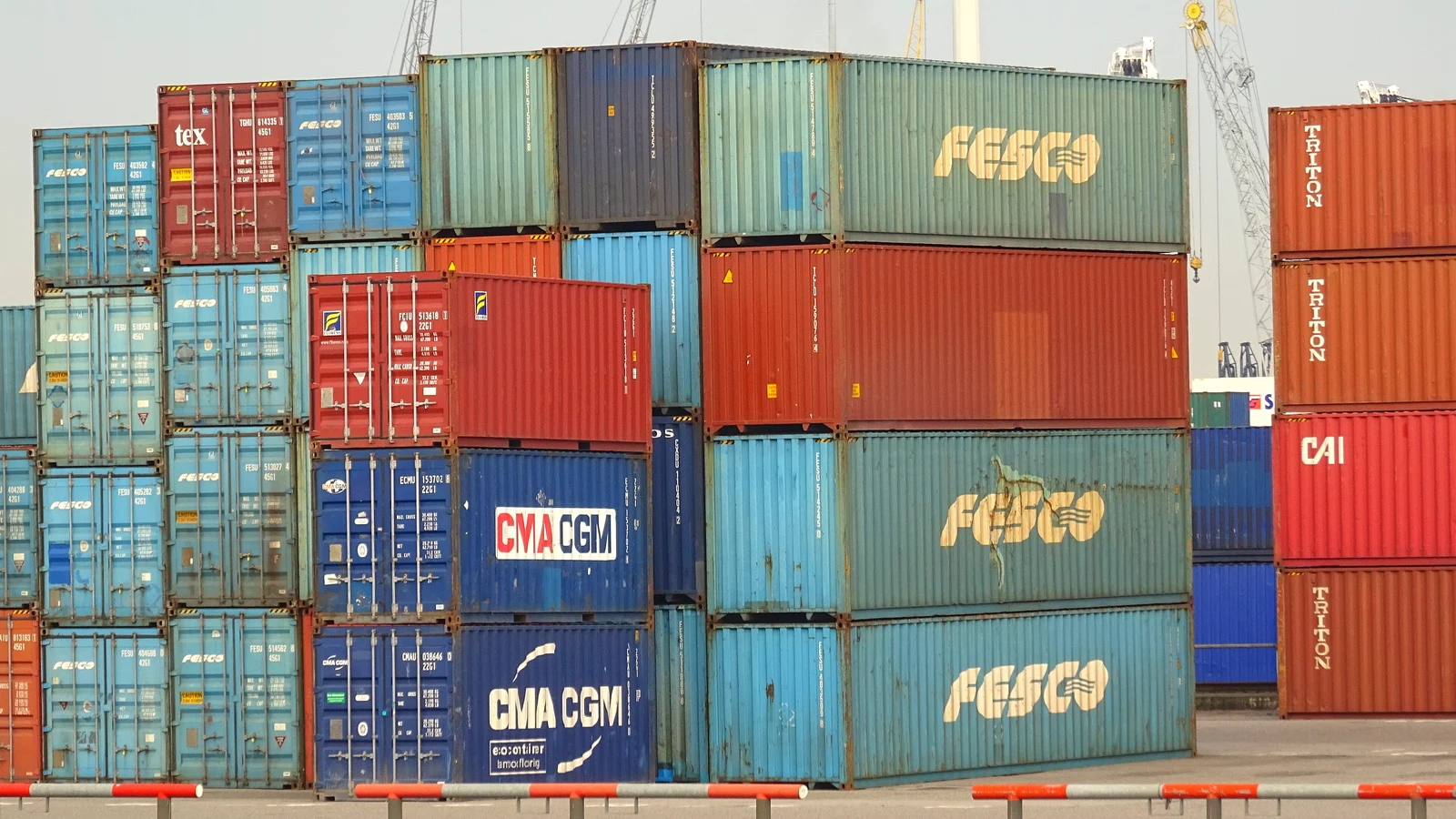
Triton International’s 2020 annual report says the company booked more than 1.3 million TEU of new and used containers since July of that year, and that most shipping lines relied heavily on leasing companies for capacity. A container prefix lookup on one of those boxes returns Triton. The line that moves it is another question. The release notes of SeaRates dated 21 August 2020 announced automatic shipping line detection for leasing and non-leasing containers. The original post now redirects to the DP World homepage, so what follows rebuilds the claim and checks it against published sources and against what the Navo API holds today.
Detection that includes leased boxes
The week 34 release notes list four lines in the tracking block: changes were made for Turkon, Hamburg Sud, Sinokor and Hapag Lloyd. A new self-learning module was to detect the shipping line, and for every version of the Tracking System API the detection was described as available for “all container types (leasing and non-leasing)”. Five lines were in development on top of the 20 already supported. The notes name no accuracy figure and do not say what the module learned from. Today the carrier directory on Navo24 lists 236 shipping lines.
The four named lines show why a lookup table is hard to keep. According to Navo24’s carrier pages, the Turkon prefixes include TRKU and WFHU, Hamburg Sud’s include SUDU and HASU, Sinokor’s include SKHU, SKLU, SKRU and SKSU, and Hapag-Lloyd’s include HLBU, HLCU, HLXU and others. What happens when the owner is a lessor?
Who is named by the first four letters?
ISO 6346 defines the owner code as three capital letters indicating the owner or principal operator of the container, followed by the equipment category letter. Codes are registered at the Bureau International des Containers in Paris so that each one is unique. A container owner code therefore records whoever registered it. For a line that runs its own fleet, the owner and the line are usually the same company or its group. For a Triton box they are not: Triton describes itself as the world’s largest lessor of intermodal freight containers, with an owned and managed fleet of more than 7 million TEU.
Triton’s 2020 letter to shareholders calls the shipping lines its customers. So the line leases the box and moves it, and the prefix on the door stays Triton’s. A container prefix lookup in the BIC register tells you who owns the steel. Terminal49’s SCAC lookup page puts the limit plainly: the owner can be a leasing company or a different line than the carrier moving the box, so a prefix match is a starting point and not proof of who carries the shipment.
2,527 Triton boxes, 85 carrier names
One account’s list in the Navo API, the data behind the container tracker, holds 3,921 container numbers. It is one customer’s list, not all tracking on the platform. In 2,634 of them the equipment owner is Triton Container International, spread over 12 prefixes. TRDU is the largest with 1,259 boxes, then TCNU with 322, TCLU with 272 and TLLU with 225. A carrier name is recorded for 2,527 of the 2,634, and the names add up to 85 different ones. TRDU alone is tied to 29. HMM (239 boxes), Hapag-Lloyd (215), CMA CGM (135) and OOCL (82) lead that prefix, and the 85 names also include forwarders such as Kuehne + Nagel.
Then the lessee field. Of the 2,358 Triton boxes that carry both a lessee and a carrier name, only 800 show the same name in both. In the other 1,558 they differ. Take TRDU6578346, a 20GP box with ISO type code 22G1 and lease status on lease. Triton owns it, Topocean Consolidation Service (Los Angeles) Inc. leases it, and the record names HMM as the carrier. Three parties, one box. Topocean is the lessee on 158 boxes in the list, and the carrier field on those reads HMM 92 times, Yang Ming 21, Hapag-Lloyd 15, ONE 5 and CMA CGM 5.
By lease status, 2,408 of the Triton boxes are on lease, 225 are off lease and one has no status. Every on-lease record carries a lessee name. Among the Triton boxes the API’s carrier_source field reads lessor on 292 records and user on 287, and it is not set on 2,054.
Line-owned prefixes in the same list look different, though the samples are small. All 23 HLBU boxes sit under Hapag-Lloyd, all 7 MSKU under Maersk, all 6 MSCU under MSC and all 9 ONEU under ONE. CMAU is the exception in this sample: 17 of 29 boxes under CMA CGM and 12 spread over six other names.
In this list, 12 of the 171 prefixes are Triton’s, and they cover 2,634 of the 3,921 boxes, about two thirds. Used as a carrier filter, a prefix table would name a lessor rather than the line for those 2,634 boxes. That is my inference, not a tested comparison. Count how many of your own prefixes belong to a lessor before you trust one. For a leased box, read the line off the booking confirmation or the bill of lading.
Frequently asked questions
Can the fourth letter of a container prefix be anything other than U?
Under ISO 6346 the fourth letter is the equipment category identifier: U for freight containers, J for detachable freight container-related equipment and Z for trailers and chassis. Wikipedia's summary of the standard adds that all official BIC container codes end in U at present, so a prefix ending in J or Z points to equipment other than a standard box.
Does the check digit at the end of a container number say who owns the box?
No. The check digit is one numeric digit that validates the recording and transmission accuracy of the owner code and serial number. It catches a mistyped number and carries no information about the owner or the line.
Can one shipping line hold several owner codes?
Yes. ISO 6346 lets an owner apply for more than one code, Hapag-Lloyd is one example, and its prefixes include HLBU, HLCU and HLXU.