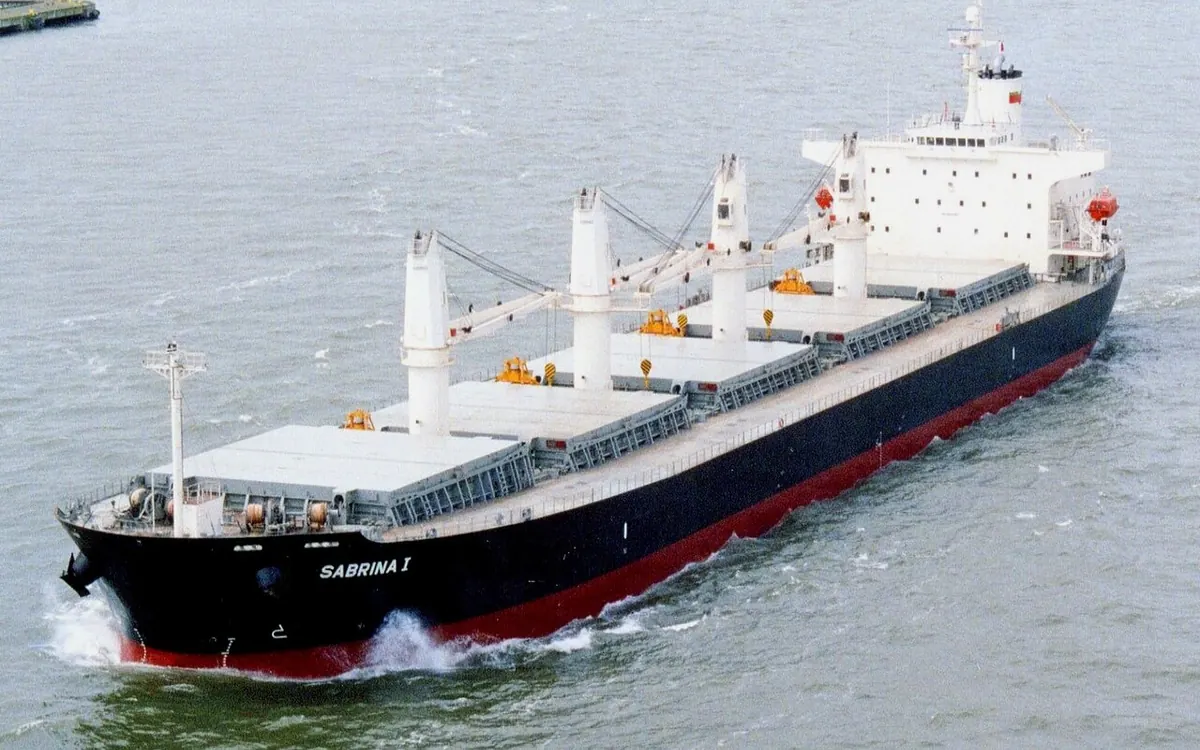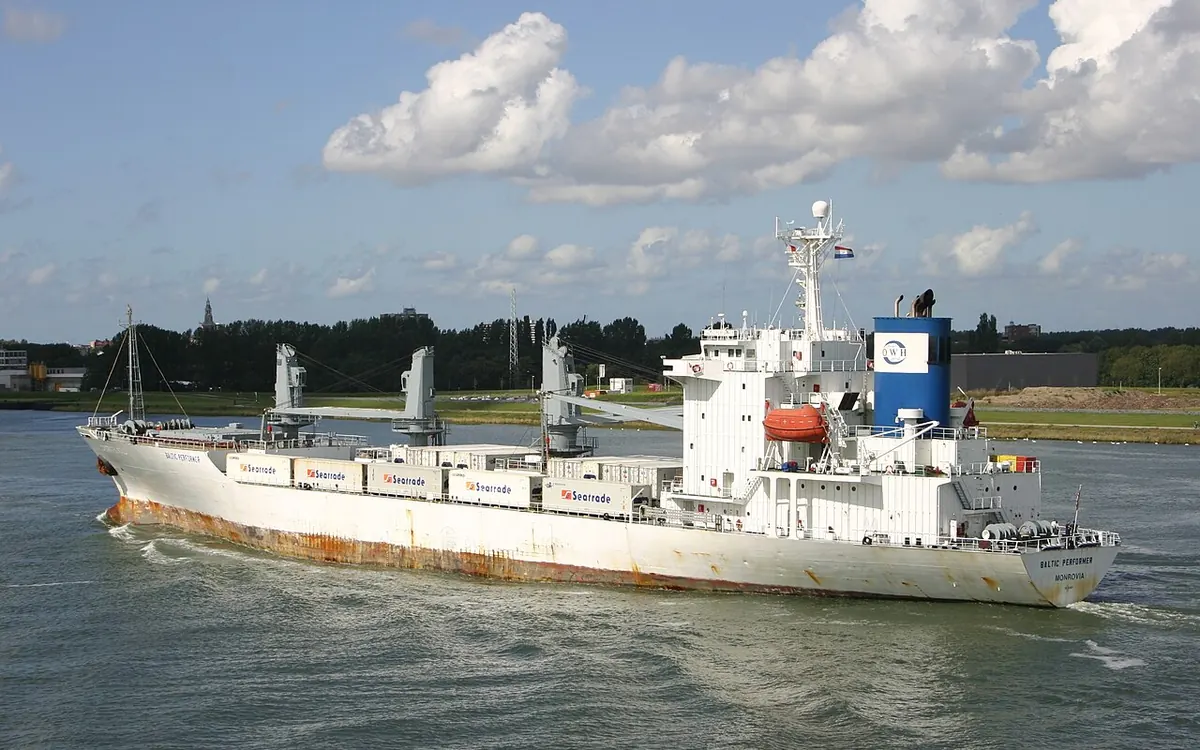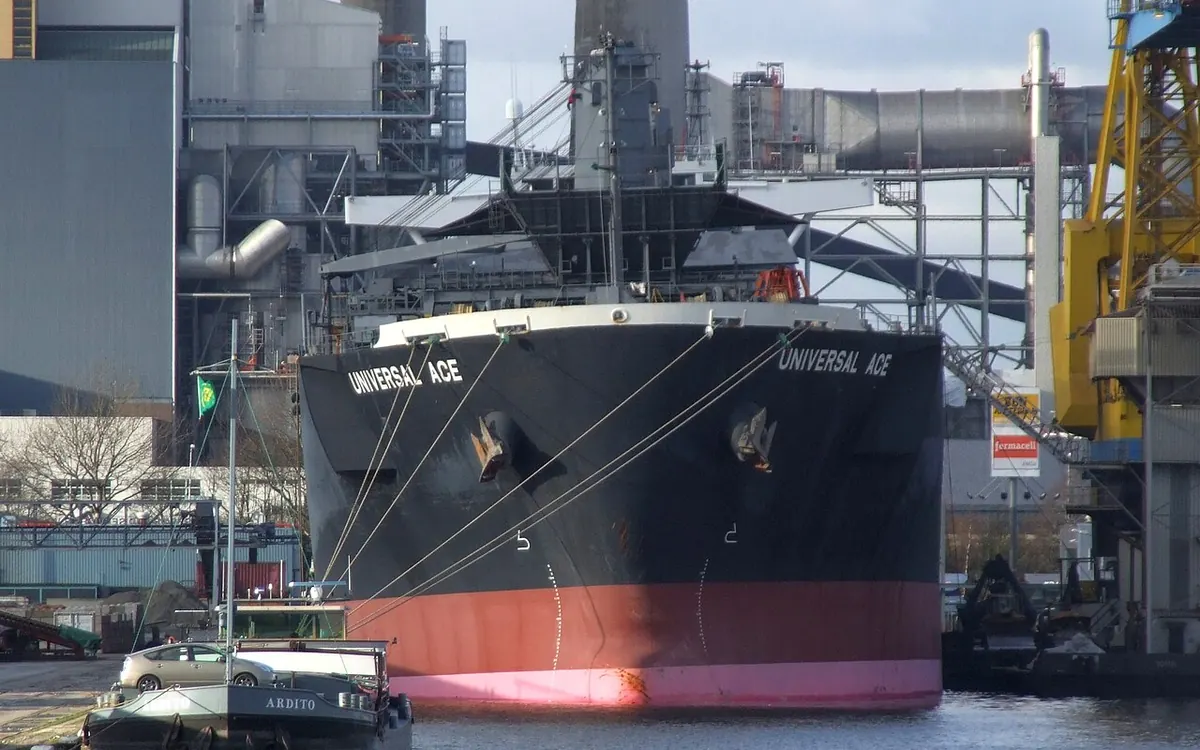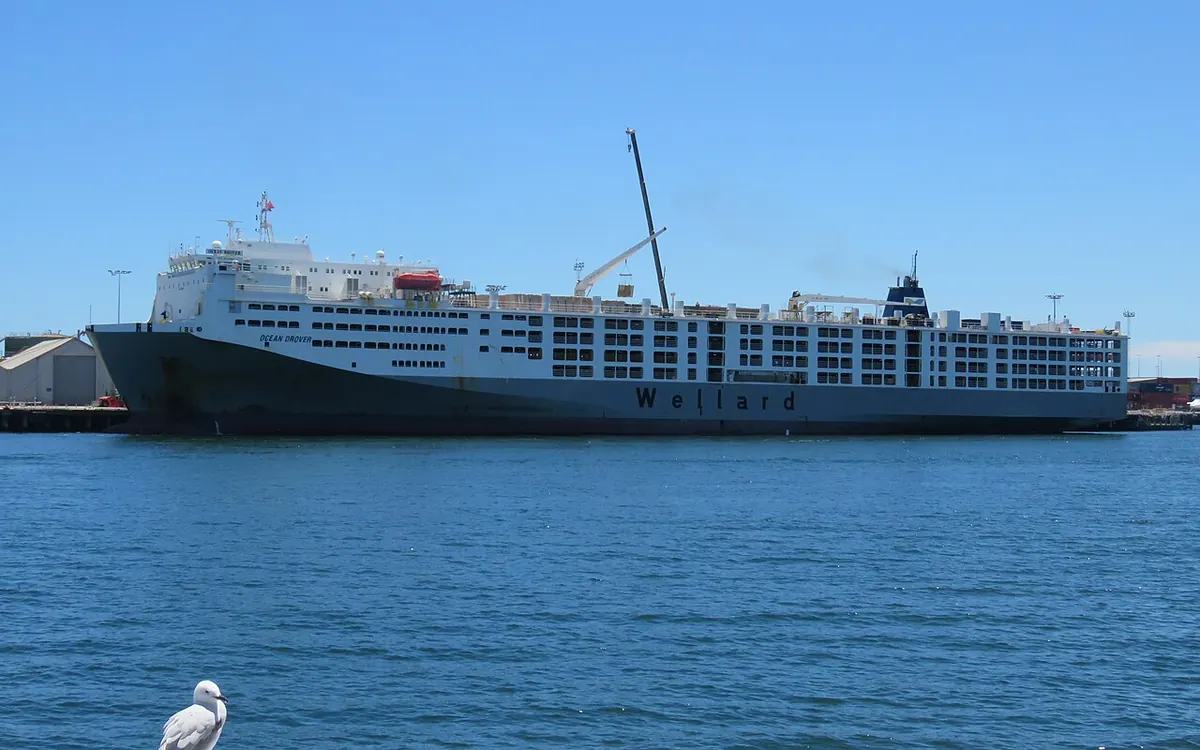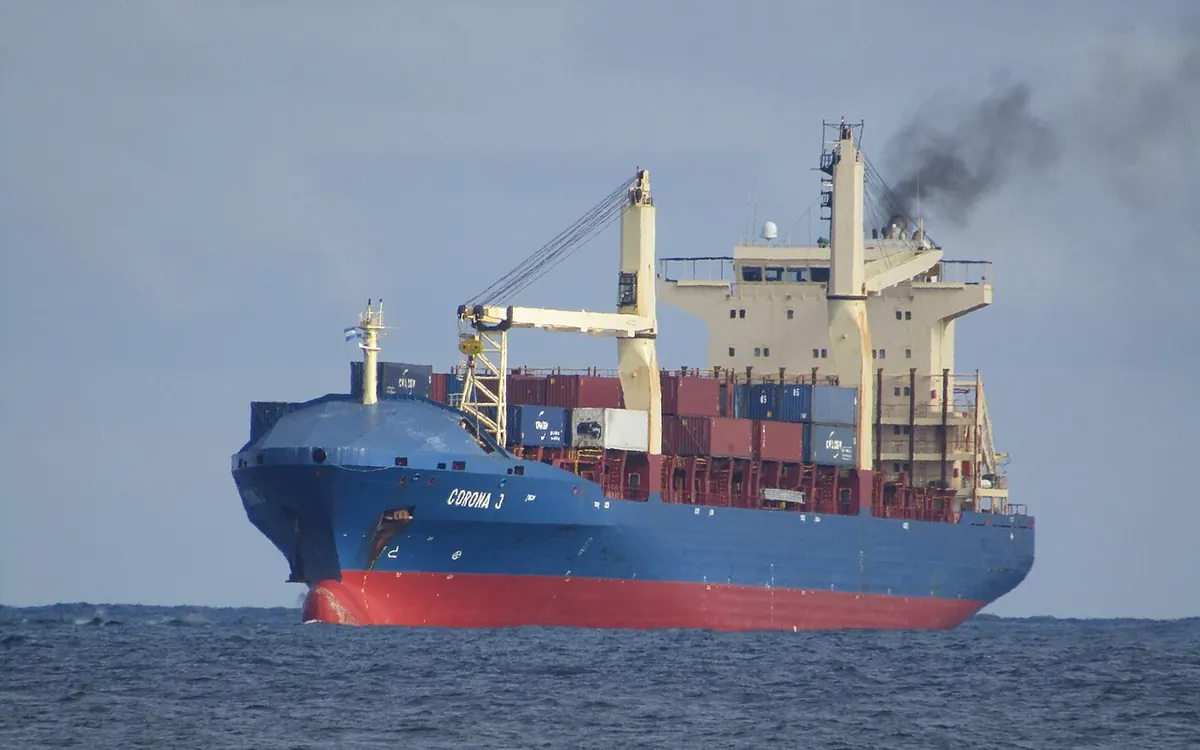
Carries break-bulk goods: cargo stowed in individually counted units such as bags, cases, drums, coils and machinery. Most ships have their own cranes, so they can work ports without shore gear.
What a general cargo ship is
Break-bulk, also called general cargo, means goods stowed on board in individually counted units. The items are traditionally listed on separate bills of lading by product, unlike bulk cargo, which goes straight into the hold and is measured by weight or volume.
The modern form is the multi-purpose vessel (MPV), built for a wide range of cargoes such as wood, steel, building materials, rolls of paper and bulk cargo. Its design must handle heavy loads, large objects and unitised cargo, and some cargo is rolled on board while other cargo is lifted.
How cargo is loaded and secured
The usual method is to deliver cargo to the port before the ship arrives and hold it in a warehouse. When the ship is alongside, the cargo moves to the quay and is lifted on board by the ship's own derricks or cranes, or by dockside cranes. Discharge is the same process in reverse.
Goods are bundled into unit loads for hoisting: cargo nets, slings, crates, or stacks on trays, pallets and skids. Smaller items travel in bags, sacks or cartons, which can be loaded onto trays before lifting. Stevedores stow and secure the cargo in the hold, using dunnage to keep it from shifting.
Sizes and design limits
Cargo ships are classed partly by tonnage, partly by deadweight (DWT) and partly by dimensions. Length and beam decide which canal locks a ship fits, draft limits canals, shallow straits and harbours, and height matters for passing under bridges.
MPVs range from small coastal vessels to large ships with heavy-lift capability. DNV counts some 15,000 of them. Their designs are complex, because they must handle very different operating conditions. Bigger units can carry different kinds of cargo on one voyage, while smaller ones enter small harbours thanks to their limited draught.
Cargo and trades
Typical cargo is anything that does not suit a container: steel, wood, paper rolls, building materials, bagged goods and large heavy objects. Cargo liners that run fixed services mostly carry general cargo, and a liner with 12 or more passengers is called a combination ship.
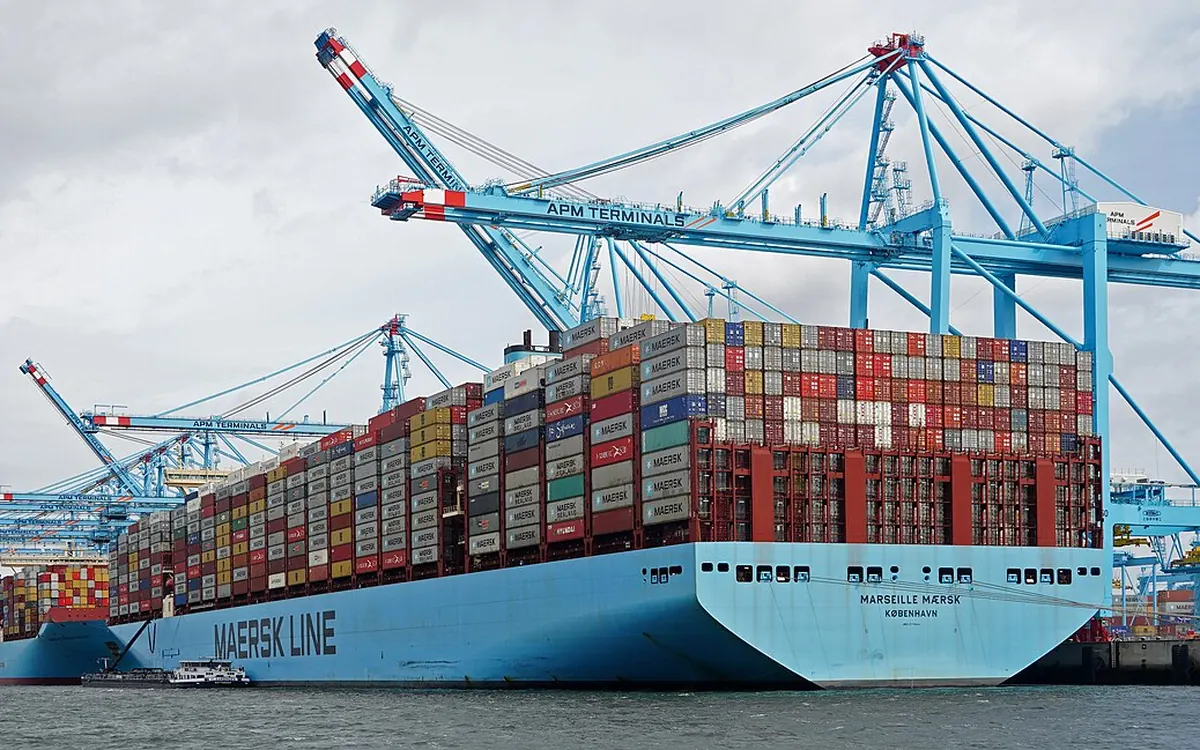
Since the 1960s, the volume of break-bulk has fallen sharply as cargo moved into intermodal containers. Containerisation cut shipping and loading costs by 80% to 90%, and break-bulk suffered more theft and damage. The ship type survives where cargo shape, weight or port equipment rules out the box.
History
Break-bulk was the traditional way to ship packed goods. Before pallets and forklifts, goods were carried on board over a plank or passed from hand to hand in a human chain when no hoisting gear was available.
Many older general cargo ships mixed cargo types. The Gladstone Star, built in 1957 and scrapped in 1982, was a refrigerated general cargo ship. Today the role has moved to multi-purpose and heavy-lift designs that carry both unit cargo and bulk.
What to know when booking
Give the carrier a full packing list with the number of pieces, weights and dimensions per piece, because the cargo is counted and stowed piece by piece. Heavy or long items decide whether the ship's own cranes are enough or shore cranes are needed.
Ask whether the ship has its own cranes if the destination port has little lifting equipment. Check draft limits at both ports, since smaller MPVs exist for shallow harbours. Agree on who supplies dunnage and lashing, and allow for warehouse time before loading, because cargo usually arrives at the port ahead of the ship.
Variants
Questions shippers ask
What is the difference between break-bulk and bulk cargo?
Break-bulk is stowed in counted units such as crates, drums and bundles. Bulk cargo goes loose into the hold and is measured by weight or volume, like grain or ore.
When should I use a general cargo ship instead of a container?
When the item does not fit a container, is very heavy, or the destination port has no container crane. Multi-purpose ships also suit mixed cargo on one voyage.
Does a general cargo ship need port cranes?
Not always. Cargo can be lifted by the ship's own derricks or cranes or by dockside cranes, so confirm which applies before booking.
What information does the carrier need?
A piece-by-piece list with weights, dimensions and packing type, since each unit is counted and stowed separately and recorded on the bill of lading.