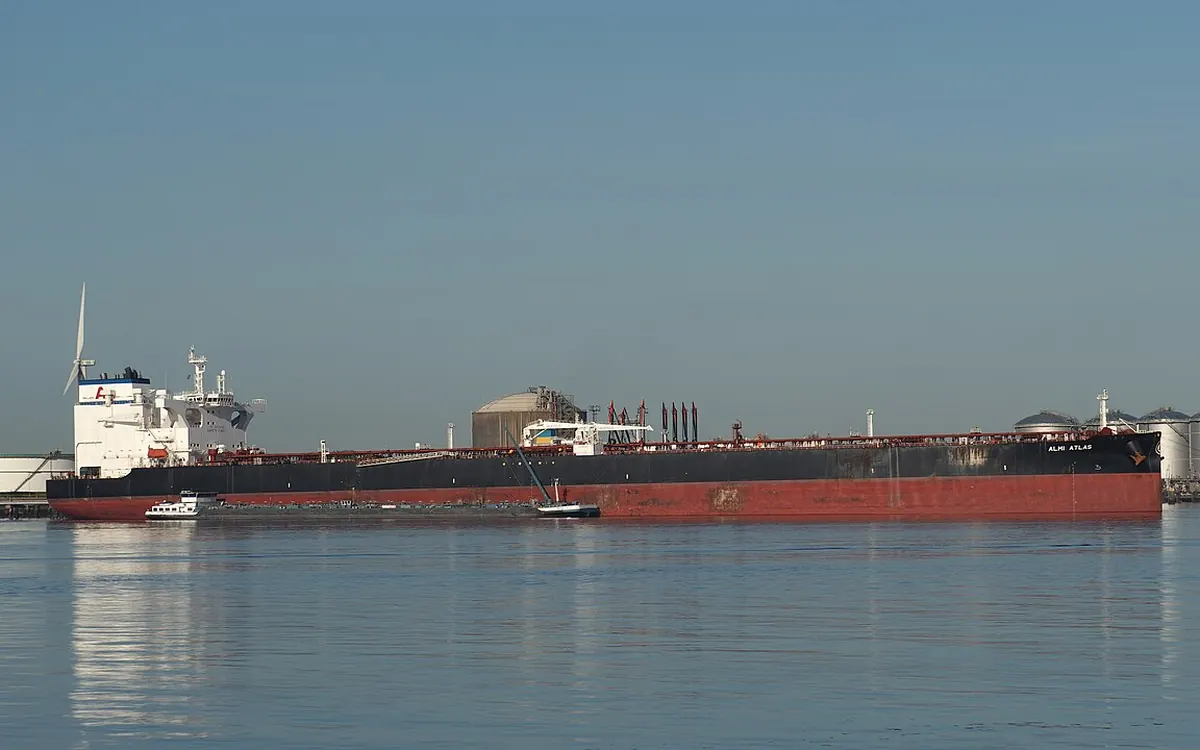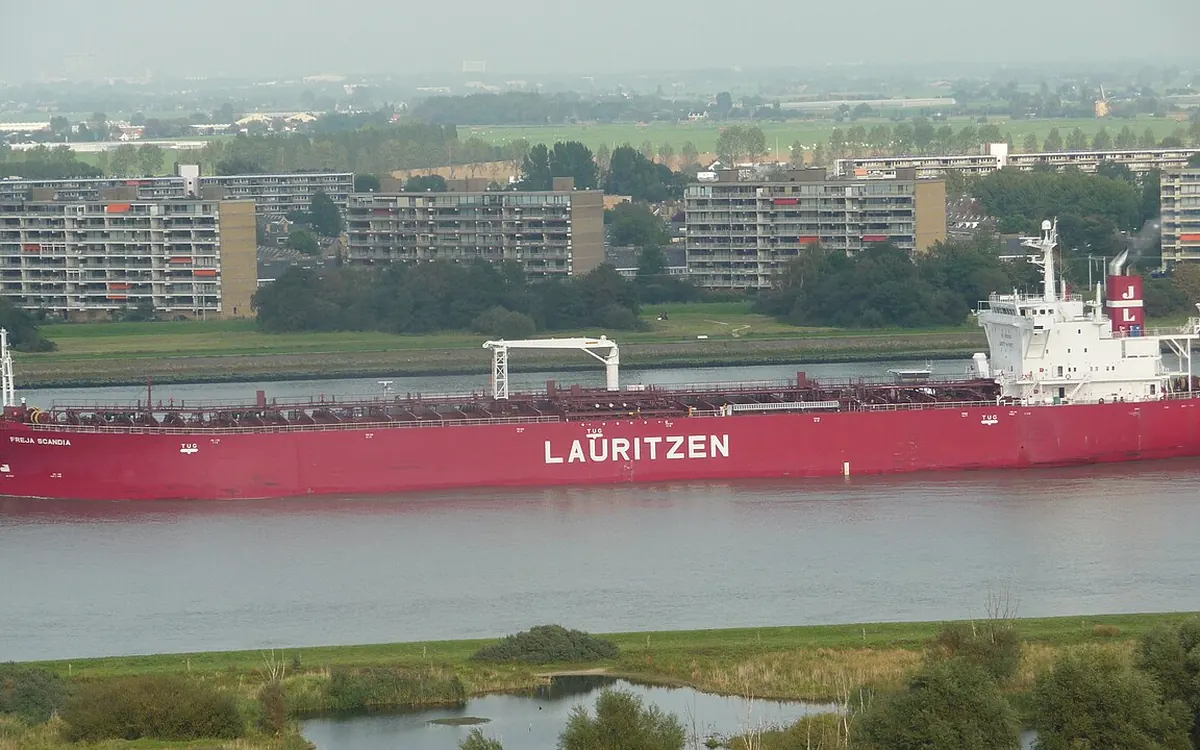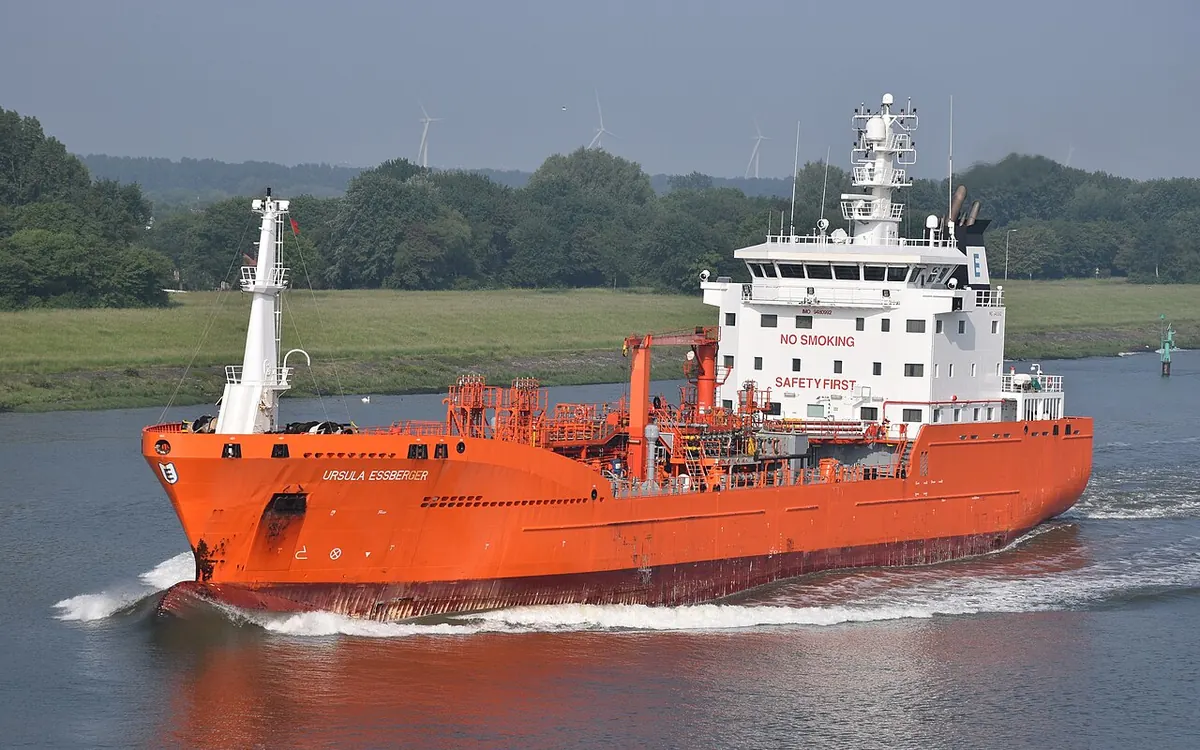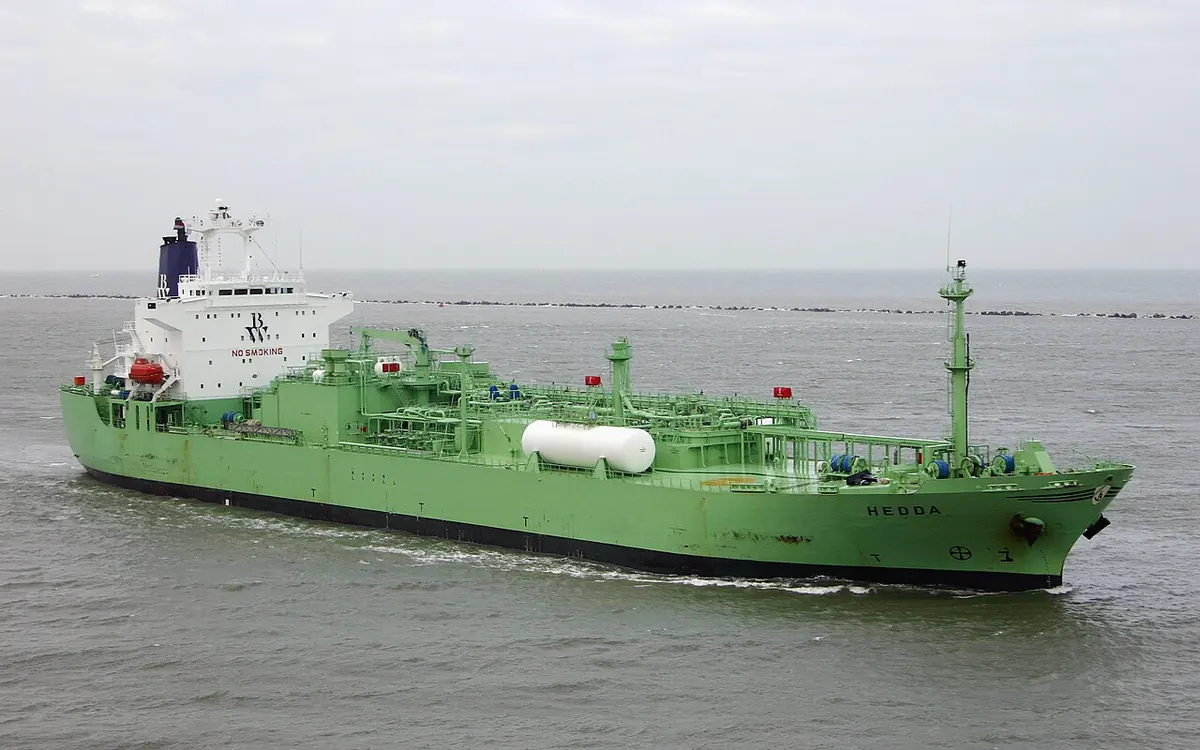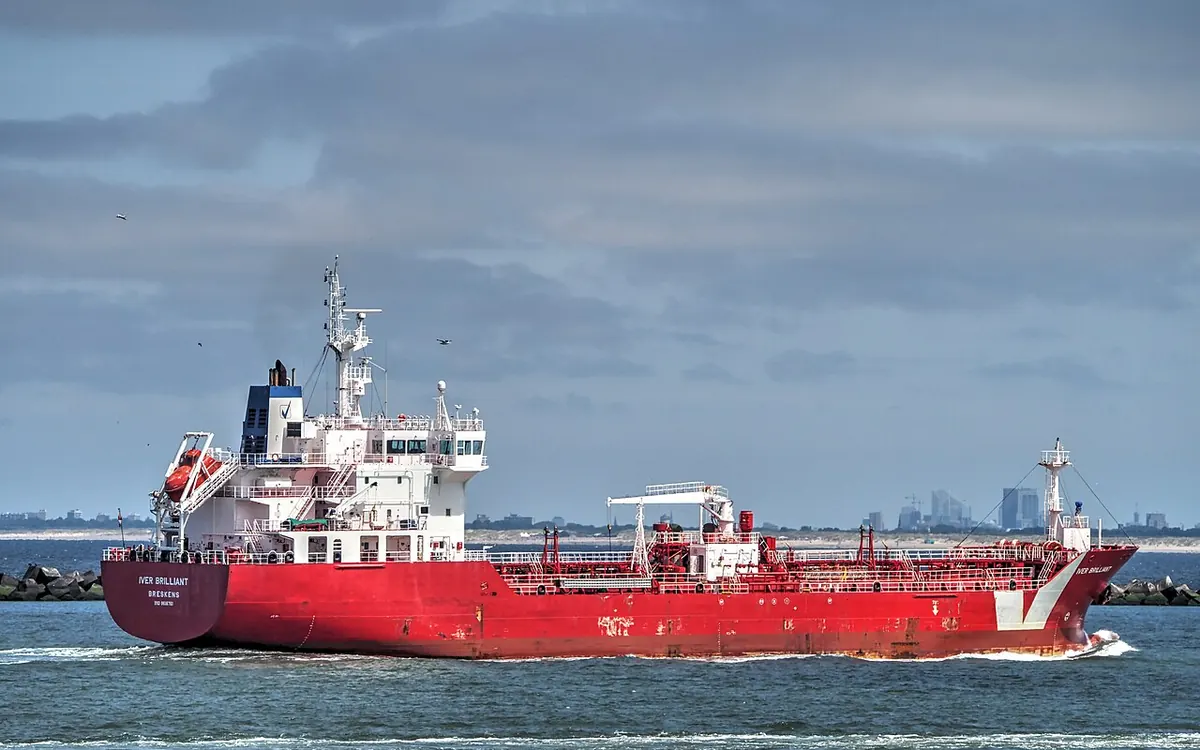
Carries bitumen and asphalt hot, up to 200 °C, in independent cargo tanks. Heat makes the tanks and pipes expand, so the design is built around thermal expansion.
What an asphalt carrier is
Bitumen is a very viscous part of petroleum. Depending on its make up it is a sticky black liquid or a mass that looks solid. In American English it is usually called asphalt. Refined bitumen is the residue of the fractional distillation of crude oil boiling at about 525 °C.
To pump it, the cargo must stay hot, so an asphalt carrier is a tanker built around heat. The FKAB I15 design is a bitumen, chemical and product oil tanker. Its independent cargo tanks take bitumen and asphalt at up to 200 °C, and the ship can also carry IMO type II chemicals.
Heated tanks and thermal expansion
The big temperature changes mean the tanks and pipes grow and shrink, so the design centres on thermal expansion. In the I15 the cargo tanks sit in two blocks, forward and aft of the pump room, with four and six tanks. The supports let each tank expand freely in every direction.
There is no structure inside the cargo tanks. The ship has a single bottom and double sides for ballast water. Heat comes from two dual fuel thermal oil heaters of 2,400 kW each and an exhaust gas heated thermal oil economiser on the main engine.
Size and dimensions of an example design
The I15 carries 20,000 m³ of cargo. It is 169.90 m long overall, 165.20 m between perpendiculars and 28.20 m wide, with a depth of 13.90 m. Draft is 9.20 m at design and 9.80 m at scantling, for a deadweight of 21,500 t and 23,500 t.
Three cargo pumps each move 400 m³/h, and two ballast pumps serve 10,000 m³ of water ballast. The ship has berths for 19 people and is built for ice class 1C. Bureau Veritas classes it as an oil tanker and asphalt carrier for cargo with a flash point above 60 °C.
Cargo and where it goes
About 70% of yearly bitumen production goes into road building. Bitumen binds gravel and other aggregate into asphalt concrete, which most people simply call asphalt. Its other main uses are waterproofing products such as roofing felt and roof sealant.
So the usual trade runs from refineries to terminals that supply road and roofing markets. Because the I15 is also a product oil tanker and an IMO II chemical tanker, the same ship can switch between bitumen and other liquid cargoes.
Propulsion and fuel
The I15 runs on a four stroke, medium speed dual fuel engine of 5,500 kW, with a gearbox, a shaft generator and a controllable pitch propeller. A frequency converter lets the propeller turn at the best speed for each ship speed, which saves fuel.
Service speed is 13.0 knots at 75% power. At that speed the main engine burns about 11.9 t a day on LNG or 13.8 t on marine gasoil. LNG tanks of 1,400 m³ give a range of 11,700 nautical miles.
What a shipper should know when booking
Give the bitumen grade and the temperature it must be kept at and delivered at. Check that the ship's maximum cargo temperature and heating capacity match it, and that the receiving terminal has heated tanks and lines.
Ask about the previous cargo, because the same ship may carry oil products or chemicals between bitumen voyages. Confirm the flash point of the cargo against the class notation, which for the I15 is above 60 °C, and check draft and length limits at both terminals.
Variants
Questions shippers ask
Why is bitumen shipped hot?
Bitumen is very viscous and can behave like a solid when cool. Ships keep it heated, up to 200 °C, so it can be pumped in and out.
Why do bitumen carriers have independent tanks?
Hot cargo makes tanks and pipes expand. Independent tanks on supports that allow free movement in all directions take up that expansion.
Is asphalt the same as bitumen?
In shipping and engineering the terms are often used for the same product. American English says asphalt, most other places say bitumen.
How large is a typical asphalt carrier?
The FKAB I15 example carries 20,000 m³, is 169.90 m long and has about 21,500 t deadweight at design draft.