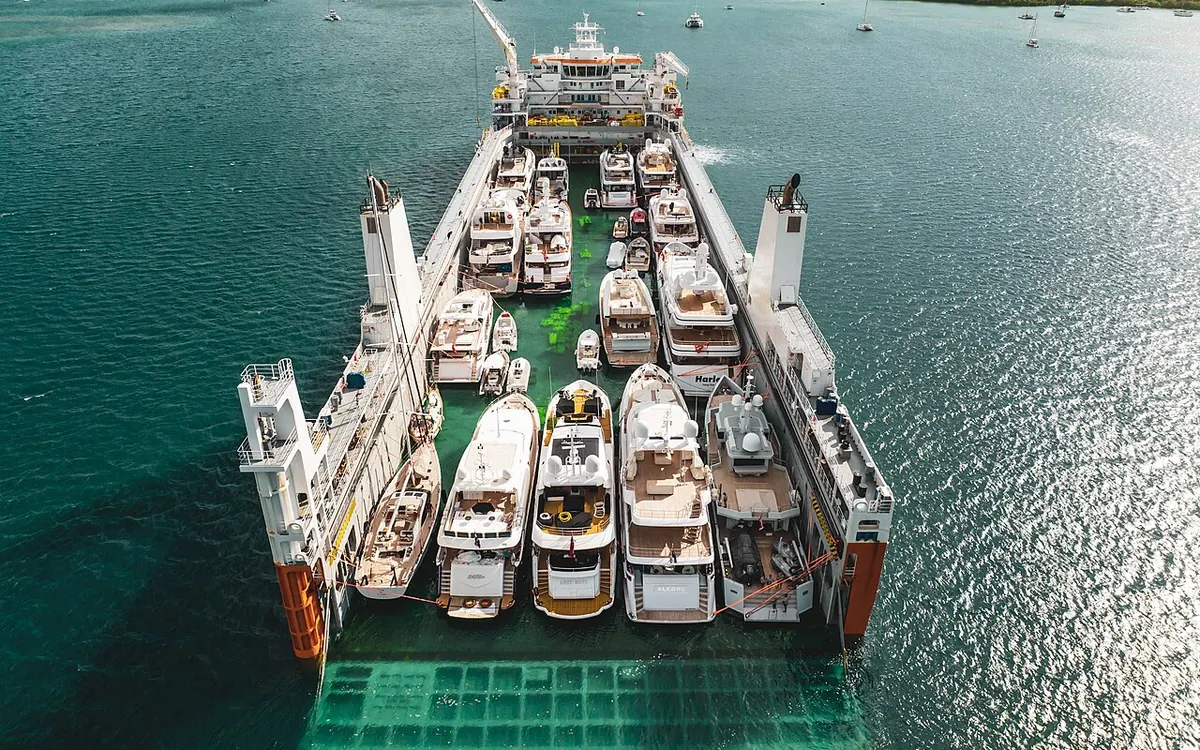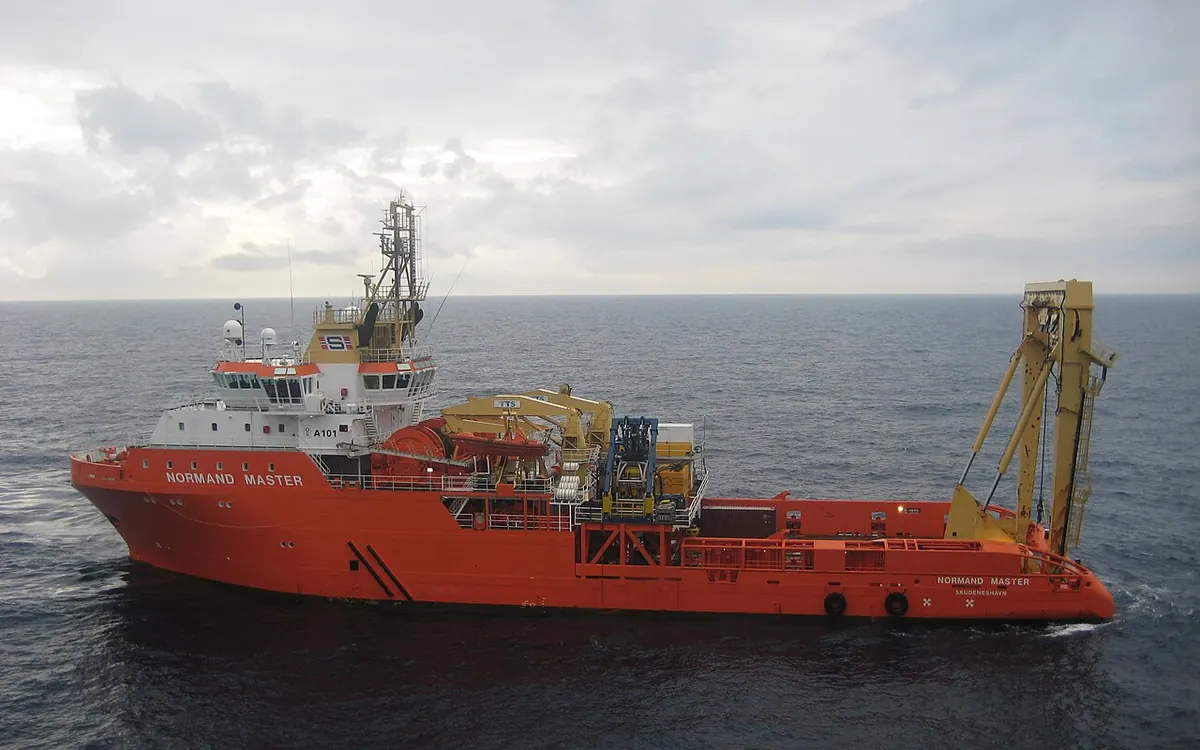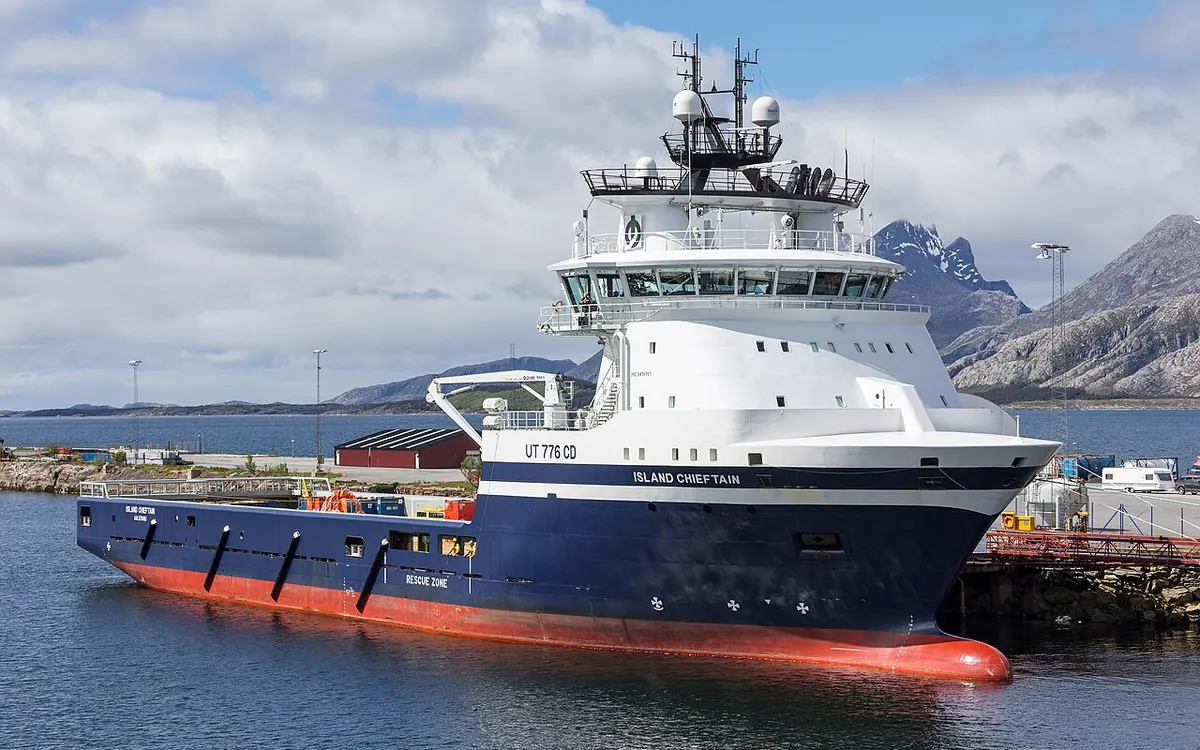
Supplies offshore oil and gas platforms and brings cargo back to shore. Cargo tanks hold drilling mud, pulverised cement, diesel fuel, water and drilling chemicals; the family also includes AHTS and other offshore support ships.
What a PSV is
A platform supply vessel is built to supply offshore oil and gas platforms and other offshore installations. Its main job is logistics: moving goods, tools, equipment and personnel to and from the field.
PSVs typically measure 50 to 100 m and are recognisable by a large open after deck. They belong to the wider group of offshore support vessels, together with anchor handling tug supply vessels (AHTS), service operation vessels, construction support vessels and well stimulation vessels.
How cargo is carried
Most PSVs carry deck cargo on the open deck and bulk cargo in tanks below it. The tanks hold drilling mud, pulverised cement, diesel fuel, potable and non-potable water, and chemicals used in drilling. Platforms need fuel, water and chemicals almost all the time.
On the return trip, certain chemicals go back to shore for recycling or disposal. Some ships have equipment on deck to receive drill cuttings. Crude oil from the platform is usually not PSV cargo.
Dynamic positioning
Dynamic positioning (DP) is a computer system that holds the ship on a set position and heading by controlling its thrusters and propellers. It keeps a PSV in place next to a platform while cargo is lifted, which is critical in rough waters such as the North Sea.
A typical setup is two bow thrusters plus two azimuth thrusters or Voith Schneider propellers at the stern. All modern PSVs are DP2 rated: under the IMO equipment classes, a single fault in an active component such as a generator or thruster should not cause loss of position.
Crew and daily operations
Crew can number up to 50, depending on size and work. One example crew of 13 has four deck officers including the captain, four able seamen, three engineers, an electro-technical officer and a steward, sometimes with cadets.
Crews live on board for one to three months, followed by time off, and work shifts of up to 12 hours. The ship has a bridge, machinery spaces, cabins, a galley and a mess. Part of the main deck is sometimes used for portable housing.
Variants and extra roles
Many PSVs are built or refitted for a particular job. Some carry fire monitors to fight platform fires, and others carry oil containment and recovery equipment for spill clean-up at sea.
Related types include the AHTS, which can also anchor and tow floating rigs, the multipurpose supply vessel (MPSV) with a crane of 100 t or more, and the fast supply intervention vessel (FSIV), which runs at about 25 knots with a smaller deck for urgent shipments.
What a shipper should know
PSVs are normally hired by the operator of the offshore field, so a shipper's cargo usually travels through the operator's supply base and logistics schedule. Deliver deck cargo ready to lift, in offshore containers or with certified lifting points, and declare the weight of every lift.
For liquids and dry bulk, state the product, volume and any tank cleaning needs, since tanks may carry different cargoes on later trips. Urgent small items may go on a fast supply vessel instead of waiting for the next PSV sailing.
Variants
Questions shippers ask
What does a PSV carry?
Deck cargo such as pipe and equipment, plus drilling mud, cement, fuel, water and chemicals in tanks below deck.
Does a PSV carry crude oil from the platform?
Usually not. On the return trip it brings back chemicals for recycling or disposal and, on some ships, drill cuttings.
What does DP2 mean?
A dynamic positioning class with redundancy, so a single fault in an active component should not make the ship lose position.
What is the difference between a PSV and an AHTS?
An AHTS has towing and anchor winches, an open stern and more power. A PSV is built mainly to carry supplies.