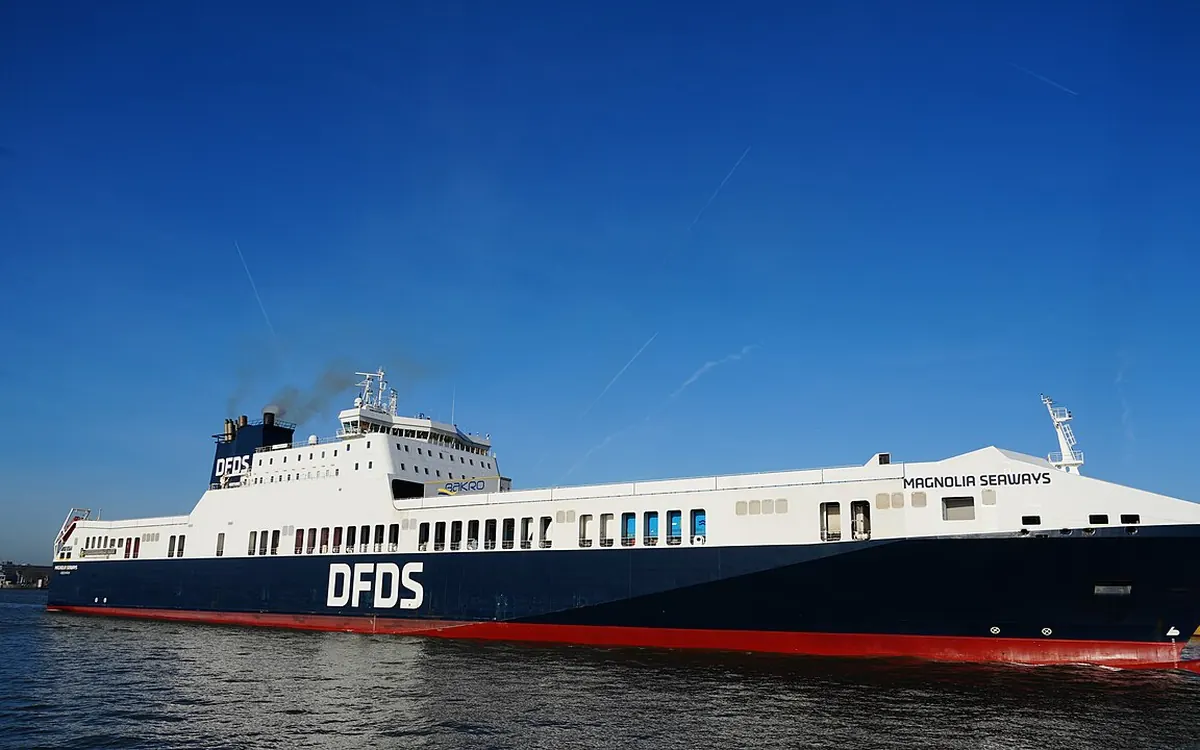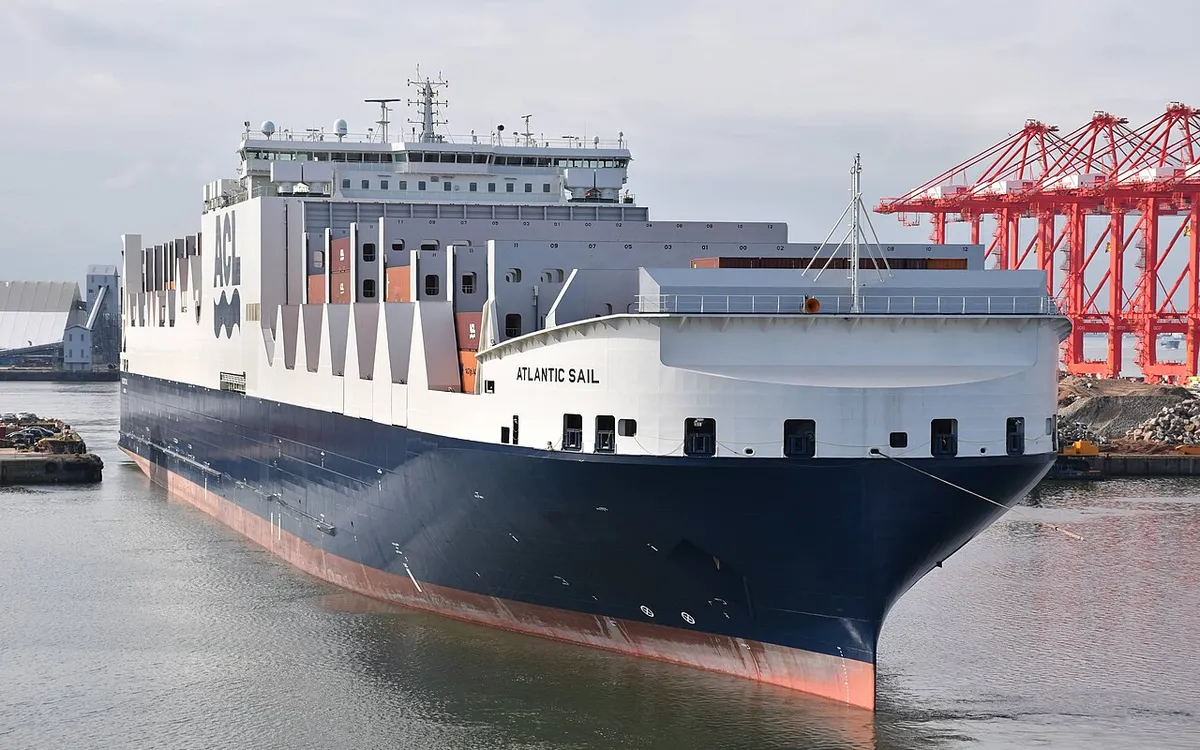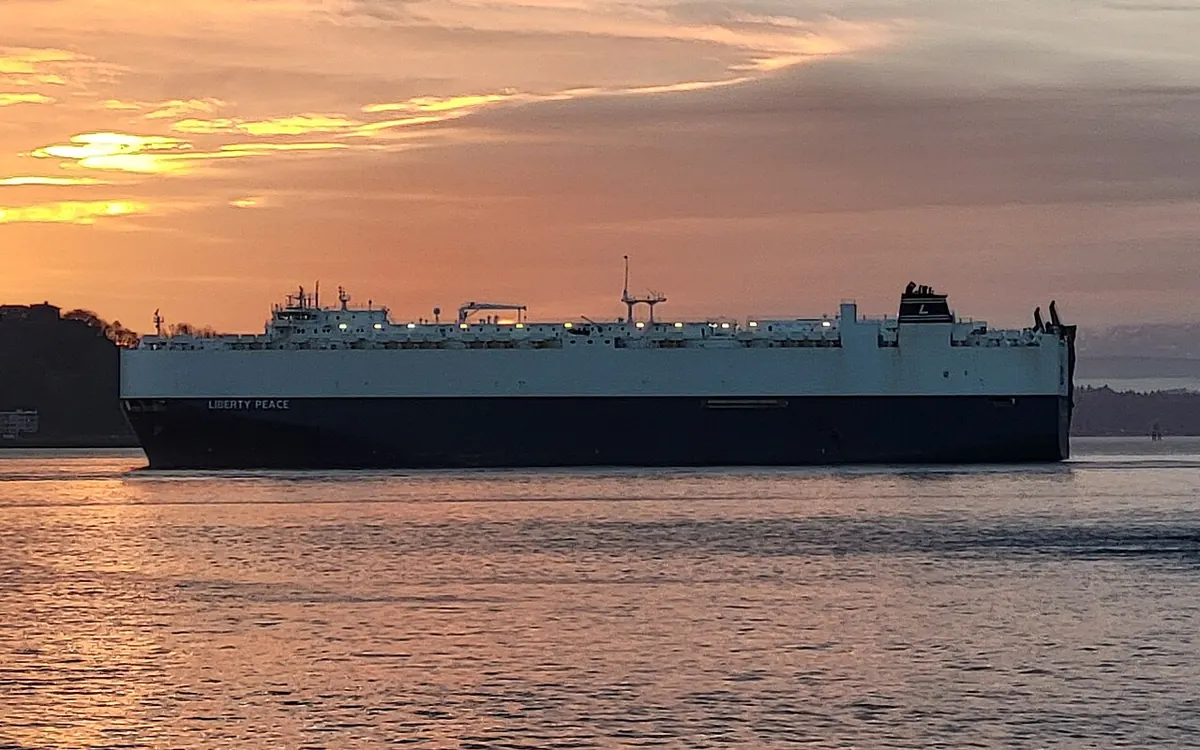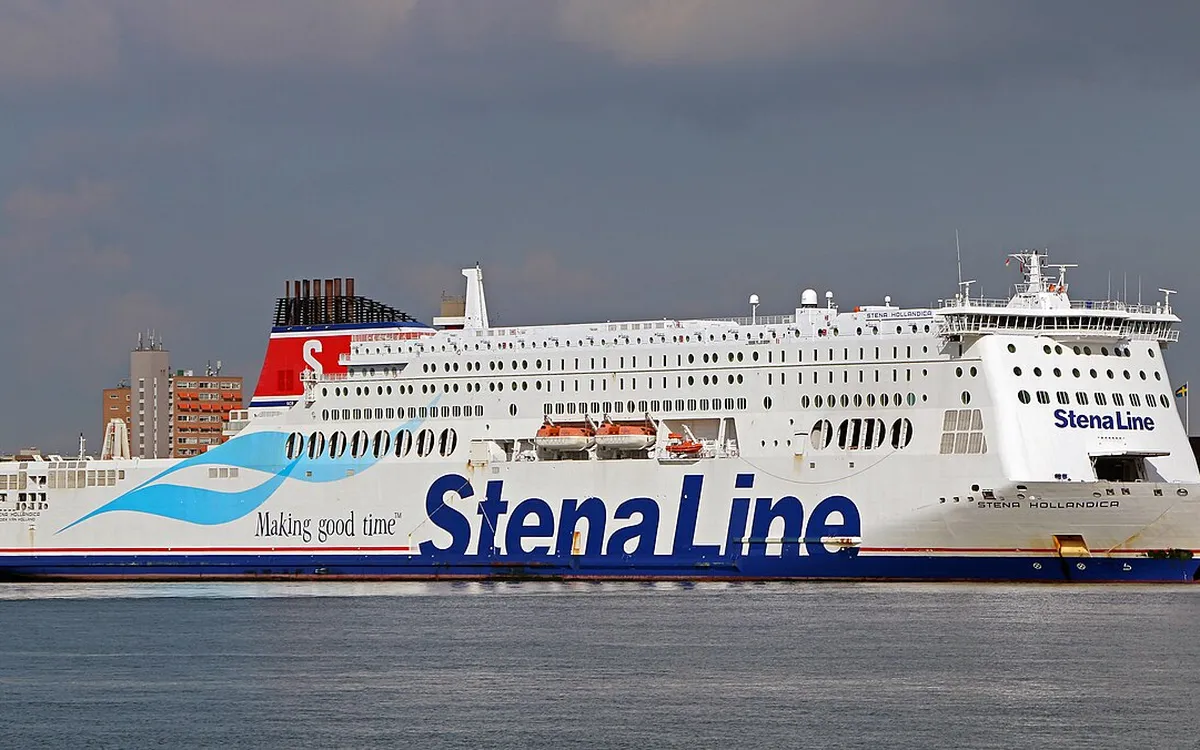
A Ro-Ro with passenger decks (roll-on/roll-off passenger). Trucks, trailers and cars drive onto the vehicle deck, passengers and drivers ride above it. Runs to a timetable on short-sea lines, so it moves much of the trailer freight across the Baltic, the English Channel, the North Sea and the Mediterranean.
What a RoPax ferry is
RoPax stands for roll-on/roll-off passenger. The term covers every ferry that combines a roll-on/roll-off vehicle deck with passenger capacity, from small car ferries to large overnight ships. Ferries with facilities for more than 500 passengers are often called cruiseferries.
For freight, a RoPax works like a Ro-Ro ship that sails to a timetable. Freight units share the voyage with private cars and foot passengers, and drivers of accompanied trucks travel in cabins or lounges on the passenger decks.
How loading works
Vehicles drive on over the ship's own bow, stern or side ramps, or over a shore linkspan. Many routes use dedicated ferry berths matched to the ship, so a full load can be discharged and reloaded in a short port call.
The open car deck with few bulkheads and large doors near the waterline is the type's weak point. The Herald of Free Enterprise capsized in 1987 after leaving port with an open bow door, and free surface water on the vehicle deck contributed to the loss of MS Estonia. Lashing rules and door checks on modern ferries follow from these accidents.
Size and capacity
Capacity is stated as lane metres for freight and as passenger and cabin numbers. Ulysses of Irish Ferries, in service since 25 March 2001 between Dublin and Holyhead, is 209.02 m long and 31.84 m wide, measures 50,938 GT and carries 1,342 cars or 4,101 lane metres of cargo, the largest car capacity of any RoPax.
The largest RoPax by tonnage is the cruiseferry Color Magic of Color Line: 75,100 GT, 223.70 m long and 35 m wide, built by Aker Finnyards in Finland and in service since September 2007. It carries 550 cars or 1,270 lane metres, showing how much space a cruiseferry gives to passengers instead of freight.
Routes and trades
Cruiseferries are most common in Northern Europe, especially the Baltic and the North Sea, with similar ships on the English Channel, the Irish Sea, the Mediterranean and the North Atlantic. They also run from India, China and Australia. On the Baltic, crossings between Finland and Stockholm are typically one or two nights.
Baltic cruiseferries have a higher hull, thicker plating and a deeper draft than cruise ships so they can sail year-round. At the other end of the scale, short crossings such as Moss to Horten in Norway are run by smaller car ferries, and the RoPax cruiseferry SuperSpeed 2 links Larvik in Norway with Hirtshals in Denmark.
History
Commercial RoPax service grew out of converted wartime landing ships. On 21 May 1948 Empire Cedric of the Atlantic Steam Navigation Company opened a route from Preston to Larne in Northern Ireland. With a certificate for fifty passengers, it became the first commercial passenger Ro-Ro ferry in the world.
The first Ro-Ro service across the English Channel started from Dover in 1953. The term cruiseferry came into use in the 1980s, when ferry operators on the Baltic and North Sea began building ships with large cabin capacity and public spaces as well as vehicle decks.
What a shipper should know
Book a trailer as accompanied, with the driver on board, or unaccompanied, where the trailer is dropped at the terminal and collected at the other end. Freight is normally charged per unit or per lane metre, so declare the real length, height and weight, and any dangerous goods, since rules for dangerous goods are stricter on passenger ships.
Because RoPax ferries run to a timetable, cut-off times at the terminal matter more than on tramp shipping. Ask how early the unit must check in, whether reefer trailers can be plugged in on deck, and whether a driver cabin is included.
Variants
Size classes
All size classes and canal limits
Questions shippers ask
What does RoPax mean?
Roll-on/roll-off passenger: a ferry with a vehicle deck for trucks, trailers and cars plus accommodation for passengers.
What is the difference between accompanied and unaccompanied freight?
Accompanied means the driver travels with the truck on the ferry. Unaccompanied means only the trailer sails and is collected by another tractor at the destination port.
How many lane metres does a trailer take?
A European semi-trailer needs about 18 lane metres. A car needs about 6.
Can dangerous goods travel on a RoPax ferry?
Often yes, but rules are stricter because passengers are on board. Declare the goods when booking so the operator can confirm the sailing and stowage.