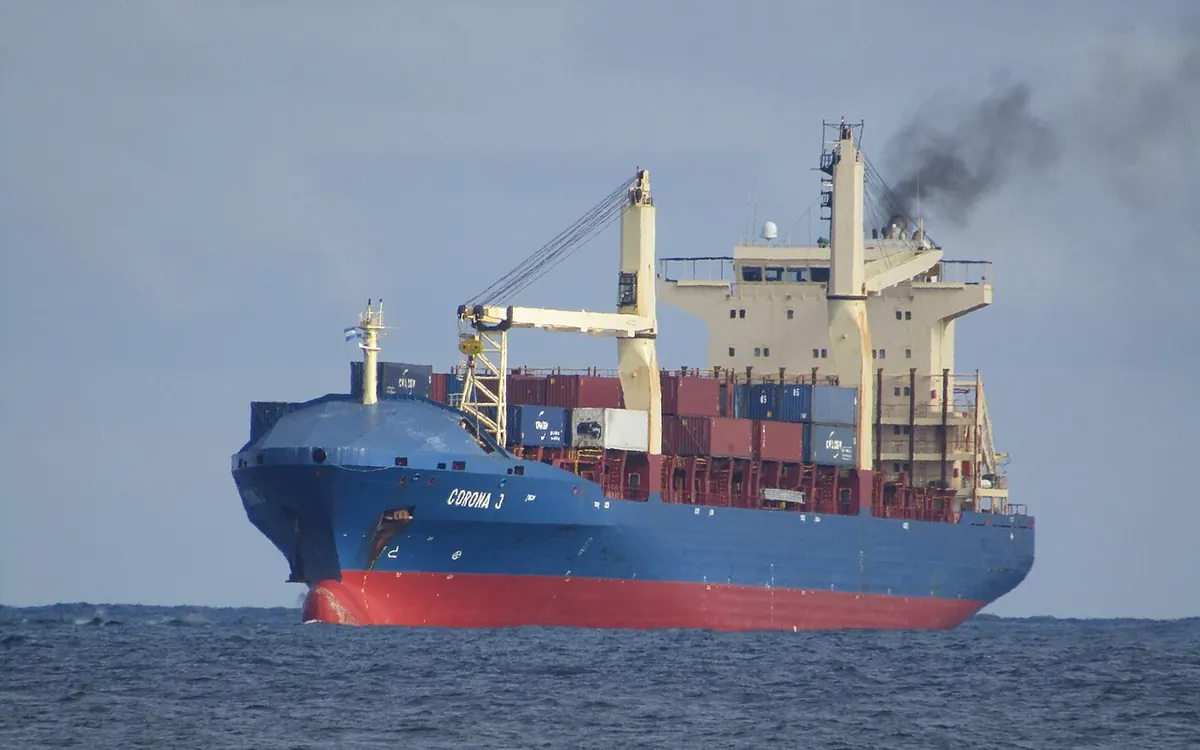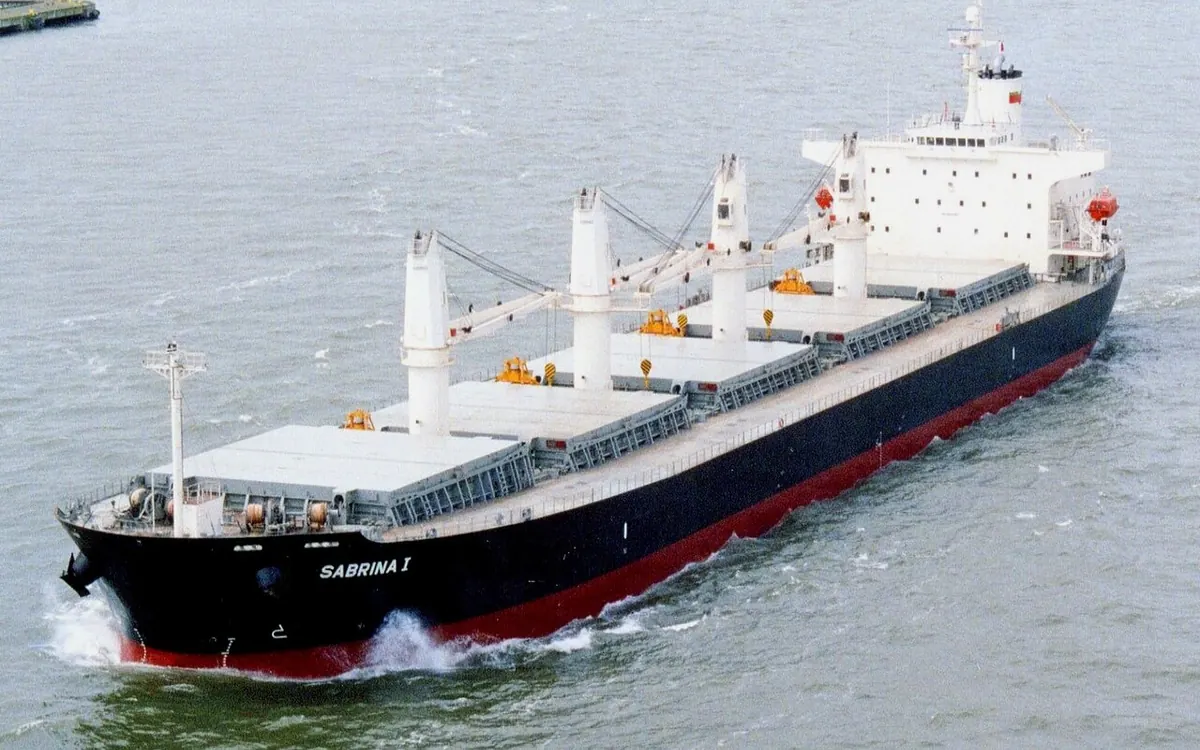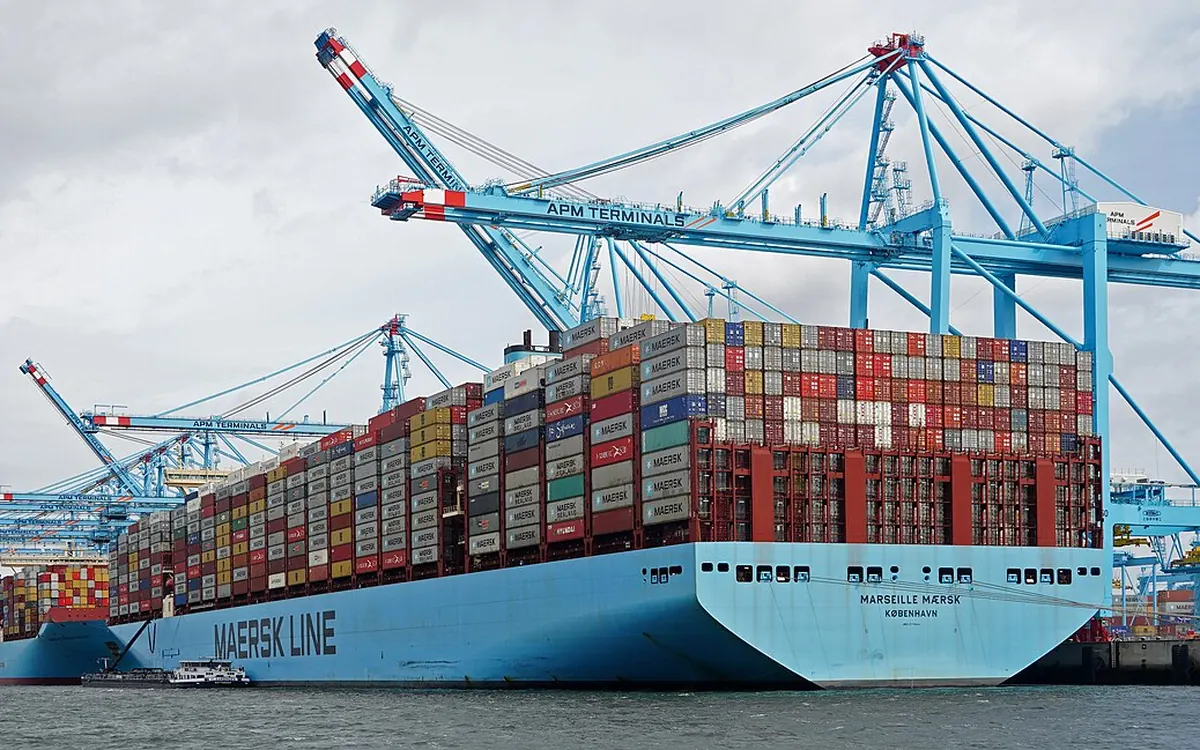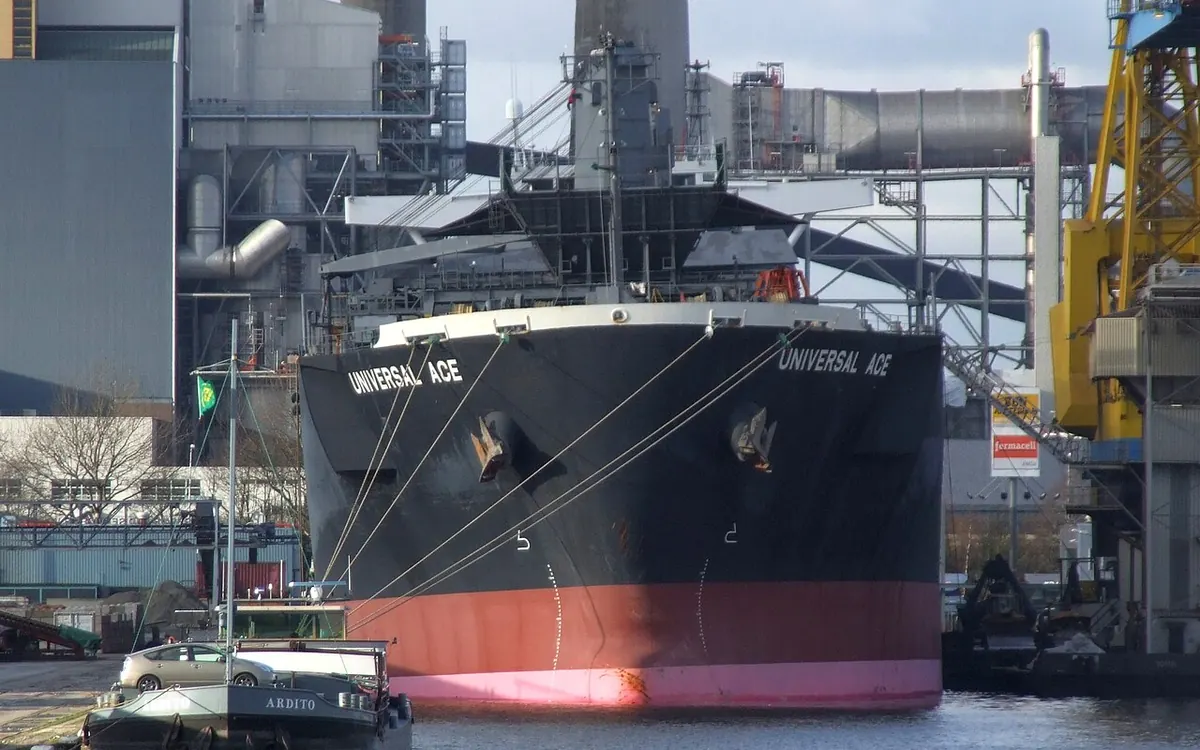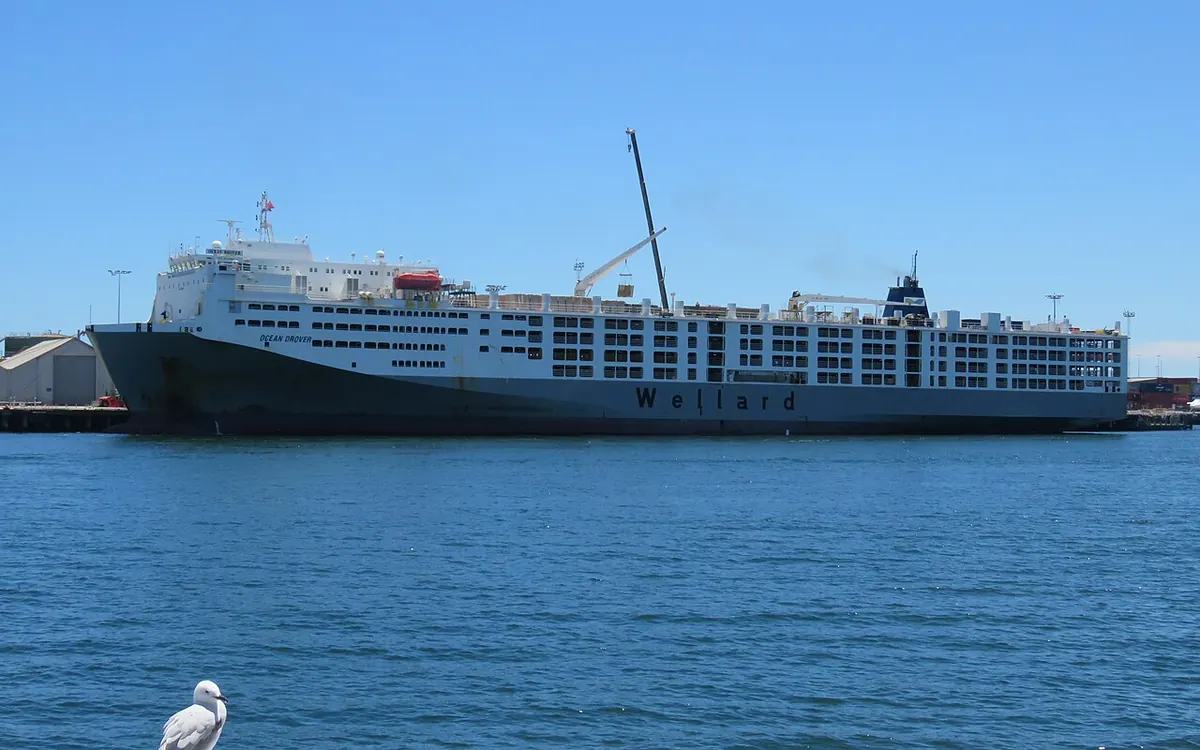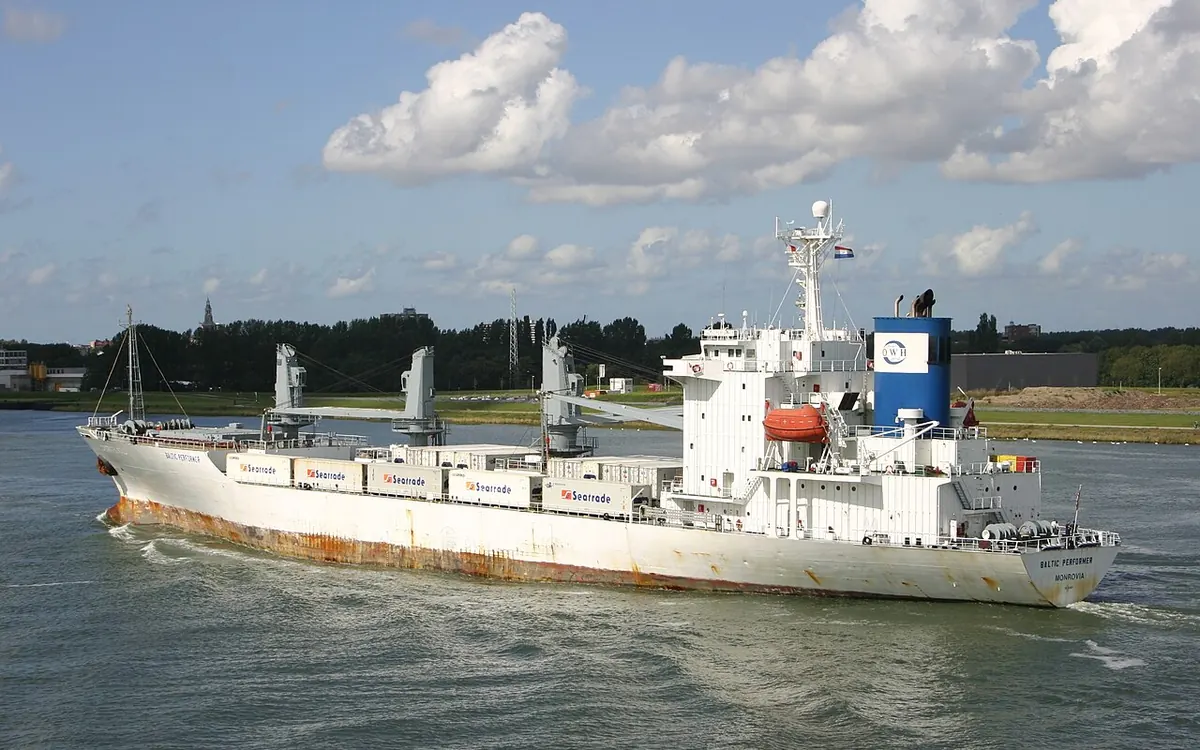
Cooled holds for perishables. Palletised cargo goes in through side doors and pallet lifts; refrigerated container ships instead power a cooling unit on every reefer box.
What a reefer ship is
A refrigerated cargo ship, or reefer, carries perishable cargo that needs temperature-controlled handling: fruit, meat, vegetables, dairy products and similar goods. Bananas, fruit and meat have historically been the main cargoes.
There are three types. Conventional reefers have top-opening hatches and cranes or derricks. Side-door reefers load through ports in the hull. Refrigerated container ships carry boxes that each have their own cooling unit.
How cargo is loaded and kept cold
Side-door ships have watertight hull ports with elevators or ramps for forklifts and conveyors. Inside the doors, pallet lifts or conveyors bring the cargo to each deck. Hatches stay closed against rain and sun, while a conventional reefer must close its hatches in wet weather. Both conventional and side-door ships handle palletised and loose cargo well.
On refrigerated container ships each box plugs into an outlet, typically 440 VAC, fed by the ship's generators through its own breaker. Boxes below deck are water-cooled and boxes on deck are air-cooled. Cell guides include walkways so crew can inspect the units. Some systems use two compressors for very precise, low-temperature work.
Capacity and design
Reefer containers are nearly always the size of standard containers handled at ordinary container terminals. Refrigerated container ships differ from normal container ships in design, power generation and electrical distribution, because every reefer box draws power for the whole voyage.
Capacity grew early. By 1913 the UK fleet alone counted 230 refrigerated ships with a combined cargo capacity of 440,000 tons. The first refrigerated sailing ships used a steam engine burning three tons of coal a day to run the compressor.
Cargo and trades
The classic reefer trades are bananas from Central America, frozen meat and dairy from New Zealand and Australia, and fruit and vegetables on seasonal routes. By 1902 the United Fruit Company had banana boats built in the UK for its services between the United States and Central America.
Many of these trades have since moved in part to refrigerated containers, which have the cooling system fixed to the rear end of the box. Dedicated reefer ships remain suited to palletised fruit and loose cargo.
History
In 1869, reefers shipped beef frozen in a salt and ice mixture from Indianola, Texas, to New Orleans. The clipper Dunedin was refitted in 1881 with a Bell-Coleman compression refrigeration machine.
In February 1882 Dunedin sailed from Port Chalmers, New Zealand, with 4,331 mutton, 598 lamb and 22 pig carcasses, 246 kegs of butter and 2,226 sheep tongues. Her refrigeration funnel between the masts made her look like a steamship.
What to know when booking
Decide between space on a reefer ship, usually for pallets, and a reefer container on a liner service, booked per box. Give the carrier the set temperature and whether the cargo is chilled or frozen.
For pallets, check that the ship and port can work side doors or hatches as planned. For reefer containers, confirm plug availability on board and at the terminal, because the box needs power for the whole trip.
Variants
Questions shippers ask
Reefer ship or reefer container?
Reefer ships suit palletised and loose cargo in cooled holds. Reefer containers travel on regular container services and are booked per box.
How are reefer containers powered at sea?
Each box plugs into the ship's power, typically 440 VAC, through its own breaker. Boxes below deck are water-cooled, on deck air-cooled.
Can a reefer ship load in rain?
Side-door reefers can, because cargo goes through hull ports and the hatches stay closed. Conventional reefers must close their hatches in wet weather.
What cargo do reefer ships carry?
Perishables needing temperature control: fruit, bananas, meat, fish, vegetables and dairy.