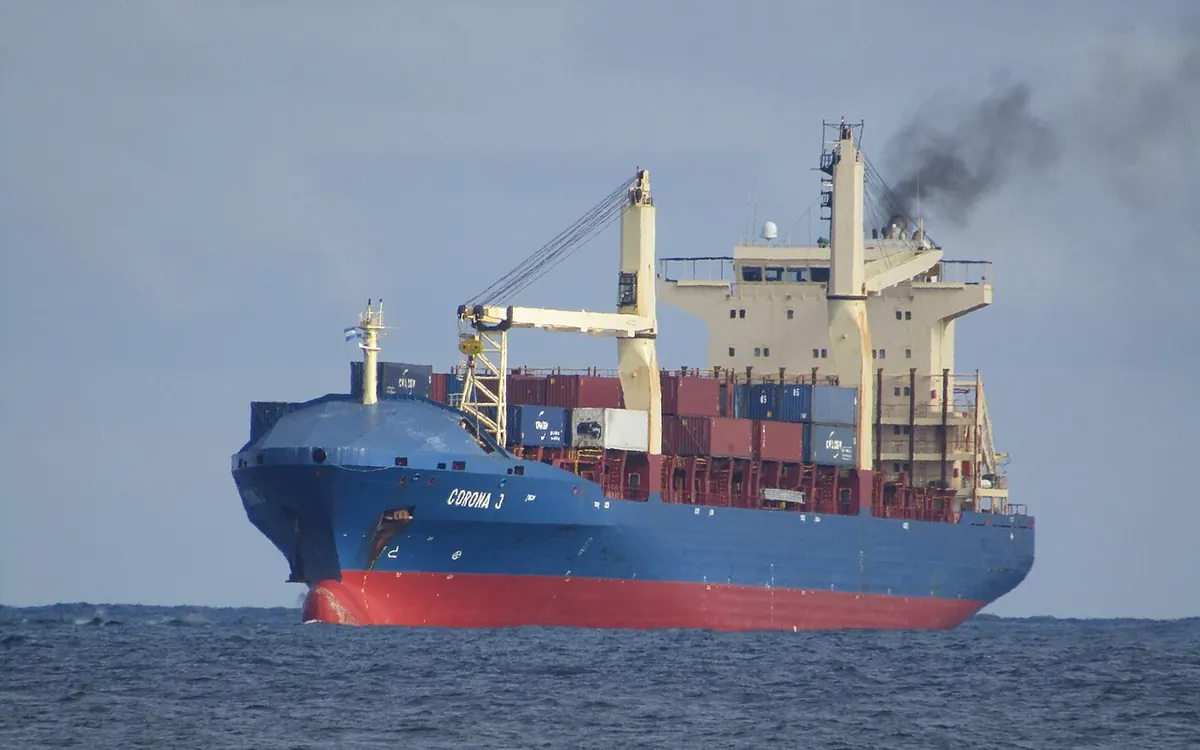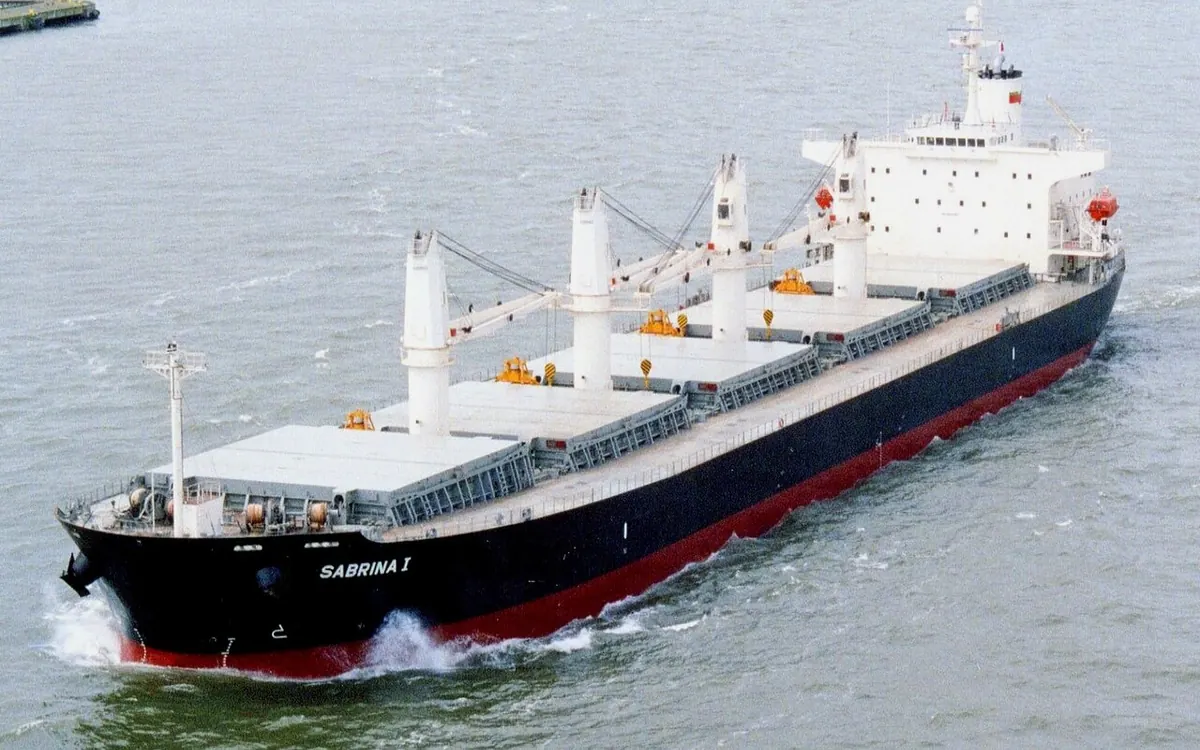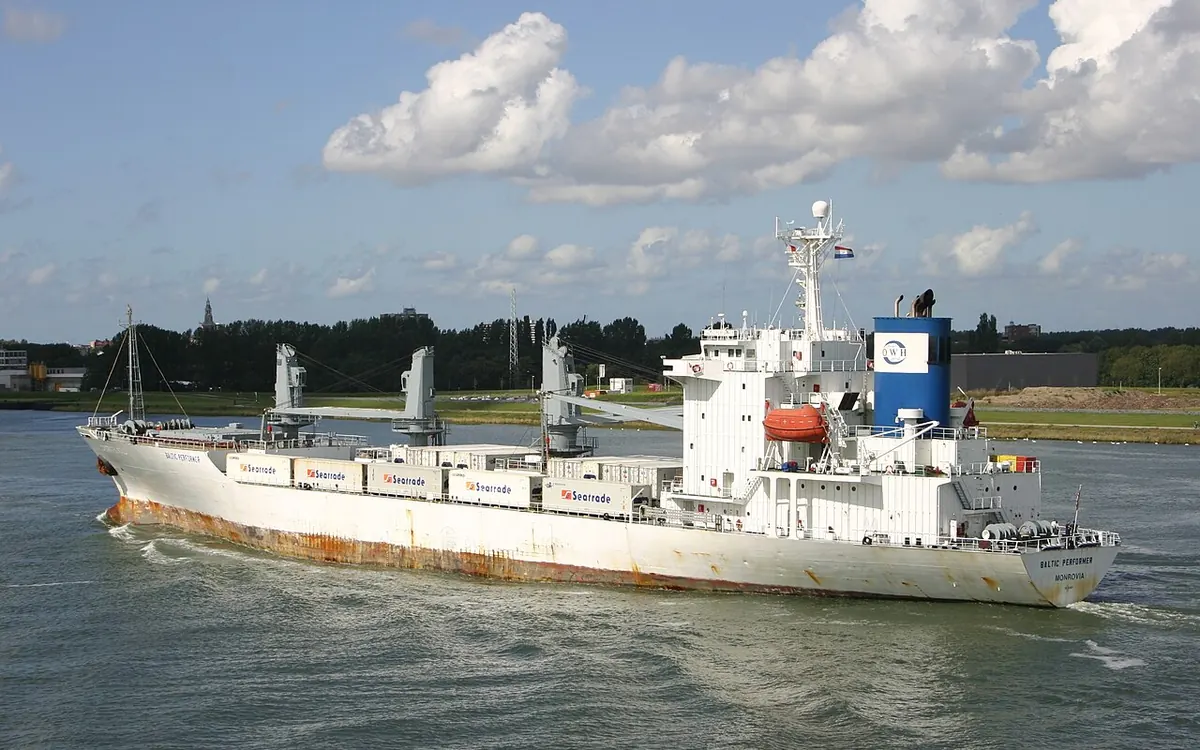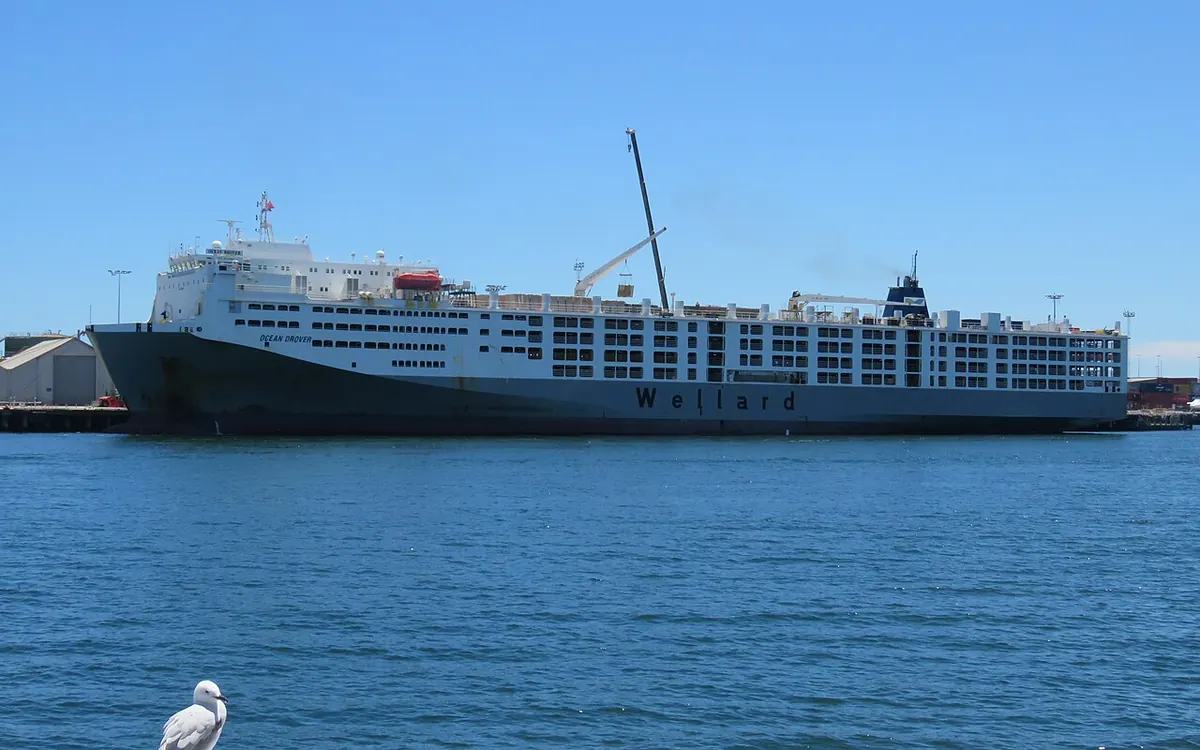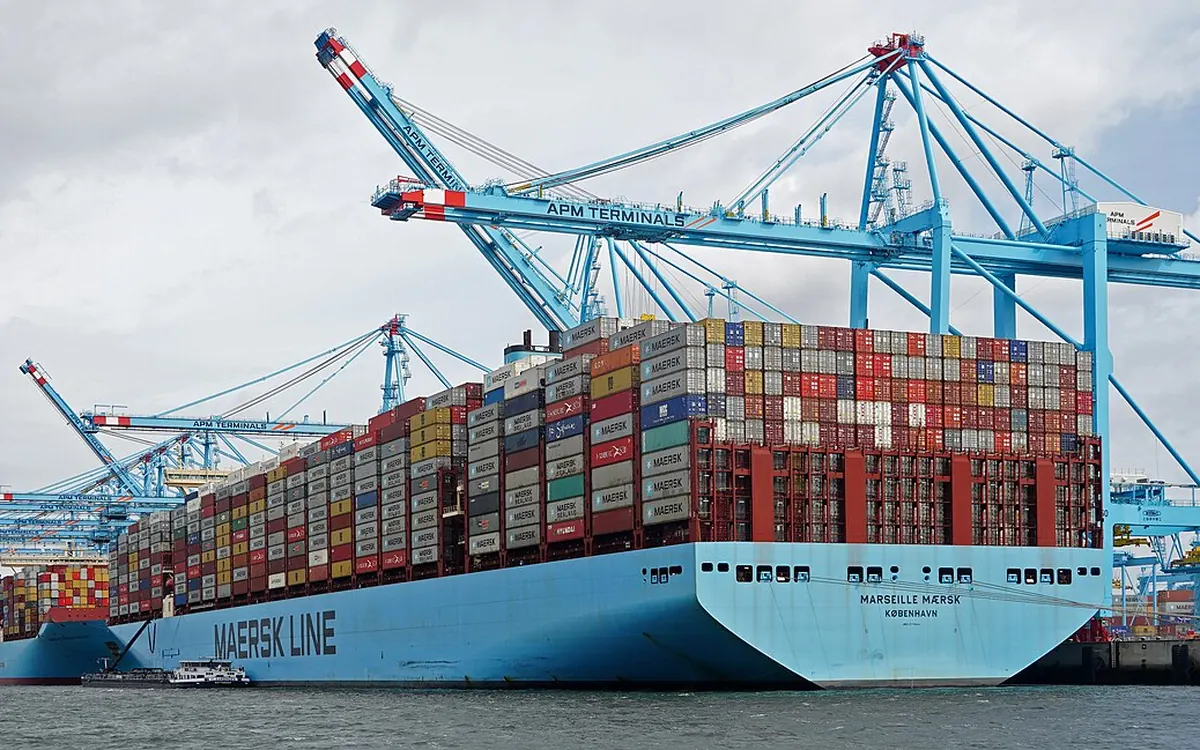
Cellular ship for ISO containers, sized in TEU. About 90% of non-bulk cargo moves on container ships; since 2023 the largest carry over 24,000 TEU.
What a container ship is
Container ships carry cargo in standard intermodal containers, and capacity is counted in twenty-foot equivalent units (TEU). Today about 90% of non-bulk cargo worldwide moves on container ships, and since 2023 the largest carry over 24,000 TEU.
Container ships are classed by gear (geared or gearless), by trade (feeder or worldwide) and by breadth (Panamax or post-Panamax). Ships are hired on voyage, time or bareboat charters.
How containers are loaded and secured
The hatch openings span the full breadth of the cargo holds and are framed by a raised steel hatch coaming that carries the hatch covers. Containers go below deck into cell guides and are stacked on deck above the covers. Most ships are gearless and rely on shore cranes: only 7.5% of container ship capacity in 2009 had cranes.
Three securing systems are in wide use: lashing, locking and buttress systems. Twist-locks fit into the corner castings of one box and turn to lock the box above. Lashing rods and stacking cones tie the stacks together.
Size classes and dimensions
Container ships fall into seven size categories: small feeder, feeder, feedermax, Panamax, Post-Panamax, Neopanamax and ultra-large (ULCV). Ships under 3,000 TEU are generally called feeders. Panamax runs from 3,001 to 5,100 TEU, Post-Panamax from 5,101 to 10,000 TEU, Neopanamax from 10,000 to 14,500 TEU and ULCV from 14,501 TEU up.
The old Panama locks allow 32.31 m beam, 294.13 m length and 12.04 m draft. The new locks opened in June 2016 take 366 m length, 49 m beam and 15.2 m draft, about 12,000 TEU and 19 container rows across. The Maersk Triple E class measures 400 m by 59 m with 14.5 m draft and 18,270 TEU.
Cargo and routes
Almost any packed cargo travels in containers, from consumer goods and machinery parts to chilled and frozen food in refrigerated boxes powered by the ship.
Feeders shuttle between small ports and large hubs, collecting containers for transshipment onto bigger ships and distributing them again. As of December 2012 there were 161 ships above 10,000 TEU, and only 51 ports could take them. Since the early 2010s most lines have slowed to about 21 knots, down from 25 knots or more, to save fuel.
History and record ships
On 26 April 1956, the converted T2 tanker Ideal X, owned by Malcom McLean, left Port Newark for Houston with 58 metal containers. She was the first commercially successful container ship. Before containers, break-bulk was loaded, lashed and unloaded piece by piece.
In 2011 Maersk announced the Triple E family at 18,000 TEU. The largest ship by capacity, MSC Irina, was delivered on 9 March 2023 by Yangzi Xinfu Shipbuilding to MSC with 24,346 TEU, and her sister MSC Loreto followed in April with the same capacity.
What to know when booking
Freight is booked per container, either per box or per TEU, on a liner service with fixed sailings. Choose the box type first, standard or refrigerated, then confirm the port pair is on the service.
Small and remote ports are often reached by feeder with transshipment at a hub, which adds time. Very large ships call only at ports deep enough to take them, so routing can differ from the direct line.
Variants
Size classes
All size classes and canal limits
Questions shippers ask
What does TEU mean?
Twenty-foot equivalent unit: one standard 20 ft container. A 40 ft box counts as two TEU.
Why does my cargo go via a hub port?
Large ships call only at major hubs, so feeders under 3,000 TEU collect and distribute containers between small ports and those hubs.
How are containers kept in place at sea?
Below deck they sit in cell guides. On deck they are held by twist-locks, stacking cones and lashing rods.
Can I ship refrigerated cargo on a container ship?
Yes, in reefer containers plugged into the ship's power supply, typically 440 VAC, with each box on its own outlet.