





















Entry points close without notice
A port can lose berths to damage or a runway can be shut by debris or fuel shortage within days of a booking. Teams need to see alternative ports, their depths and the facilities they have before they reroute.
Relief shipments move against the clock, often through ports, airports and roads that are congested, damaged or closed without notice. Navo24 is a data and software platform, not a forwarder: it gives tracking, air and sea schedules, rates, load plans and reference data so teams can plan and report.
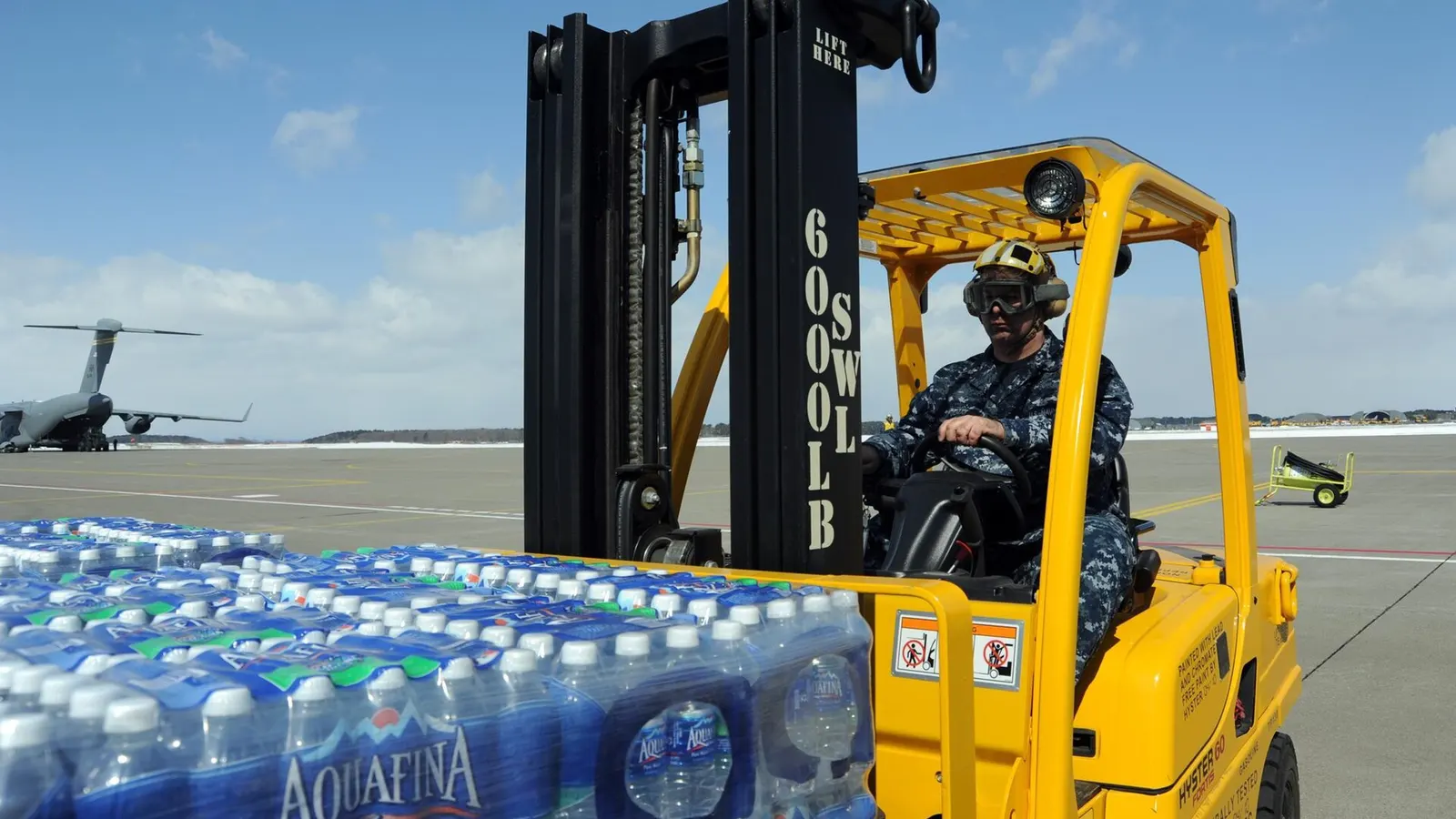
Relief cargo moves by whichever mode reaches the affected area first. Air freight carries medicines, emergency health kits and vaccines on freighters such as the 767-300F, with outsize loads on the An-124. Sea freight in 20ft and 40ft containers carries food, shelter materials, water equipment and bulk supplies, usually through the nearest working port. The last leg is by truck, rail or small turboprop to airstrips with short runways. Pre-positioned stocks, charters and commercial bookings often run in parallel under one response.
Things go wrong when a planned port call or airport closes after cargo is booked, when a container lands somewhere nobody expected, or when status reaches the programme team in a different format from every carrier and handler. Reliable data closes the gap: live container and air waybill status in one place, port depth and facility data to test alternatives, and one record that can be shared with donors and partners.
A port can lose berths to damage or a runway can be shut by debris or fuel shortage within days of a booking. Teams need to see alternative ports, their depths and the facilities they have before they reroute.
Air charter, freighter space and container slots must be found in hours, and each enquiry to a forwarder or broker adds delay. Comparing aircraft payload, pallet positions and sailing cut-offs by hand slows the decision.
A single response can combine temperature-controlled medicines at 2 to 8°C, lithium batteries, oxygen cylinders and bulk food. Each needs different packaging, declarations under IATA DGR or the IMDG Code, and handling.
Carriers, airlines, handlers and local agents each report status in their own wording and timing. Programme teams then rebuild a consignment timeline by hand for every donor report and audit.
 TrackingMCP
 follows ocean containers across 240+ carriers with predicted ETAs, so a programme team can see where relief stock is without chasing each line. Free-time and demurrage alerts show when boxes held at a congested port begin to cost money.
 World Sea Ports
 gives depths, maximum vessel size, berths and facilities for 2,900+ ports. When the planned port is damaged or congested, logistics cells can check whether a neighbouring port takes the vessel and has the cranes, reefer points or RoRo ramps needed.
 SchedulesMCP
 covers 72,000+ sailings with cut-offs, transshipment points and carrier on-time reliability. Planners can pick a sailing that still reaches the affected region and see where the cargo changes vessel.
 Navo Mesh
 lets a team post one transport request and receive offers from freight forwarders. This replaces rounds of separate enquiries when air, sea or road capacity is needed at short notice.
Review port depth, facilities and airport codes for the affected region, then shortlist the entry points that are still usable.
Check sea schedules and cut-offs, and post a transport request on Navo Mesh for forwarder offers on air, sea and road legs.
Follow each container in TrackingMCP and each air waybill in AirCargoMCP, with alerts when an ETA moves or a port call is omitted.
Pull consignment status and event history through the API or widgets to feed donor reports and partner dashboards.
Sets out simplified customs procedures for relief consignments, which supports faster clearance when the receiving country applies it.
Recommend that affected states waive or reduce duties and ease customs, transit and transport rules for international disaster relief.
Govern how lithium batteries, oxygen cylinders, chemicals and other hazardous relief items are classified, packed, marked and declared by air and sea.
Requires controlled storage and transport of medicines, typically 2 to 8°C or 15 to 25°C, with temperature records that support quality and donor audits.
Define where risk and cost pass between donor, procurement agent and receiving partner, for example under DAP or CPT.
Enter the container number or bill of lading in TrackingMCP, which covers 240+ ocean carriers, and use AirCargoMCP for air waybills. Each consignment then shows one timeline, whatever carrier or handler moves it.
No. Navo24 is a data and software platform and never moves, stores, insures or handles cargo. Through Navo Mesh you can post a transport request and receive offers from freight forwarders.
Use World Sea Ports to check depth, maximum vessel size, berths and facilities for the port. Compare nearby ports if the planned one is damaged or congested, then confirm current operating status with the port authority or your agent.
Typically a commercial invoice or donation certificate, packing list, bill of lading or air waybill, and a dangerous goods declaration where relevant. Medicines may also need import permits and temperature records, and requirements vary by receiving country.
Use the TrackingMCP API and webhooks, or embed Navo widgets in your own site, to share live status and event history. This replaces manually assembled updates with a record built from carrier data.
All solutions by problem, industry, role and location: Solutions.
Photo: Petty Officer 1st Class Steven DeMay, aviation boatswains mate (handling), hauls a pallet of bottled water toward an MH-53E helicopter, from, Public domain.
