Port congestion hits inland legs
When a North Range terminal backs up, vessel ETAs move by days while barge, rail and trucking slots stay fixed. Missed slots then create storage, waiting time and extra pre-carriage cost.
From Rotterdam and Hamburg to Piraeus and Gdańsk: the ports, the countries and the Navo24 tools for European sea, air, road and rail freight.
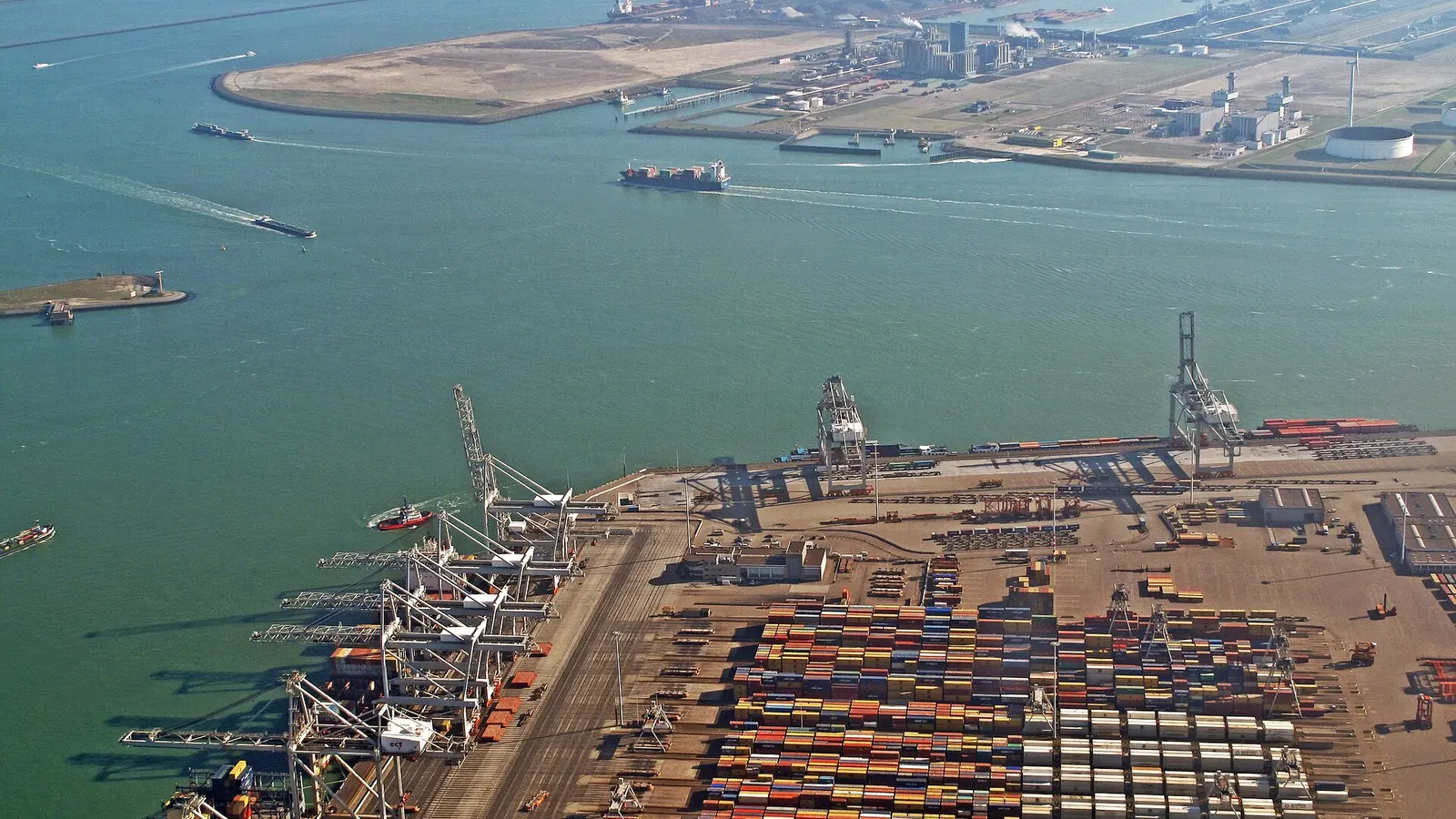
European freight is a dense network of short handovers. Deep-sea containers arrive at North Range ports such as Rotterdam, Antwerp, Hamburg and Le Havre, or at Mediterranean gateways like Piraeus, Valencia and Genoa, then fan out by truck, barge and rail. Inland, 13.6 m curtainsiders carry 33 Euro pallets, swap bodies and 45 ft pallet-wide boxes move by block train, and short-sea and RoPax services link the Baltic, North Sea and Mediterranean. Air cargo concentrates at Frankfurt, Amsterdam, Paris and Liège, fed by road.
Problems start at the handovers. A vessel ETA slips at the first port while barge and rail slots are already booked, a truck reaches a terminal after its pick-up window has closed, or a container runs through free time unnoticed. Customs data must also be filed before loading, and a mismatch can hold cargo. Shared vessel, schedule and container-event data shows slippage early enough to rebook the inland leg.
When a North Range terminal backs up, vessel ETAs move by days while barge, rail and trucking slots stay fixed. Missed slots then create storage, waiting time and extra pre-carriage cost.
When the Kaub gauge falls, barges must load lighter, so one box can need a second vessel or a switch to rail. Low water surcharges and longer transit times follow.
Under ICS2 the entry summary declaration for deep-sea containers is due before loading at the port of departure, and incomplete HS code or party data can trigger holds. Onward moves under T1 transit through NCTS add a second set of references to keep consistent.
Most of the continent runs on 1,435 mm track, but the 1,520 mm network east of Poland and the 1,668 mm Iberian gauge need transshipment or gauge-changing equipment. Each break adds dwell time that rarely appears in a quoted transit.
 TrackingMCP
 follows containers across 240+ carriers with predicted ETAs, so pre-carriage by truck, barge or rail can be booked against a realistic arrival. Free-time and demurrage alerts warn before a box at Rotterdam, Hamburg or Piraeus starts costing money.
 SchedulesMCP
 lists sailings, cut-offs and transshipment points, with carrier on-time reliability for the lane. Planners can compare direct calls at Gdańsk or Piraeus with feeder routings before committing.
 World Sea Ports
 gives depths, maximum vessel size, berths and facilities for 2,900+ ports, from Baltic feeder harbours to Mediterranean hubs. It helps confirm that a vessel, reefer outlets or heavy-lift gear suit a call before cargo is booked.
 LoadingMCP
 builds 3D plans for cartons, pallets and crates in containers and trucks. It shows whether 33 Euro pallets, or a mix of Euro and industrial pallets, fit a 13.6 m trailer within axle and gross weight limits.
Search schedules for the lane, check cut-offs and transshipment points, and choose the sailing with the best on-time record.
Build the pallet or carton plan, confirm weights for VGM, and align HS codes and party data with the ICS2 filing.
Follow container events and the predicted ETA, then book barge, rail or truck pick-up against the updated arrival.
Watch free-time alerts, deliver within the window and return the empty to a depot before detention starts.
By subregion. A country links to its logistics overview: ports, airports, carriers, routes and customs.
Carriers and other filers submit entry summary data before arrival, and for deep-sea containers before loading, so poor HS code or party detail can delay cargo at origin.
Every packed container needs a verified gross mass before loading at European ports, and a mismatch can cause the box to be refused or rolled.
The CMR consignment note governs international road haulage between signatory states and sets the carrier's liability limits for loss or damage.
The directive sets standard maximum dimensions and a 40 t gross limit for a five-axle combination, rising to 44 t for combined transport, which determines how much a trailer can carry.
Dangerous goods moving by road or rail in Europe need the correct class, UN number, packaging and transport documents under ADR or RID, and IMDG applies on the sea leg.
Rotterdam is the largest, followed by Antwerp-Bruges and Hamburg on the North Range. Valencia, Piraeus, Algeciras and Gdańsk are major gateways on the Mediterranean and Baltic coasts. The World Sea Ports reference lists depths and facilities for each.
A 13.6 m curtainsider takes 33 Euro pallets (1.2 x 0.8 m) in a single layer, or about 26 pallets of 1.2 x 1.0 m. Mega trailers with 3 m inside height raise the volume to around 100 m³, but the legal gross limit of 40 t still caps the weight.
ICS2 is the EU pre-arrival security and safety system for goods entering the Union. For deep-sea containers the entry summary declaration is due before loading at the port of departure. Complete HS code, shipper and consignee details reduce the risk of a hold.
Yes. The North Sea and Baltic are Sulphur Emission Control Areas with a 0.10% fuel sulphur limit. The Mediterranean followed from 1 May 2025, so carriers may add low-sulphur or environmental surcharges on affected routes.
Track gauge changes from 1,435 mm to 1,520 mm at the border with Belarus and Ukraine, so cargo is transshipped or axles are changed. Customs checks and wagon availability add dwell time at those points. The rail gauge reference lists the break-of-gauge locations.
All solutions by problem, industry, role and location: Solutions.