Skip to content
Navo24Navo24
Perishable cargo on a clock

Perishables and cold chain.

Fruit, meat, seafood and dairy have a clock that does not stop at the port. Navo24 shows reefer containers, their delays and the fastest reliable sailing, so perishable cargo spends less time waiting.

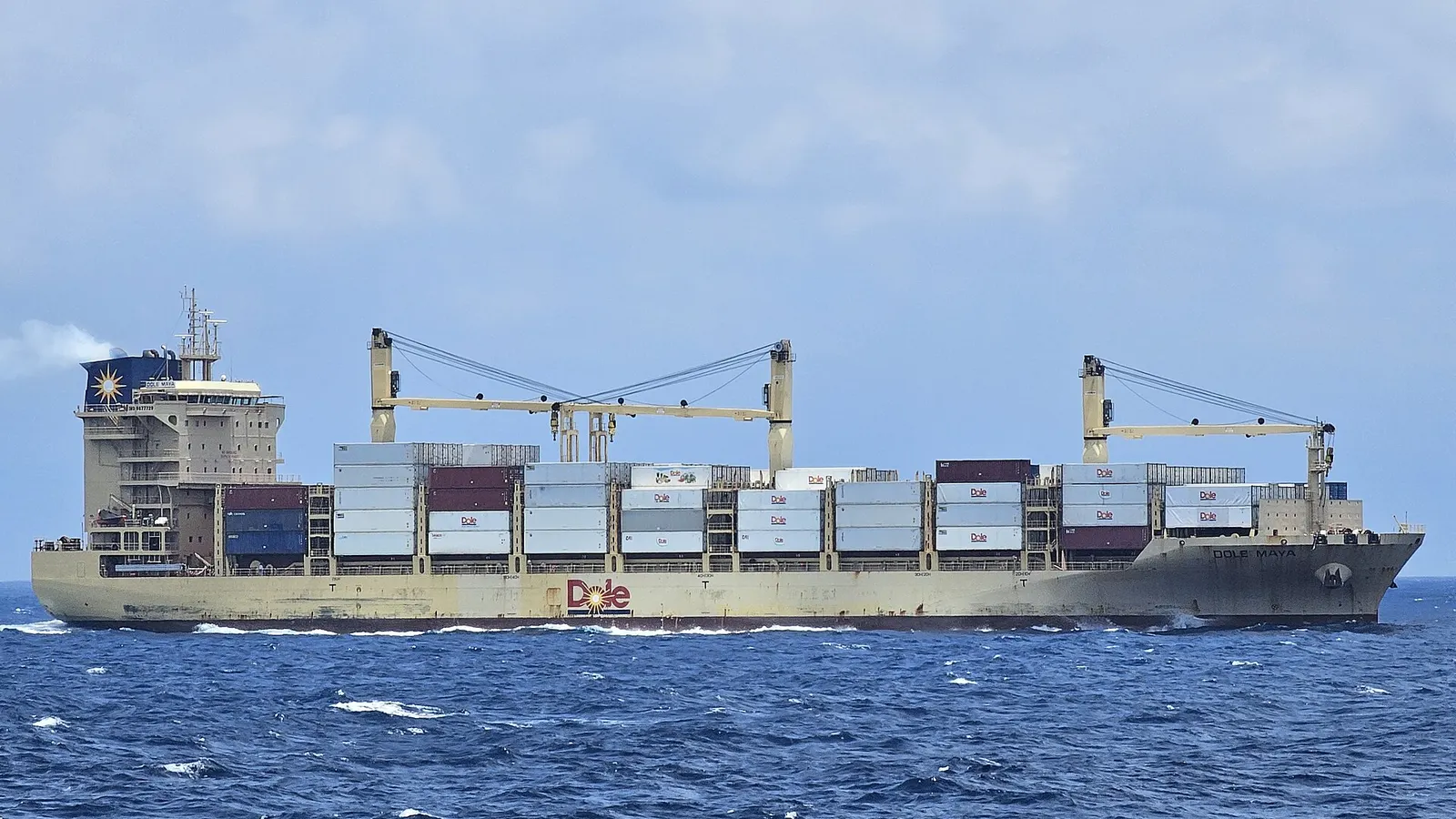
Container ship Dole Maya underway in the Gulf of Mexico.

Overview

Most perishable trade moves in 40 ft high cube reefer containers, about 67 cubic metres inside, plugged into power at every stage: on the ship, in the terminal stack and on the truck behind a clip-on genset. Bananas from Ecuador, citrus from South Africa, lamb from New Zealand, salmon from Norway and cheese from Europe run on deepsea liner services, while soft fruit, fresh fish and flowers often go by air. Set points run from about 13 °C for bananas to minus 18 °C or colder for frozen meat and fish.

The box rarely fails at sea. It fails in the gaps: a vessel waiting days for a berth, a reefer stack short of plugs, a transshipment that misses its connection, or a cut-off missed because the schedule was out of date. Each lost day takes shelf life that no claim gives back. Closing the gap takes current ETAs, port facts, sailing reliability and a carrying temperature read from a reference, not recalled from memory.


What goes wrong today

01

Berth waits that eat shelf life

A vessel anchored outside a congested port keeps the reefer on ship power but does not move the cargo any closer to the buyer. Three extra days on a 21 day fruit voyage can decide whether the pallet is sold as premium or as discount.

02

Cheap sailing, long door to door

The lowest rate often belongs to an indirect rotation with a transshipment hub or a slow loop through several ports. For perishables, the rate has to be read next to transit time and the carrier's on-time record on that service.

03

Plug power at every handover

A reefer needs a live outlet in the terminal stack, at the inland depot and on the trailer. Gaps in power at a gate move, a rail leg or a customs inspection are where temperature excursions start.

04

Set points taken from memory

Bananas, apples, chilled lamb and frozen prawns each have a different carrying temperature, and some varieties differ within one commodity. A wrong figure typed into a booking or told to a driver can chill, ripen or spoil an entire load.

What Navo24 gives you

TrackingMCP

Follow every reefer to the gate

TrackingMCP follows the container across 240+ carriers and gives a predicted ETA, so a late arrival is visible before the receiver's cold store is booked. Free-time and demurrage alerts show when the clock at the discharge terminal is about to start.

  • Predicted ETA updated as the vessel moves
  • Free-time and demurrage alerts per container
  • API, webhooks and MCP for your own systems
Open TrackingMCP
SchedulesMCP

Choose the sailing that arrives on time

SchedulesMCP compares 72,000+ sailings by transit time, transshipment and cut-off, with carrier on-time reliability beside them. Buyers can pick the direct or faster rotation instead of the one that only looks cheap.

  • Direct and transshipment routings side by side
  • Cut-offs for reefer gate-in and documents
  • On-time reliability by carrier and service
Open SchedulesMCP
World Sea Ports

Check the port before you book

World Sea Ports lists depths, maximum vessel size, berths and facilities for 2,900+ ports. Use it to see whether a discharge port can take the vessel and handle reefer cargo, and to find an alternative if it cannot.

  • Depth and maximum vessel size per port
  • Berths and cargo facilities listed
  • UN/LOCODE for clean booking data
Open World Sea Ports
LoadingMCP

Plan the load for airflow and weight

LoadingMCP places cartons and pallets in 3D inside the container, so you can check pallet count, weight and stack height before the box is packed. Reefers cool by air moving up through the T-floor, so keeping cargo below the load line matters as much as the set point.

  • 3D plan of cartons and pallets
  • Weight and height checked before packing
  • Payload limits visible per container type
Open LoadingMCP

How it works with Navo24

  1. Check the sailing and the port

    Compare direct and indirect services in SchedulesMCP, with transit time and on-time record, and confirm the discharge port can handle the vessel and reefers.

  2. Set the temperature from a source

    Take the carrying temperature, ventilation and humidity from the reefer reference or the buyer's specification and put it on the booking.

  3. Plan the load and cut-offs

    Check the pallet plan in LoadingMCP, then work back from the gate-in and VGM cut-off to schedule pre-cooling, packing and the truck.

  4. Track and warn the receiver

    Follow the container in TrackingMCP, share the predicted ETA with the cold store and importer, and act on free-time alerts before charges start.

Rules and standards that apply

ISO 1496-2 thermal containers

Sets the specification for insulated, refrigerated and heated containers, which is why a reefer has a T-floor and defined airflow.

ATP Agreement

Governs insulated and refrigerated equipment for perishable foodstuffs moved by road in the countries that apply it, so it matters for the trailer leg.

HACCP and Codex food hygiene principles

Food businesses must control temperature as a critical point, so shippers and receivers need records, not recollection, of carrying temperatures.

Phytosanitary and health certificates (IPPC ISPM 12)

Fruit, vegetables and animal products usually need certificates that must match the shipment details, or the cargo can be held at the border.

SOLAS verified gross mass (VGM)

Every packed container, reefers included, needs a verified weight before loading, and a mismatch can stop the box from being loaded.

Questions

What temperature should a reefer container be set to?

It depends on the commodity. Bananas are commonly carried at about 13 to 14 °C, chilled meat close to minus 1 °C, and frozen meat and fish at minus 18 °C or colder. Check the reefer temperature reference and the buyer's specification, because varieties and ripeness change the figure.

Does Navo24 show the temperature inside my reefer?

No. Navo24 does not handle cargo or hold the container's controller data. It shows where the container is, its predicted ETA and the free-time clock, while temperature logs come from the carrier or reefer telematics, described in the remote reefer monitoring reference.

How do I find the fastest reliable sailing for fruit or fish?

Compare transit time, number of transshipments and the carrier's on-time record for the specific service, not only the rate. A direct service that arrives on its schedule often leaves more shelf life than a cheaper indirect rotation.

Do reefers need power at the port?

Yes. A reefer needs a live outlet in the terminal stack, usually three-phase power, or it warms. Terminals fit a limited number of reefer plugs, so a congested port can leave boxes waiting for a slot, which is worth checking before booking.

Does VGM apply to reefer containers?

Yes. Under SOLAS every packed container needs a verified gross mass before it is loaded, including reefers. Weigh the packed box or the cargo plus the tare, and submit the VGM before the carrier's cut-off.