Skip to content
Navo24Navo24
Bulky cargo, 40HC load planning

Home appliances and DIY logistics.

Home appliances, furniture and DIY tools ship as bulky, low-density cargo where every cubic metre in a 40HC counts, and volumes surge before retail peaks. Navo24 gives shippers and forwarders container tracking, sailing schedules, rate benchmarks and load plans to see where boxes are and plan space ahead.

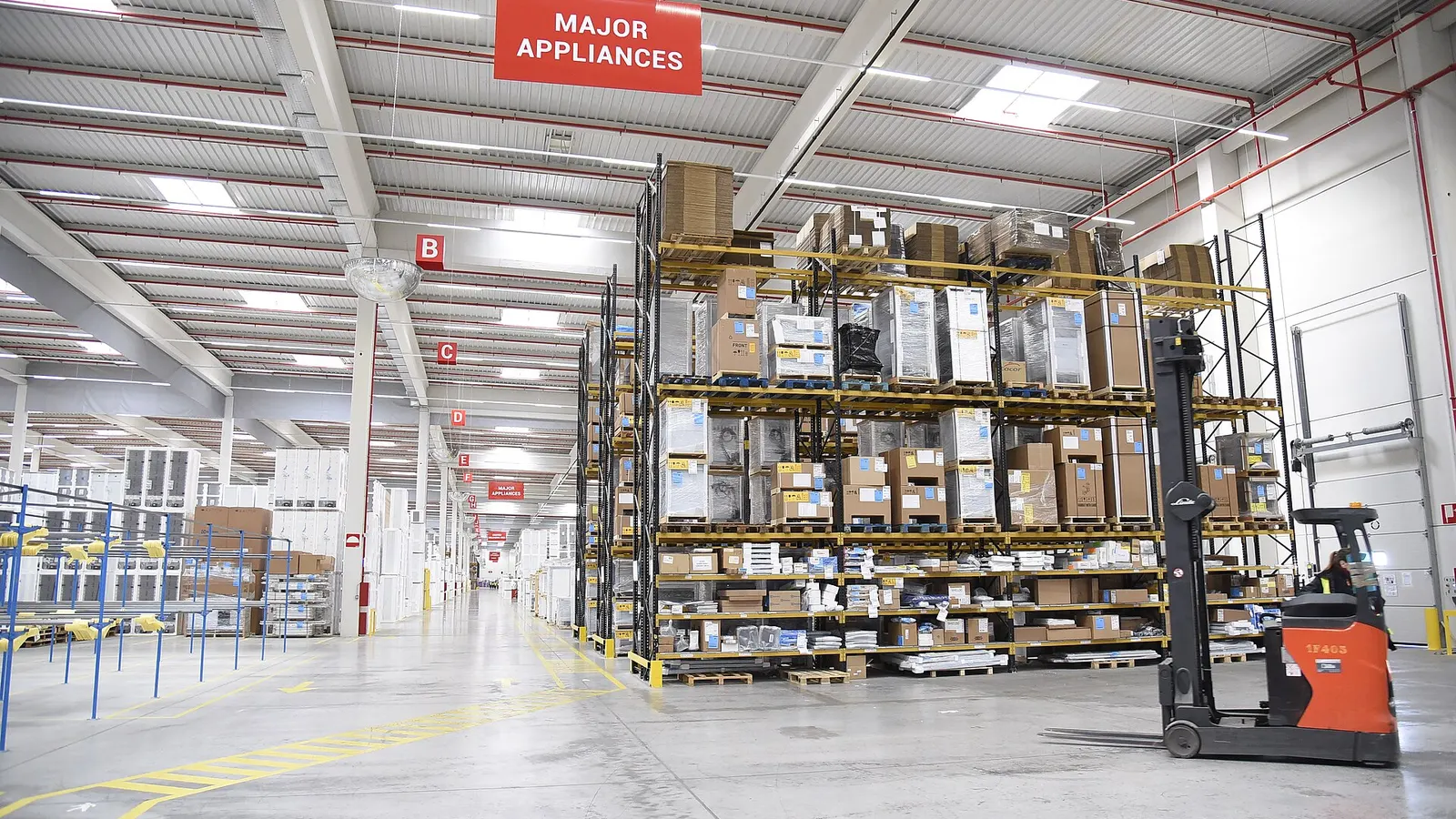
CABANILLAS DEL CAMPO (Guadalajara), 12 de marzo de 2018.- El presidente de Castilla-La Mancha, Emiliano García-Page, visita las instalacione

Overview

Appliances, flat-pack furniture and DIY tools move mostly in 40ft high-cube containers from Chinese, Vietnamese, Turkish and other manufacturing hubs into European and North American distribution centres, with 20ft boxes used for dense goods such as power tools and hardware. Cartons are floor-loaded or palletised on 1,200 x 1,000 mm or 1,200 x 800 mm pallets, then drayed by chassis to a retailer warehouse. Volume, not weight, usually sets the cost: a 40HC offers roughly 76 m³ and about 26 t of payload.

Problems start when planned and actual loads differ. A plan built from catalogue dimensions ignores carton overhang, so the last pallets are left behind or the box sails part empty. Later, rolled bookings and a slipping ETA push the container past free time. Load plans from real carton sizes, schedules with cut-offs and live container ETAs let planners fix space and delivery slots before costs build.


What goes wrong today

01

Volume fills the box before weight

Fridge, washer and flat-pack cartons cube out a 40HC at well under its payload limit, so every unused gap is paid for at the full container rate. Mixed SKUs with different carton heights make manual stacking plans unreliable.

02

Peak season compresses bookings

Orders for retail peaks and promotions land in the same few weeks, so space tightens, bookings are rolled and peak season surcharges appear with short notice. Budgets set on off-peak rates rarely hold.

03

Late boxes break warehouse slots

A container that arrives a day or two late can miss a booked unloading slot and a store delivery date. Bulky goods are expensive to hold, so demurrage and detention add up fast.

04

Mixed dangerous goods and documents

Cordless tools ship with lithium batteries (UN3480, UN3481, UN3090, UN3091, class 9), and some appliances carry refrigerant or gas charges that need correct declaration. Wrong HS codes or weights cause holds, VGM mismatches and bumped boxes.

What Navo24 gives you

LoadingMCP

Plan every cubic metre of a 40HC

LoadingMCP places cartons, pallets and crates into containers and trucks in 3D from real dimensions and weights. Planners see how many units fit, where the gaps are and whether to switch box size or combine SKUs.

  • 3D plans from actual carton dimensions
  • Compare 20GP, 40GP and 40HC fill
  • Check payload and weight distribution
Open LoadingMCP
TrackingMCP

Track containers and warn on free time

TrackingMCP follows containers across 240+ carriers with predicted ETAs, so warehouse slots can be set against realistic arrival. Free-time and demurrage alerts show when a box is at risk before charges start.

  • Predicted ETA, not just the carrier date
  • Free-time and demurrage alerts
  • API, webhooks and MCP for your systems
Open TrackingMCP
SchedulesMCP

Book sailings ahead of the retail peak

SchedulesMCP lists sailings, cut-offs and transshipment points, with carrier on-time reliability. Teams can place bookings on dependable services early and keep a fallback sailing when space tightens.

  • Cut-offs and transit times by service
  • Direct versus transshipment options
  • Carrier on-time reliability
Open SchedulesMCP
FreightRatesMCP

Benchmark rates before peak surcharges

FreightRatesMCP gives indicative FCL lane rates and rate history, so buyers can see how a lane moves into peak and judge a quote. Finance can budget landed cost per unit with a realistic range.

  • Indicative 40HC lane rates
  • Rate history across seasons
  • Compare quotes to the market
Open FreightRatesMCP

How it works with Navo24

  1. Model the load before booking

    Enter carton sizes and weights in the load planner to see units per 40HC and decide on box type and pallet use.

  2. Pick sailings and benchmark rates

    Compare schedules, cut-offs and indicative rates, and book early for peak weeks with a backup sailing in mind.

  3. Pack, verify weight and release

    Load to the plan, secure cartons, and submit the VGM and documents before the terminal cut-off.

  4. Track to door and manage free time

    Follow the container, update warehouse slots from the predicted ETA and act on free-time alerts before charges begin.

Rules and standards that apply

SOLAS VGM (Chapter VI, Regulation 2)

Every packed export container needs a verified gross mass from the shipper before loading, and a mismatch with the terminal weighbridge can leave the box behind.

IMO/ILO/UNECE CTU Code

Guidance on packing and securing cargo units, which applies to heavy cartons of appliances that can shift or crush lower tiers in transit.

IMDG Code, class 9 lithium batteries

Power tools with lithium cells, UN3480, UN3481, UN3090 and UN3091, must be classified, packed, marked and documented correctly.

CSC plate and ISO 6346 marking

The CSC safety approval plate and ISO 6346 container number identify the box, its max gross mass and the unit you track end to end.

Incoterms 2020

FOB, CIF, DAP and similar terms decide who books the container, pays surcharges and bears demurrage risk on late-arriving boxes.

Questions

How many washing machines fit in a 40ft high cube container?

It depends on the carton size and whether units are stacked or palletised. A 40HC has about 76 m³ of internal volume, so divide usable volume by carton volume and allow for gaps and overhang. A 3D load plan from your real carton dimensions gives a firmer number than a rule of thumb.

Why do appliances cube out before they weigh out?

Large cartons of fridges, washers and flat-pack furniture are bulky relative to their weight. The 40HC fills by volume while still well below its payload of roughly 26 t, so the freight cost per unit depends on how tightly you pack.

Are cordless power tools dangerous goods?

Tools with lithium-ion batteries fall under IMDG class 9, with UN numbers such as UN3480 and UN3481 for batteries alone or packed with equipment. They need correct classification, packing, marking and documents, and carriers may apply a dangerous goods charge.

How do I avoid demurrage on a late container?

Track the container with a predicted ETA, check the free time in your carrier terms and book the warehouse unloading slot against the realistic arrival. Alerts before free time ends give you time to rebook a slot or arrange an extension.

When should I book space for the retail peak?

Book as early as the sailing schedule allows, because peak weeks bring rolled cargo, tighter space and peak season surcharges. Review cut-offs and carrier reliability, and keep a second sailing in mind in case the first is rolled.