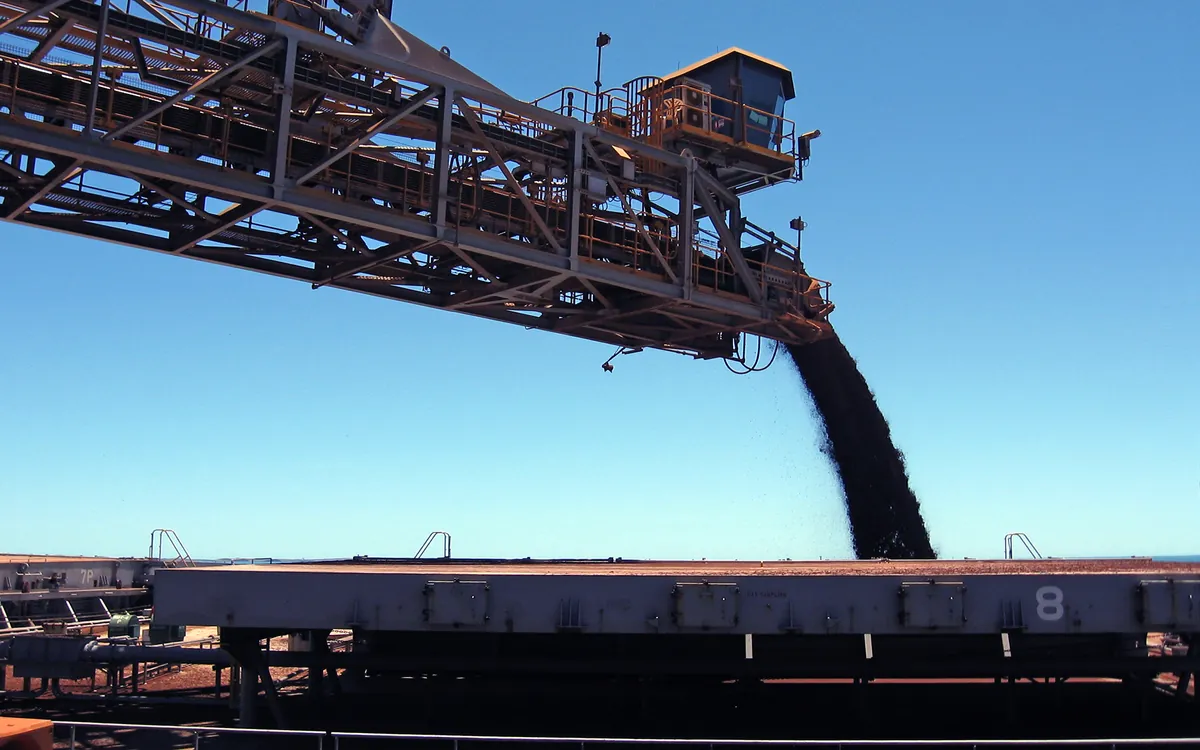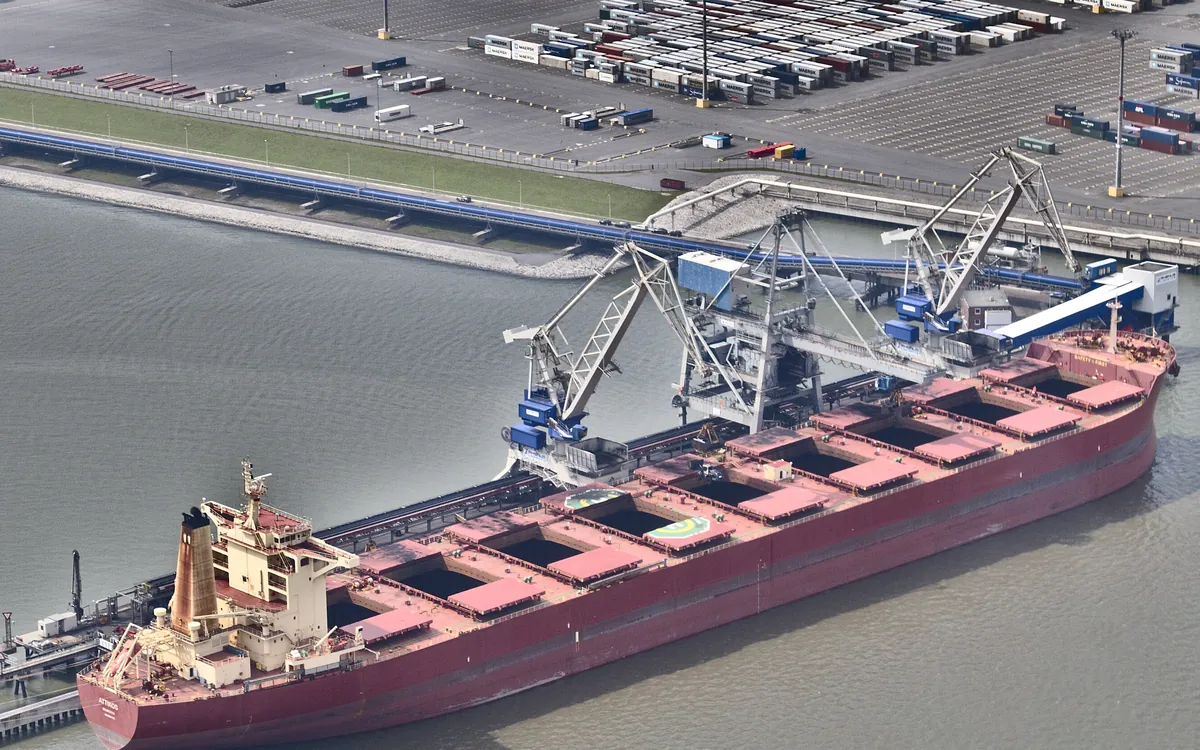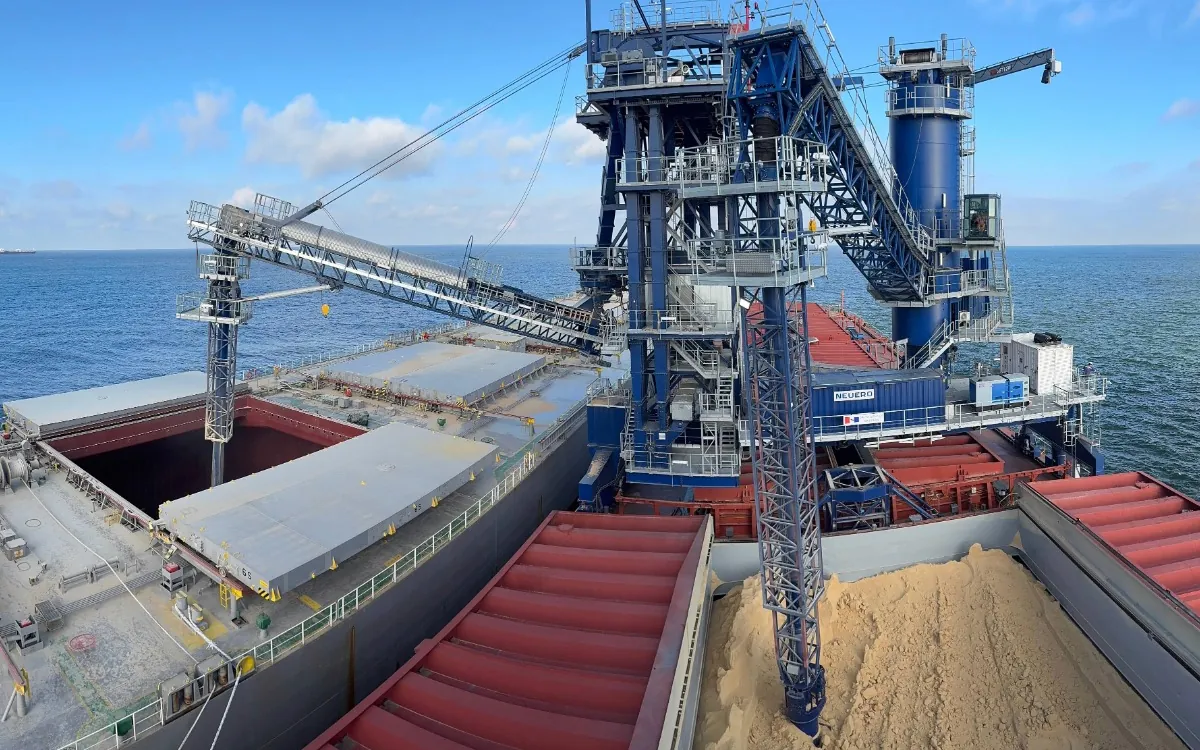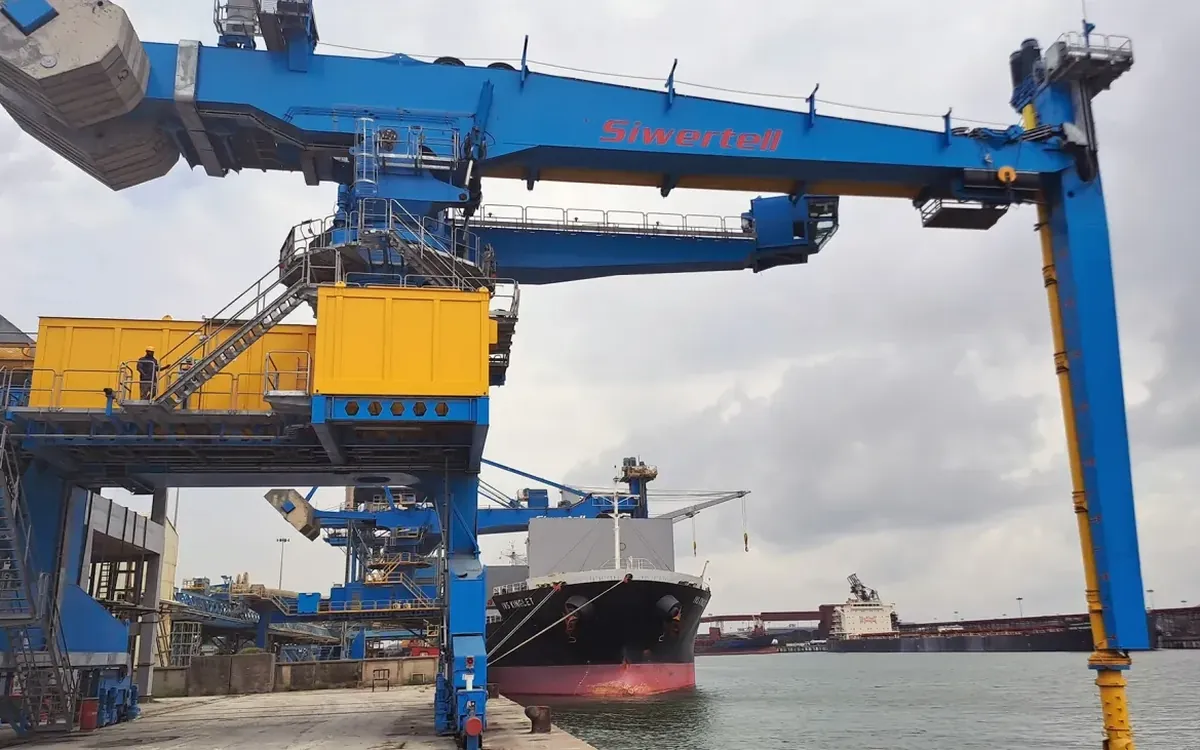
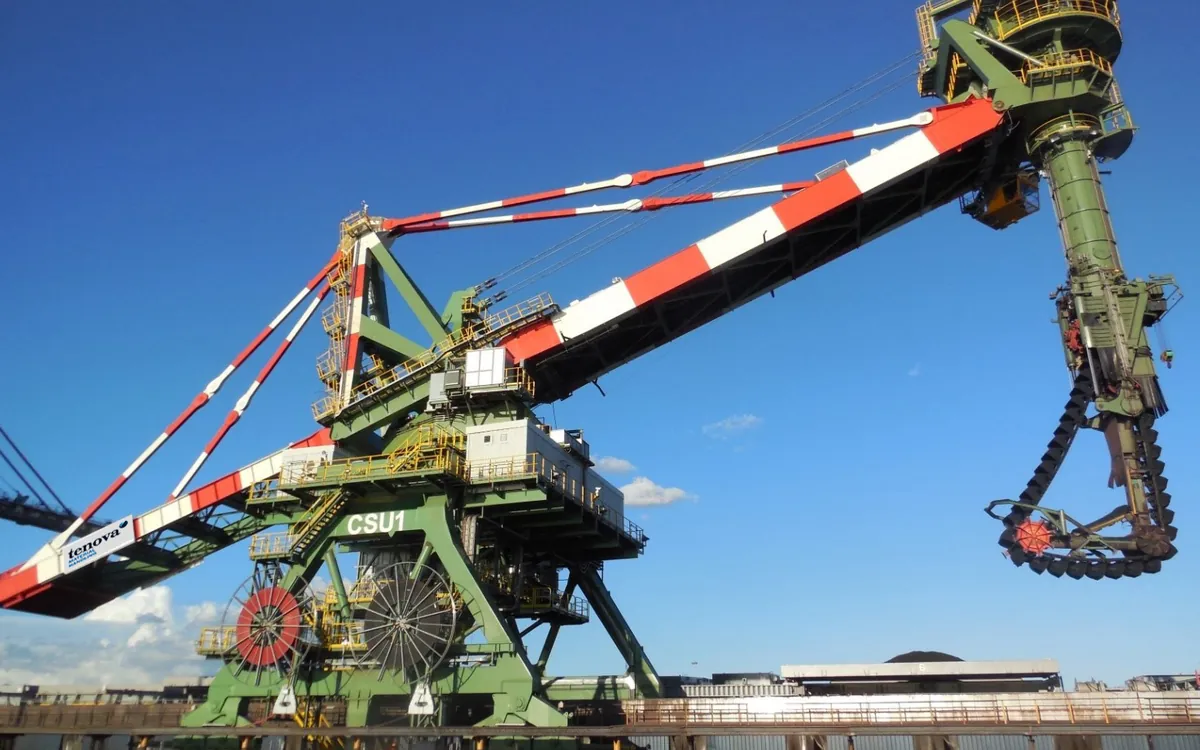
A vertical screw or chain conveyor hangs from a slewing boom into the hold and lifts the cargo inside a closed casing, so dust stays in. Output is a steady flow rather than grab cycles.
What a continuous unloader is
A CSU is a slewing, luffing machine on the quay whose vertical arm reaches down into the hold. At the bottom, a feeder or bucket digs into the cargo, the vertical conveyor raises it to the boom, and a horizontal conveyor carries it back to the jetty conveyor or silo.
Because the cargo moves in enclosed conveyors, dust stays inside the machine. That makes the type popular for cement, fly ash, grain and other dusty or valuable materials.
How it works
There are two main mechanical principles. Screw-type unloaders, such as Siwertell, use a totally enclosed vertical screw conveyor. A counter-rotating inlet feeder, invented by Siwertell, improves pick-up and the filling of the screw, and the conveyor is built from standard screw sections, outer tubes and intermediate bearings.
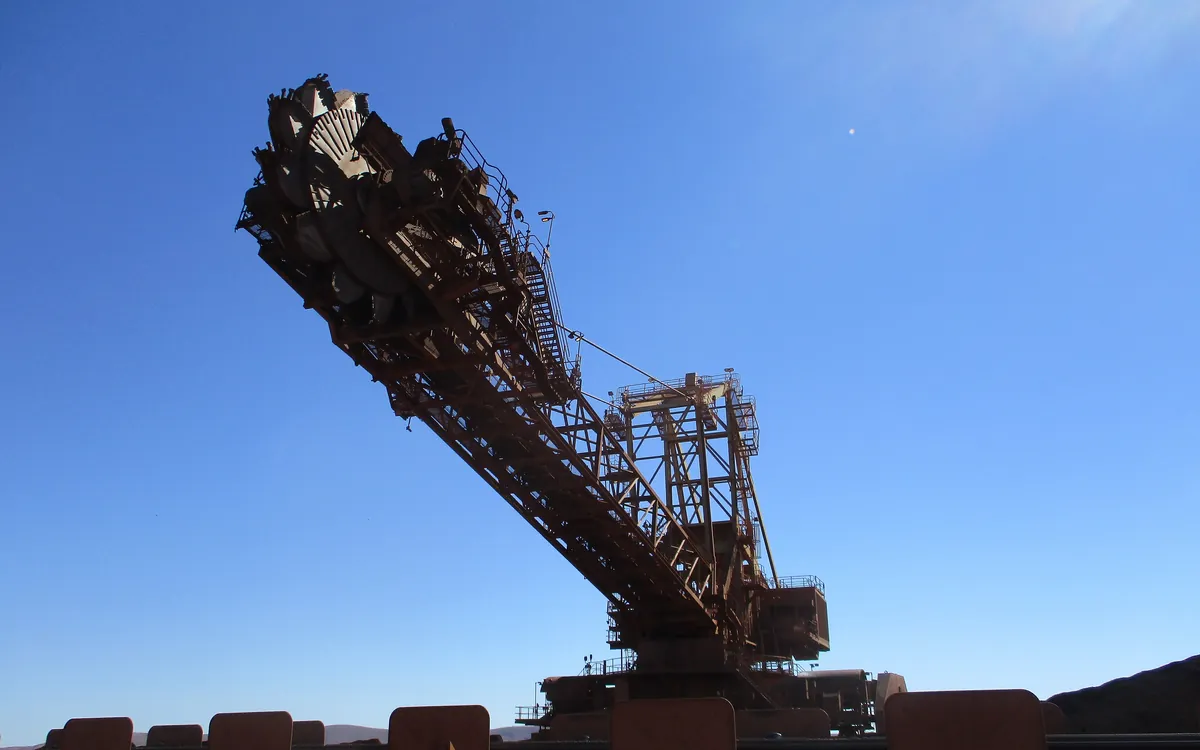
Bucket elevator or chain-bucket unloaders hang a chain of buckets into the hold. The buckets scoop the cargo and lift it to the boom. Mitsui Miike gives this type a cargo handling efficiency of 0.7 to 0.75, against 0.45 to 0.6 for grab unloaders.
Pay loaders and excavators are often put into the hold to help during the final clean-up.
Sizes and key figures
Siwertell screw unloaders cover rated capacities from 200 t/h to more than 3,000 t/h. The large-scale units can be installed fixed or rail-mounted to travel along the quay. Mitsui Miike's bucket elevator unloaders, used for coal, reach a maximum of 2,800 t/h, and the company lists seven units delivered.
The rated figure matters less than through-ship capacity, which is the average over the whole discharge including clean-up. Continuous unloaders tend to keep a steadier rate as the cargo level drops.
Where it is used and what cargo
Screw unloaders are widely used for cement, coal, grain and fertiliser, and Bruks Siwertell also points to oxygen-depleting cargoes such as biomass, where an enclosed system is the safer method. Bucket elevator unloaders are mainly used for coal at power stations and for large-volume imports.
Siwertell also offers standardised road-mobile and port-mobile versions for ports without dedicated unloading berths. Freight rates for cargo through these terminals can be compared at rates.navo24.com.
Dust, noise and energy
Enclosed conveying keeps dust down and protect the cargo from rain. Electric drives give no exhaust emissions at the berth, and there are no shock loads from a dropped grab, which reduces noise and stress on the quay.
Siwertell installs the electrical system in an insulated housing with heating and air conditioning, and the operator's cabin is fully insulated with the same climate control.
How to choose, pros and limits
A CSU makes sense when cargo is dusty, sensitive or regulated, when steady flow suits the receiving plant, and when berth occupancy matters. Match the unloader to the intake rate of the terminal and to the ships it will receive.
The limits are higher capital cost and less tolerance for very heavy, lumpy or sticky cargo, where grab unloaders remain the robust choice. Clean-up of the last cargo in the hold still needs mobile equipment.
Many ports run both types. The Bristol Port Company, for example, operates two continuous unloaders next to two grab unloaders, so each cargo can go to the machine that suits it. Mitsui Miike links the higher handling efficiency of continuous unloaders directly to shorter ship turnaround and lower shipping charges.
Variants
Questions shippers ask
What is the advantage of a continuous ship unloader?
Steady flow, high average throughput and very little dust compared with grab unloaders.
How much can a screw unloader discharge?
Siwertell rates its machines from 200 t/h to more than 3,000 t/h.
Can a continuous unloader handle iron ore?
Grab unloaders remain the usual choice for iron ore; continuous unloaders are most common for coal, cement, grain and fertiliser.