Open body lifted by a hydraulic ram. End dumps tip backwards; side dumps tilt the body to the left or right, unload faster and are hard to tip over during unloading.
What it is
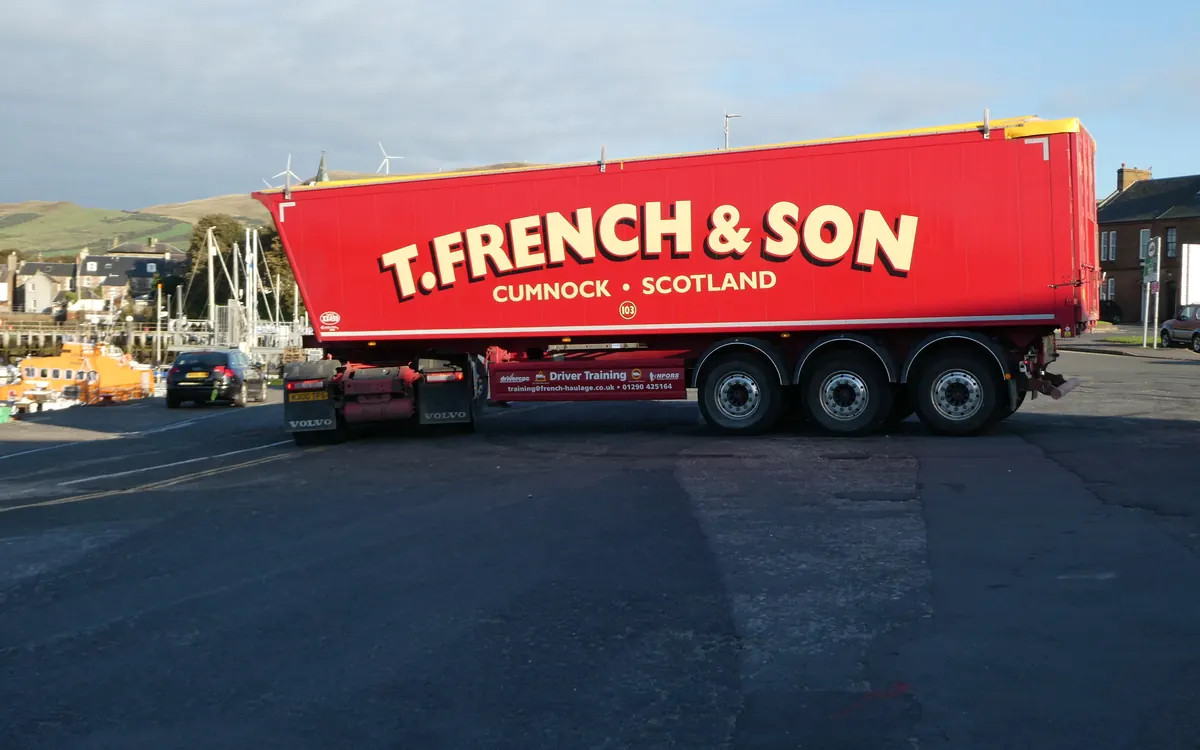
In a tipper one end of the body is raised so that the cargo, often building materials or agricultural produce, slides out at the other end. Most are hinged at the rear and raised at the front, but side-unloading tippers are also used. On a semi end dump the hydraulic hoist sits on the trailer itself.
Axles and payload
In the US a typical semi end dump is a 3-axle tractor pulling a 2-axle trailer with dual tyres. In the EU the trailers often have 3 axles and single tyres. The key advantage of the semi end dump is its large payload.
Depending on the structure, end dump trailers are built with a frame or frameless. A frame trailer has a large beam along the bottom; a frameless trailer has ribs around the body instead. For the same length, a frame dump trailer weighs around 5 t more than a frameless one, which leaves less payload.
How it is unloaded
An end dump raises the body and tips the load out at the rear, often through a tailgate. Some bodies for grain have swing-out doors and a metering gate. A side dump uses hydraulic rams to tilt the body to the left or right. A bottom dump, also called belly dump, opens a clam shell gate in the floor and lays the material in a windrow, a linear heap.
Stability on site
A raised end dump is very unstable, which limits its use where the dumping ground is uneven or off level. Some end dumps have an articulated arm under the body (a stabilizer) to steady the load when raised. A side dump is almost immune to tipping over while dumping, but it can tip over if dumping is stopped prematurely, and it can get stuck if the pile covers too much of the wheels. A semi bottom dump can be reversed, unlike double and triple dump combinations.
When to book it
Book a tipper for loose material that can be dropped on the ground or into a hopper. Tell the carrier the material, the tipping direction the site needs and whether the ground at the unloading point is level. Road rates for this equipment can be compared at rates.navo24.com.
Variants
Questions shippers ask
Can a tipper unload inside a building?
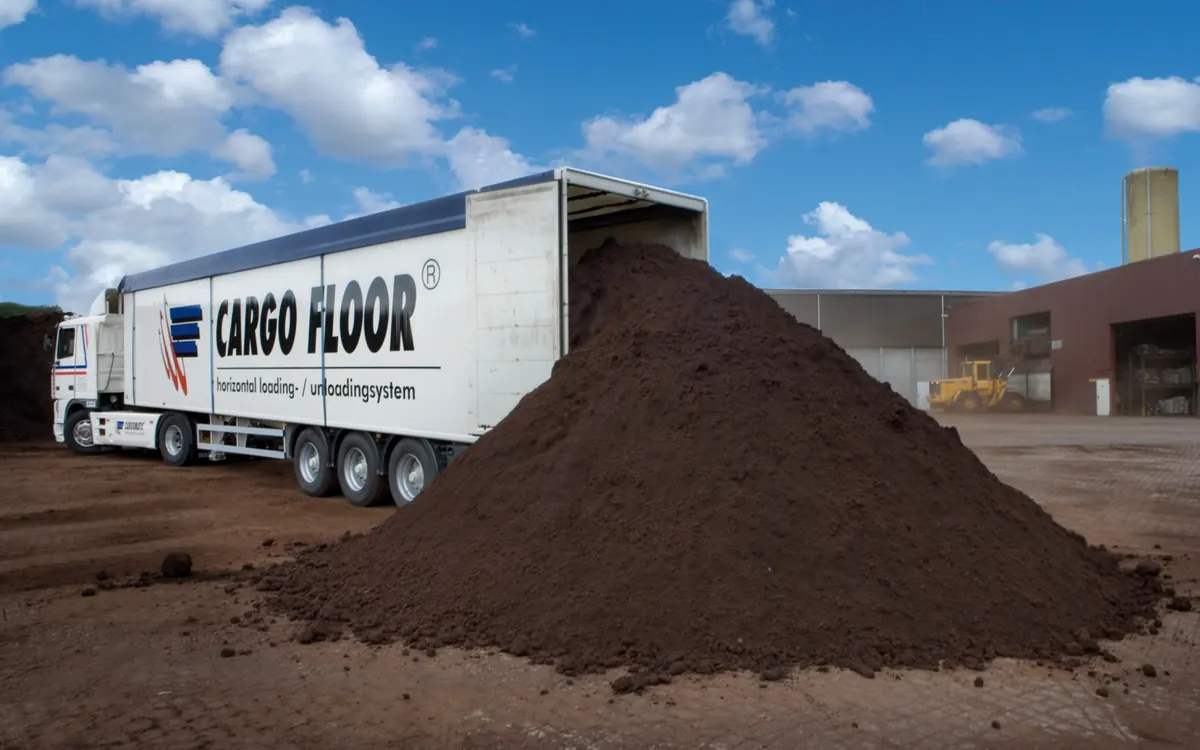
Often not, because the raised body needs height. A walking floor trailer is the usual alternative for low or narrow entrances.
Is a tipper safe on soft or sloping ground?
An end dump is very unstable when raised on uneven ground. Ask for a stabilizer or a side or bottom dump if the site is not level.
Can a tipper carry grain?
Yes. Some bodies built for grain have swing-out doors and a metering gate.