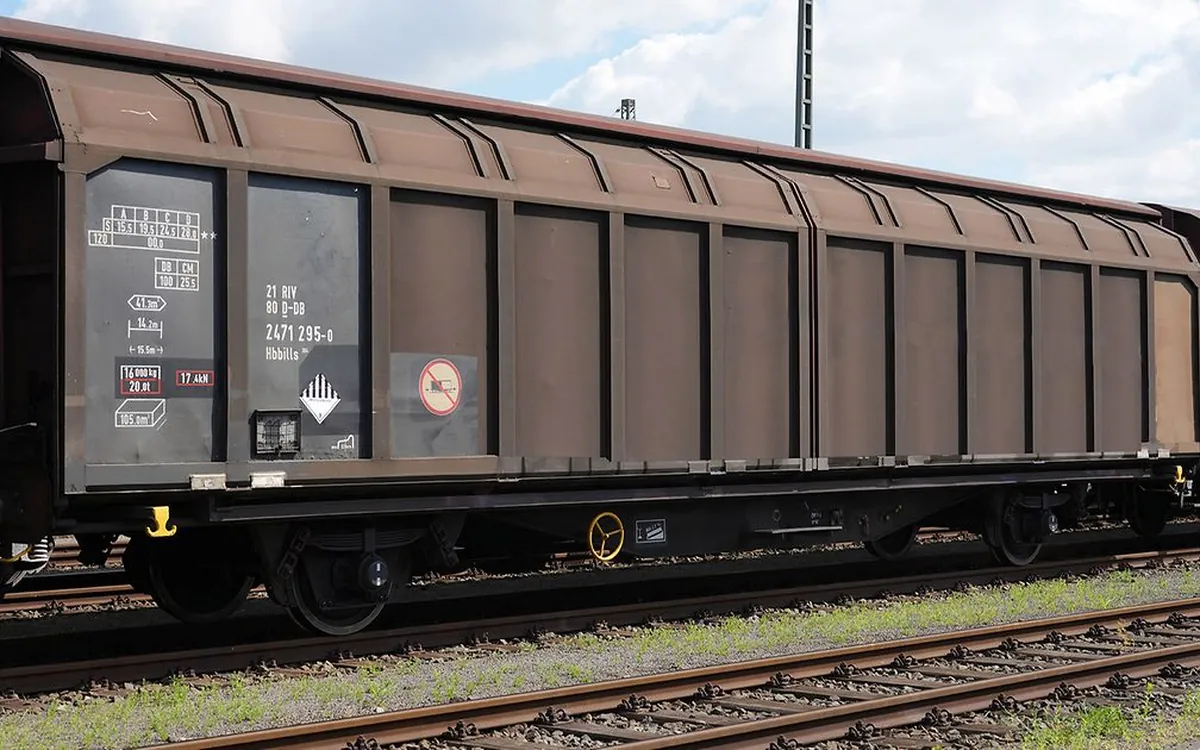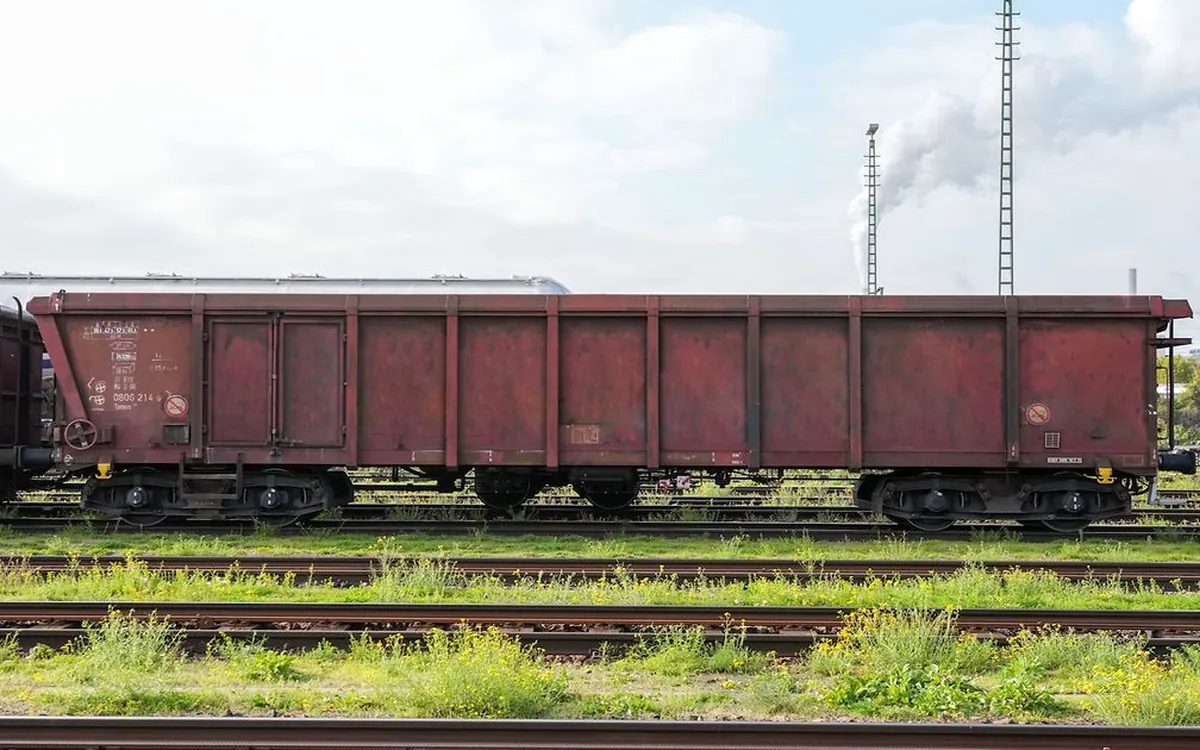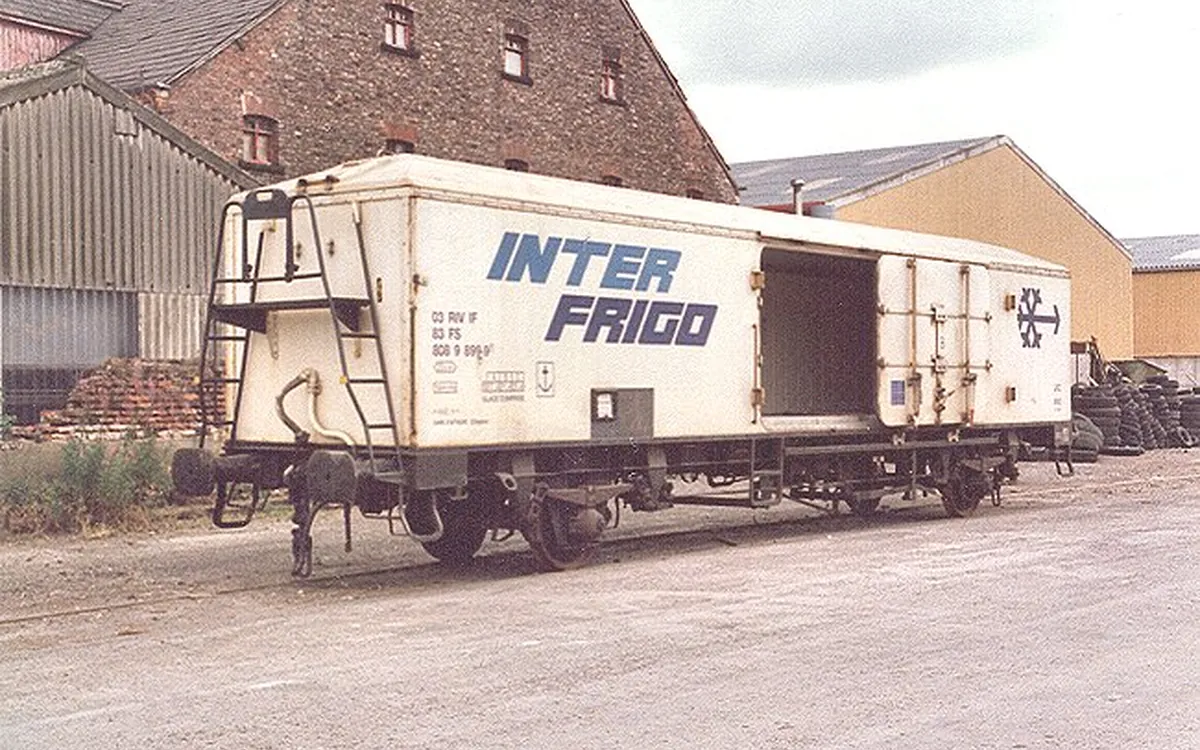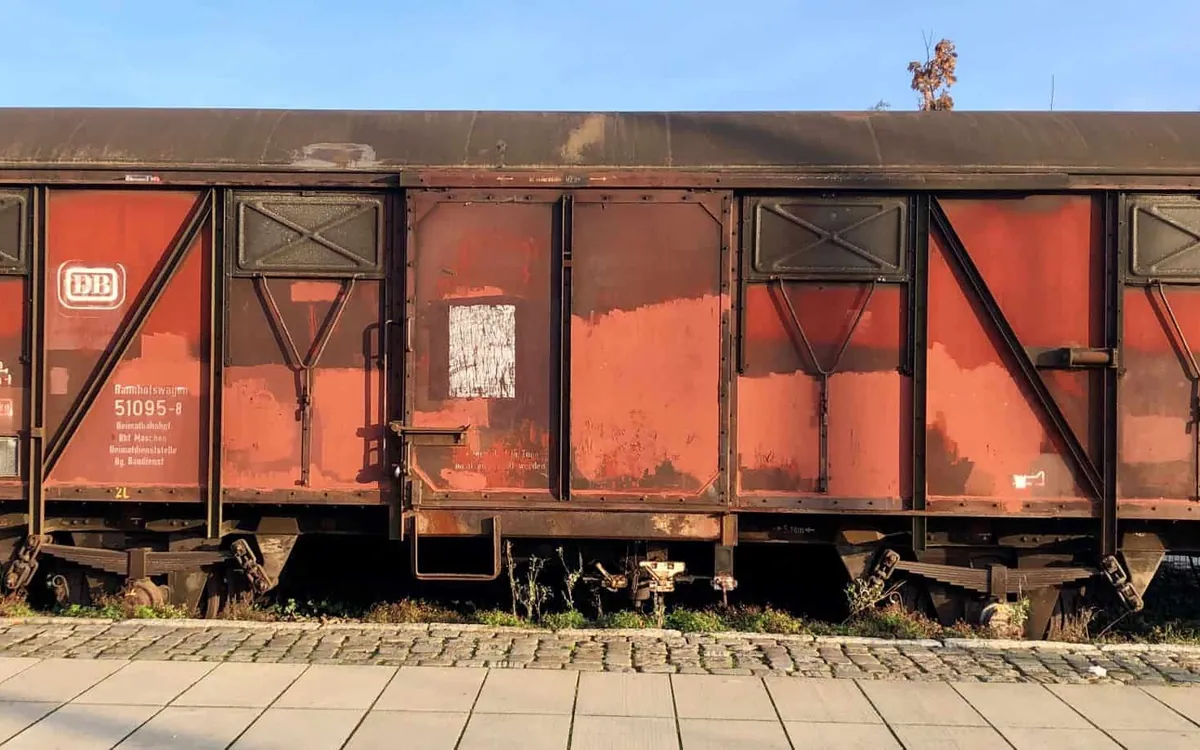
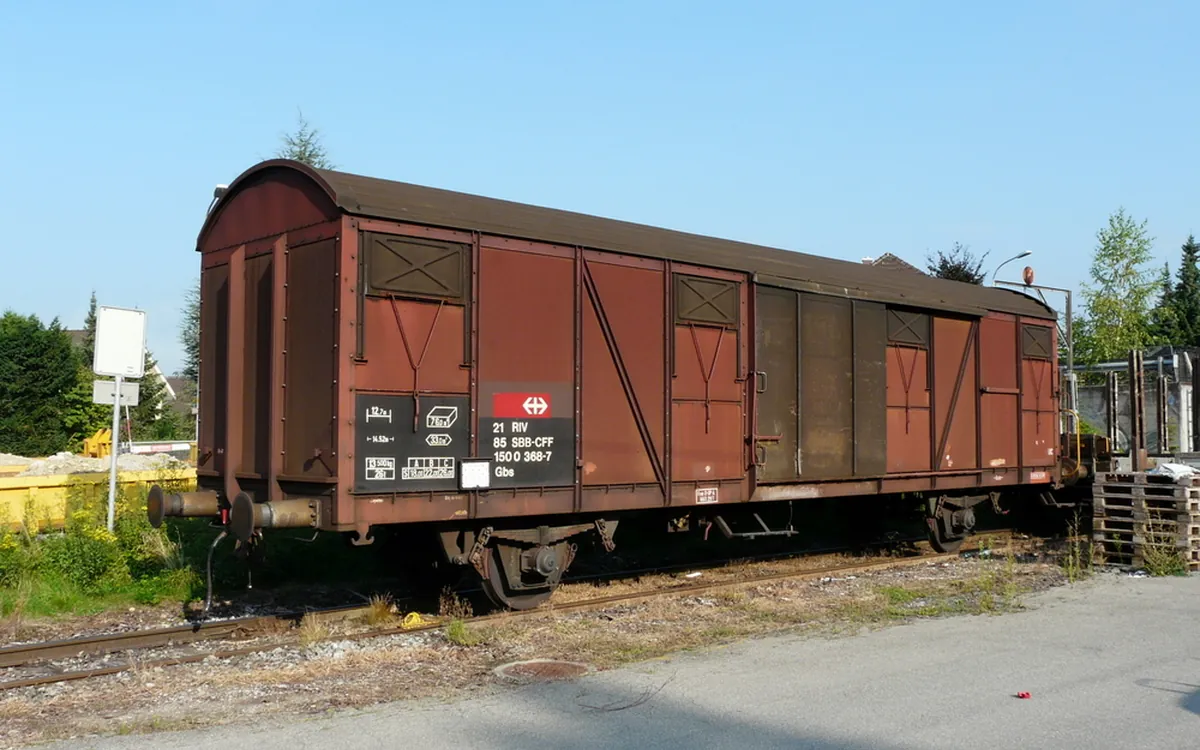
Ordinary covered wagons with sliding doors and at least 8 lockable openings for ventilation and loading. Gbs has two axles, Gabs(s) four. Only the dimensions are standardised; there are dozens of body frame designs.
What an ordinary covered wagon is
A covered goods wagon has a load space closed by side walls and a roof. Class G covers the ordinary type: a flat floor, fixed walls all round and sliding doors in the long sides. Gbs has two axles and Gabs(s) four.
Covered wagons are nearly as old as the railway. Until the 1960s they made up about 40% of the fleet of many railways. Open and flat wagons are now far more common, and most covered wagons in Europe still have two axles because their light loads do not need bogies.
Design, doors and ventilation
In the upper third of the side walls sit lockable openings that serve for ventilation, loading or both. Ordinary wagons have at least eight. Fewer than eight is shown by the letter l, as in Gl. The UIC standard wagons all have at least eight combined loading and ventilation openings closed by standard slides.
Bodies began as wood and steel composite and later became all-steel. Only the main dimensions are standardised; there are dozens of different body frame designs. The single door per side is the main drawback, since it does not allow quick loading of large packaging units.
Dimensions and capacity
The two-axle Gbs measures 14.02 m over buffers with an 8.00 m wheelbase. It has a minimum loading length of 12.70 m, about 33 m² of floor, about 88 m³ of volume and a maximum tare of 14.5 t. Doors are 2.15 m high and 2.50 m wide.
The four-axle Gabs(s) measures 21.70 m over buffers with bogie centres 16.66 m apart, a loading length of at least 20.41 m, about 53 m² of floor and about 137 m³. Its maximum tare is 29.0 t and its doors are 2.15 m high and 4.00 m wide. The shorter Gas(s) gives 15.20 m, about 40 m² and about 105 m³.
As a normal case the UIC assumes a usable length of 9 to 12 m and a load limit of 25 to 28 t for two axles, and 15 to 18 m with 50 to 60 t for four axles.
Cargo and use today
The main traffic was weather-sensitive general cargo in boxes, sacks and barrels. Coarse bulk such as grain was also loaded, with roof hatches or special door boards. Cattle travelled in G wagons too, which is why eight ventilation openings became standard.
In the second half of the 20th century ordinary covered wagons were largely replaced, and in Europe they now have mainly local importance. Most general cargo moves in containers, palletised goods go in sliding-wall wagons, and dry bulk goes in self-discharging wagons with opening roofs.
Class letters and related types
G is the ordinary covered wagon, H the special covered wagon. a means four axles. For G, b means a two-axle wagon of 12 m or more, or a bogie wagon with a loading length of 18 m or more. s permits 100 km/h, ss 120 km/h. The fifth digit of the wagon number is 1 for G wagons.
Related types include the short two-axle Gs, the Hbfs built to the smaller British loading gauge, and the four-axle sliding-wall Habiss, all standardised by the UIC.
When to choose a Gbs or Gabs
These wagons fit goods that must stay dry and locked but can be handled through a single door, such as sacks or hand-stacked cartons. For whole pallets, a sliding-wall wagon unloads much faster. Ask the operator which type is still available on your route, since ordinary covered wagons are now scarce in many countries.
Variants
Questions shippers ask
What is the difference between G and H covered wagons?
G is the ordinary type with fixed walls and side doors. H covers special designs, such as sliding-wall wagons.
How big is a Gabs wagon?
About 137 m³ and 53 m² of floor, with a loading length of at least 20.41 m and 21.70 m over buffers.
Why are Gbs wagons less common now?
The single door makes pallet handling slow. Sliding-wall wagons and containers have taken most of their traffic.