

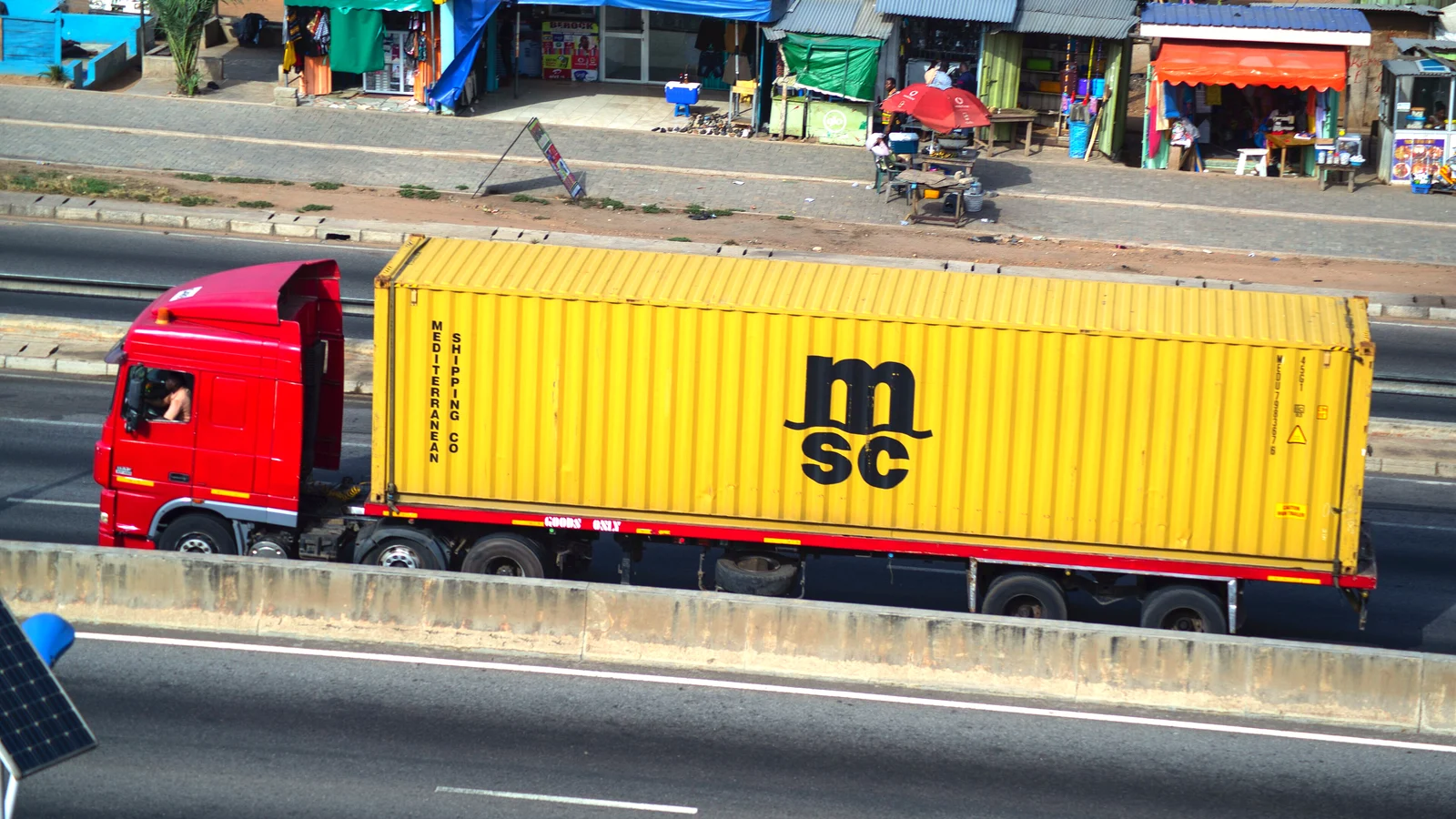
Take 1,000 boxes at 10 kg each. The goods alone weigh 10,000 kg. Add a 40-ft container with a tare of 3,800 kg and your container gross weight lands at 13,800 kg. That single arithmetic chain, net plus tare equals gross, sits underneath customs clearance, VGM filings, axle limits, and every freight quote you will ever receive. Get one number wrong and the whole stack shifts.
Where the numbers come from
Net weight is the goods by themselves: no container, no crate, no covering. Tare weight is the opposite extreme, an empty trailer, truck, or container with nothing inside. Gross weight combines them, folding in everything wrapped around the goods: pallets, packaging, dunnage.
A container’s tare is usually printed right on its exterior, but the figure depends on which box you book. Expect roughly 2,200 kg, about 4,850 lbs, from a 20-ft dry unit. The 40-ft dry version sits near 3,800 kg (8,380 lbs). Choose the high cube and the empty box already weighs around 4,200 kg, or 9,260 lbs, before a single carton goes in.
Those figures feed directly into Verified Gross Mass submissions and into how you distribute cargo inside the unit. A wrong tare figure corrupts everything downstream of it, and compliance problems tend to be expensive ones.
What a bad declaration actually costs
Carriers, customs officers, and compliance authorities all price and plan around the weight you declare. When that declaration is wrong or thin on detail, the consequences run from annoying to severe: overloaded containers raising compliance concerns, route restrictions that knock delivery schedules off track, unexpected upcharges inflating freight fees, and SOLAS violations, most often traced to skipped or sloppy VGM submissions.
At sea, SOLAS regulation VI/2, in force since 1 July 2016, makes the shipper responsible for a verified gross mass (VGM) for every packed container, submitted early enough to be used in the stowage plan. No VGM, no loading. Miss that step and you can face port pushback, suspended shipping, or penalties. Standard boxes come with ceilings you have to respect. The 20-ft carries about 2.2 tonnes of tare against a max gross near 24 tonnes. Its 40-ft sibling begins around 3.8 tonnes of tare and tops out close to 30 tonnes gross.
On European roads, exceeding gross vehicle weight (GVW) invites fines and roadside checks, and correct container loading keeps axle balance in check. Air freight plays by yet another rulebook, built around dimensional weight rather than GVW or VGM.
The air freight formula worth memorizing
Air carriers charge on chargeable weight. They compare the shipment’s actual weight against its cubic DIM weight and bill whichever figure is greater, so the larger of the two becomes the cost-driving figure:
(L x W x H in cm) ÷ 6,000 = DIM weight in kg
Light, bulky cargo gets punished here. The 6,000 divisor means volume, not heft, can decide what you pay.
How weight shows up on the invoice
Freight pricing bends around weight in different ways depending on the mode:
-
With LCL, the price keys off how heavy or how bulky your cargo is, so fees shift with scale or space.
-
FCL comes with firm weight ceilings; cross them and surcharges appear while schedules slow down.
-
A stated weight that turns out wrong can push you into a bigger container, or into flat racks when the shipment is oversized.
Overweight cargo goes further than surcharges. Carriers can cancel bookings outright, and surprise freight fees follow close behind. Exceeding gross weight guidelines also risks terminal rejections and genuine safety hazards in transit.
Weight checklist before you ask for a quote
- Net weight. Weigh or count the goods themselves, with no packaging.
- Packing materials. Add pallets, dunnage, bracing and securing material. IMO’s VGM guidance requires these in the total when you use the calculation method.
- Tare. Take the tare printed on the specific container you were given, not a typical figure for the size.
- Container gross weight and VGM. Either weigh the packed container (Method 1) or add packages, packing materials and tare using a certified method (Method 2), then file the VGM before the carrier’s cut-off. More on what goes wrong in VGM mismatches still bump boxes.
- Limits. Check the result against the container’s max gross and the road limits on both trucking legs.
- Air shipments. Work out (L x W x H in cm) ÷ 6,000 and quote on whichever is greater, DIM or actual weight.
Taking manual math out of the loop
Most weight errors start as human error. Load planning software attacks that directly. It keeps weight entries from being mistyped, matches the container to what the cargo actually measures, confirms VGM and SOLAS compliance, flags rules tied to the route, and catches containers that were loaded wrong or paired badly.
Weight touches every shipment three times over: as a legal question, as a logistics question, and as a question of liability. Accuracy is protection. Penalties, postponed deliveries, and disputes over price all stay outside the door when your numbers hold up.
Frequently asked questions
What is the difference between net, tare and gross weight?
Net weight is the goods alone, with no packaging or container. Tare weight is the empty container, truck or trailer. Gross weight is the total: goods plus pallets, packaging and dunnage plus the tare. For example, 10,000 kg of goods in a 40-ft container with a 3,800 kg tare gives a gross weight of 13,800 kg.
What is VGM in shipping?
VGM is the verified gross mass of a packed container. Since 1 July 2016, SOLAS regulation VI/2 makes the shipper responsible for providing it to the carrier and terminal early enough for the stowage plan. A container without a VGM should not be loaded. It is obtained by weighing the packed box or by adding up all contents and the tare using a certified method.
How is chargeable weight calculated for air freight?
Air carriers compare actual weight with dimensional weight and charge whichever is greater. A common formula is length x width x height in centimetres divided by 6,000, giving DIM weight in kilograms. Light, bulky cargo usually ends up billed on volume rather than on what it actually weighs.
Where do I find a container's tare weight?
The tare weight is marked on the container itself, usually on the doors alongside the max gross weight. It varies by box, so use the figure on the unit you were given. Typical values are around 2,200 kg for a 20-ft dry, 3,800 kg for a 40-ft dry and 4,200 kg for a 40-ft high cube.