

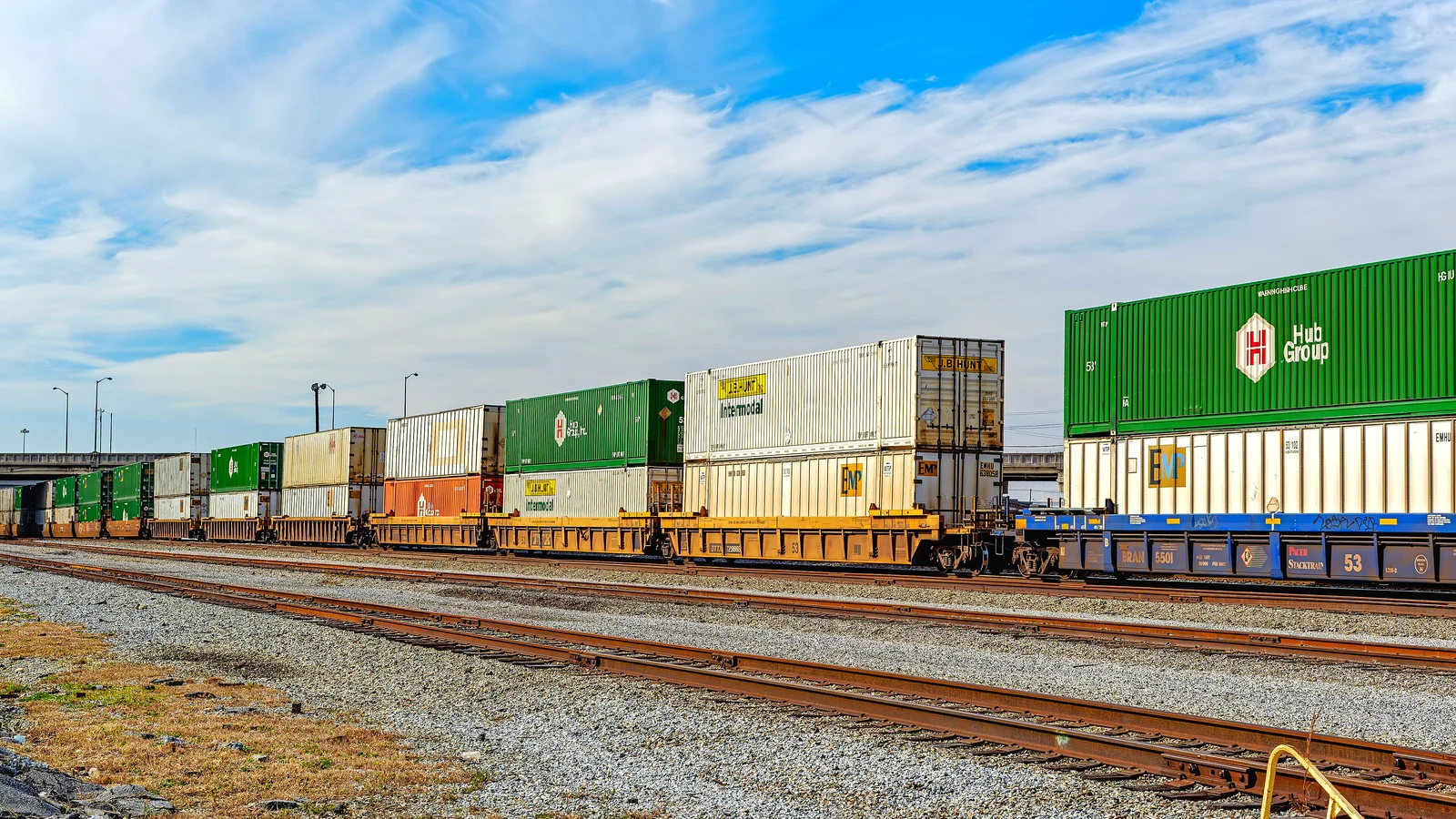
CBP’s final rule on the rail export manifest takes effect on 26 October 2026. It applies to trains leaving the United States for Canada or Mexico, and the manifest is filed electronically in ACE. Enforcement starts a year later, on 26 October 2027 according to the rule’s dates line. Exporters, forwarders and railroads have until then to agree who files and which bond stands behind the filing.
Before the rail export manifest rule, each railroad has sent CBP a train consist in a format it designed itself. The Electronic Export Information that Census rules require applies generally above $2,500 per Schedule B number and generally not to shipments to Canada. CBP says that gap leaves many shipments outside its security review.
The railroad files unless someone else elects to
The outbound carrier always sends the transportation data and the empty-container data under the new 19 CFR 123.93. It also sends the initial filing and the cargo data, unless another eligible party elects to. That can be the U.S. principal party in interest or its authorized agent, the foreign principal party in interest or its authorized agent, or any other party with direct knowledge of the export information, such as a customs broker, an ABI filer, an NVOCC or a freight forwarder. Shipments that move by ocean before or after the rail leg still follow their own vessel schedules and filing clocks.
A forwarder or NVOCC that files acts as an EEM transmitter, not as a customs broker, according to CBP’s preamble. The regulation says sending this data “does not constitute customs business”. The filer still needs a bond with the new export condition.
If nobody else files, the party that arranges or delivers the cargo to the railroad gives the carrier the full initial-filing data. Any other entity holding required data hands it to the carrier or to the filer. A filer that received the data from someone else may send what it reasonably believes to be true when it cannot verify it.
A vague cargo description holds the car
The initial filing is due as early as practicable and no later than 24 hours before the train departs the U.S. port of export. It has seven elements: the bill of lading number, quantity, total weight, a precise cargo description, the shipper, the consignee, and an EIN, importer record number or CBP-assigned number. Quantity is counted at the lowest external packaging unit, so a container (see how a container load plan counts units) holding 10 pallets with 200 cartons is reported as 200 cartons.
The rule lists “FAK”, “general cargo” and “STC” as unacceptable descriptions and accepts a six-digit HTSUS number in their place when the shipper supplied one. CBP issues a referral for information when the description is vague, mistyped or cannot be verified, and the outbound carrier may not move cargo that still has an open referral.
The AES internal transaction number or FTR exemption code is conditional and goes in as soon as it exists. The remaining cargo and transportation data is due two hours before departure, and empty-container data no later than the time of assembly of the train. CBP rewrote the deadline language so that the 24-hour and two-hour clocks run from the train’s departure from the U.S. port of export, to avoid any ambiguity regarding inland rail yards or other locations.
Enforcement starts on 26 October 2027
The rule’s dates line and CSMS notice 69684363 both give 26 October 2027 as the day CBP begins enforcing. The bond paragraph of the preamble is worded as a floor: CBP will not begin enforcing “until one year after publication”, and a party that needs a bond has 300 days to obtain one. Publication was on 26 August 2026, and the STR Trade Report of 1 September reads that floor as 26 August 2027.
Once enforcement starts, a bond without the new export condition is deemed insufficient. I would have the bond in place by August 2027, which is early enough under either reading.
Which bond pays when a filing is late
Every transmitter needs a CBP basic importation and entry bond, a basic custodial bond or an international carrier bond that carries the new condition. A filer holding several is charged against the international carrier bond first, then the custodial bond, then the importation and entry bond, using the EIN or importer record number in the filing.
Under the amended bond conditions CBP may assess liquidated damages of $5,000 per violation. On an international carrier bond they stop at $100,000 per departure, and CBP states that the cap does not apply to the other two bond types.
What CBP counted and what the pilot showed
CBP’s estimate covers the pilot and the rule together, 2016 to 2030 in 2025 dollars: $10.3 million in present value at a 3 percent discount rate, against cost savings of $47.7 million. It did not monetize bond costs, carrier staff on call for CBP questions or potential liquidated damages.
Nearly 94 percent of the pilot’s data transmissions arrived more than 24 hours before departure, CBP’s preamble reports. One commenter argued the pilot was limited in scope and so misstates the costs trade members face.