

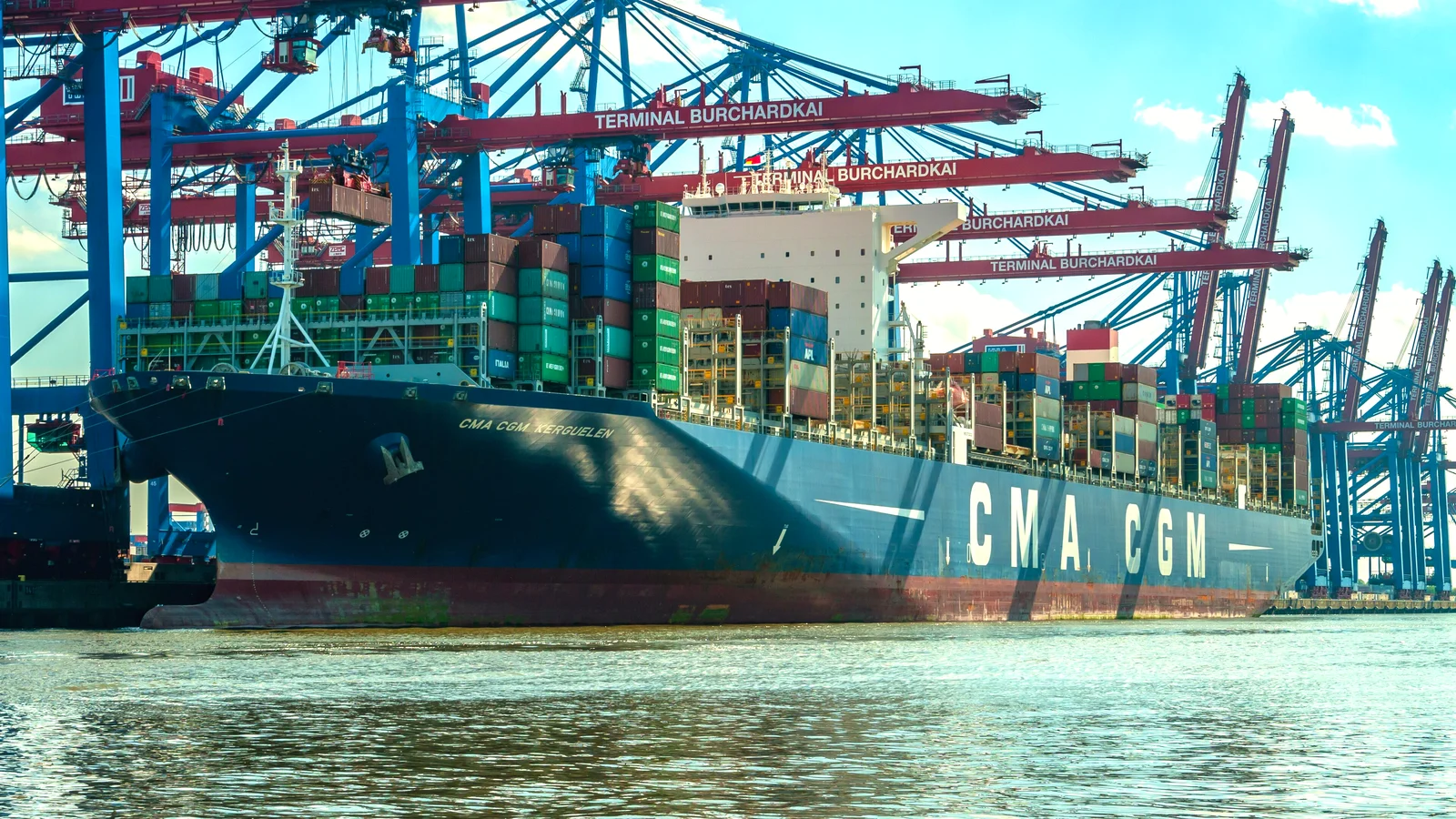
Money changes shape the moment it crosses a border, and shipping crosses a lot of them.
A single shipment might carry a carrier invoice in US dollars, an inland haulage bill in local currency, and a customs charge in whatever currency the destination country uses. For importers and freight forwarders working on the kind of margins this industry is known for, that mix isn’t background noise. A currency swing of just 1% can be the difference between a haul that pays and one that quietly loses money.
What follows is where FX risk in freight and importing actually comes from, the handful of concepts worth knowing, and the tools people use to keep it from eating into margin.
Where the exposure actually sits
For an importer, the clearest gap opens between the order and the payment.
Say a supplier based in Shenzhen prices the order in dollars, with payment landing sometime in the 30-to-60-day window after the goods ship. If the buyer’s home currency weakens against the dollar during that window, the goods get more expensive before they’ve even cleared customs at the other end. Managing that gap takes some planning; it doesn’t close itself.
Freight forwarders carry a messier version of the same problem. They tend to pay shipping lines in dollars, settle inland trucking and rail in local currency, and invoice customers in whatever the customer wants to be billed in. A single multi-leg booking can involve three or four separate currencies. A forwarder quoting in one currency and settling in several others, with no plan for the gap between them, ends up carrying an unhedged FX position, intentionally or not.
Then there’s the exposure nobody budgets for. Demurrage and detention charges usually get billed in whatever currency the carrier invoices in, and that bill can land weeks after the shipment has already moved. Customs duties and VAT are worked out from the landed value expressed in the destination country’s currency, so if rates move between the time of booking and the shipment’s arrival, duties can end up higher than what was originally budgeted. Under Article 9 of the WTO Customs Valuation Agreement, the exchange rate used is the one published by the importing country’s authorities, and Article 9.2 lets each country choose the rate in effect at the time of exportation or at the time of importation. Even cargo insurance, when it’s underwritten internationally, tends to involve a conversion somewhere at settlement.
Three terms worth knowing
Spot rate. The rate on offer at this exact moment, for delivery straight away. It’s the number in financial headlines, and it’s rarely the number a business actually gets. Banks and payment providers build a margin into it, the spread, the gap between what the market actually shows and what customers get quoted. Once every fee is counted, high-street banks typically land somewhere in the two-to-four-percent range for SMEs on international payments. Specialist providers usually charge less, though that’s not guaranteed across the board.
Forward rate. A rate fixed today for something that settles later. A forward contract lets a business fix what a later payment will cost, well before it’s due, so an importer who knows they’ll owe USD 200,000 in 90 days can turn that unknown cost into a known one before it arrives.
Multi-currency accounts. These hold money in more than one currency simultaneously, so funds can be received or sent out without a forced currency swap each time. A forwarder collecting euros from European customers while paying carriers in dollars can hold a dollar balance and skip the round-trip conversion, which otherwise gets paid for twice.
Putting the tools to work
Match currencies when you can
Natural hedging, matching what comes in with what goes out in currency terms, costs less than any other approach. A forwarder invoicing customers in dollars while settling carriers in dollars sidesteps a conversion entirely. Wherever the customer relationship allows it, lining up invoicing currency with settlement currency is the obvious first move.
Hold more than one currency at once
With a multi-currency account, a business can receive dollars, euros, pounds, or other major currencies and simply hold them until there’s a use for them. That avoids the double conversion that happens when incoming funds get converted into a home currency first and then changed back again just to pay a supplier.
Fix the rate on payments you already know are coming
Any payment that’s reasonably certain, a large shipment landing in 60 days (a live container ETA helps pin that date down), a carrier invoice that recurs every month, a planned transport drawdown, is a fair candidate for a forward contract. Forward contracts here work like insurance for the budget, covering moves the business itself has no say over.
Stop routing everything through the main bank
Cross-border payments are usually an afterthought for high-street banks, and the pricing reflects that. Moving currency payments over to a specialist international payments provider tends to bring tighter spreads, quicker settlement, and sharper hedging tools, and it can happen without disturbing the core banking relationship still used for loans, deposits, and everyday domestic payments.
Automate the boring stuff
A forwarder settling dozens of carrier invoices a month faces both operational risk and added cost from manual payment workflows. Bulk payment tools push batches of cross-border payments through in one pass, generally at better rates, with fewer places for a mistake to creep in.
A quick FX checklist for importers and forwarders
- List every currency on a typical shipment: supplier, carrier, inland haulage, duties, insurance.
- Note when each payment falls due relative to the order and the arrival.
- Match invoicing and settlement currencies wherever the customer allows it.
- Hold balances in the currencies you pay out most, instead of converting twice.
- Use forward contracts only for payments you are reasonably certain of.
- Compare the rate you were given with the market rate, not just the transfer fee.
- Write the rules down as a simple FX policy so they don’t depend on habit.
Where people go wrong
Most businesses simply don’t have a policy. FX management happens by accident, through whatever payment workflow was already sitting there. Over-hedging shows up almost as often: forward contracts make sense for exposures a business can actually count on, but locking in rates against something speculative or vague can lose money just as easily as it saves it.
The spread gets ignored more than anything else. Plenty of businesses obsess over the visible transaction fee and never look closely at the rate underneath it, and the markup baked into that rate is frequently several times larger than any fee they were tracking.
What it comes down to
Managing FX risk in freight and importing doesn’t need to be complicated. A clear picture of where the exposure sits, a working knowledge of the basic tools, plus enough willingness to shift part of the payment flow off the default bank setup, usually recovers real margin that would otherwise leak away to currency markets. Trade policy uncertainty isn’t going anywhere this year, and FX volatility tends to follow close behind. It’s one of the few pieces of the operations balance sheet a business can actually control.
Frequently asked questions
What is FX risk for an importer?
FX risk is the chance that exchange rates move between agreeing a price and paying it. An importer who buys in US dollars with payment due 30 to 60 days after shipment pays more in home currency if their currency weakens in that window. Freight bills, demurrage charges and duties in other currencies add further exposure on the same shipment.
How does a forward contract protect import payments?
A forward contract fixes today the exchange rate for a payment that settles later. An importer who knows they will owe USD 200,000 in 90 days can lock the rate now, turning an unknown home-currency cost into a known one. Forwards suit payments that are reasonably certain; hedging vague or speculative exposures can lose money as easily as it saves it.
Which exchange rate is used to calculate customs duties?
Under Article 9 of the WTO Customs Valuation Agreement, customs uses the exchange rate published by the competent authorities of the importing country. Each member decides whether the rate in effect at the time of exportation or at the time of importation applies. If rates move between booking and arrival, duties in home currency can differ from the original budget.
Why do freight forwarders use multi-currency accounts?
Forwarders often collect from customers in one currency, pay shipping lines in US dollars and settle trucking in local currency. A multi-currency account lets them hold dollar, euro or pound balances and pay out of them directly, avoiding a double conversion into the home currency and back. Each avoided conversion saves the spread the bank builds into its rate.