

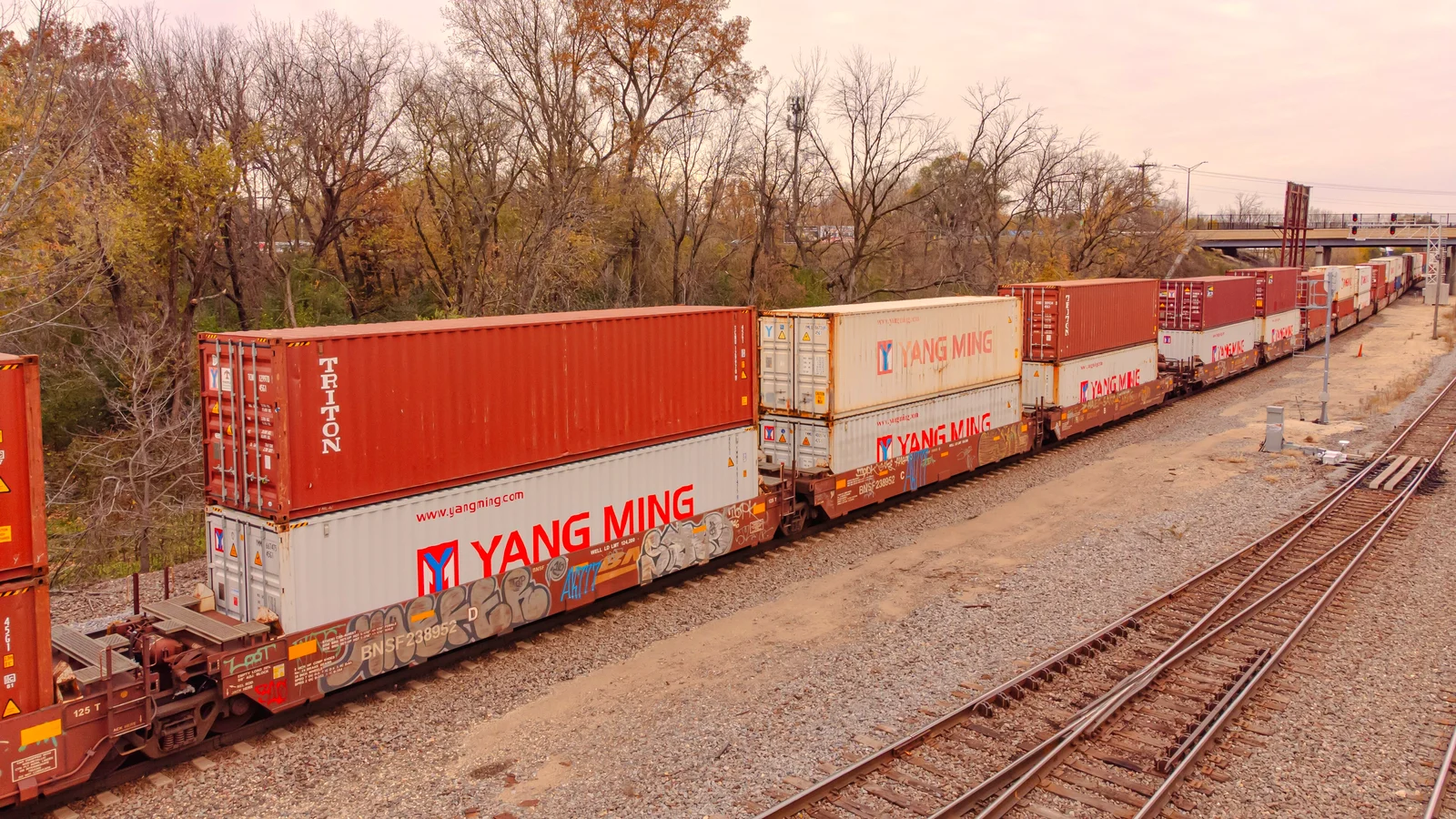
Many businesses in international trade have run into a mode of transport that costs too much. Multimodal freight transportation is one option in that situation. How is it organized, what are its main characteristics, and what does the customer gain from it? The sections below answer these questions.
Two close terms with a few differences
Both terms describe freight that moves by more than one mode of transport. Whether the legs run by river, rail, road or something else is irrelevant.
Multimodal transportation runs under a single contract. Intermodal transportation lets the customer contract with several companies.
The two schemes are very similar, but they do differ:
- A multimodal shipment involves one company. With intermodal carriage the customer works with a separate company for each part of the trip.
- In intermodal carriage liability is allocated equitably among everyone who takes part in carrying the goods. If something is damaged, finding the culprit is very difficult.
- Multimodal transportation usually needs a general set of documents covering all the goods. Intermodal needs several sets, covering every participant.
Behind one bill of lading
One transport document, the bill of lading, covers an international multimodal shipment. A single carrier provides the service: the multimodal transport operator, or MTO. The customer pays a fixed through rate.
The MTO takes on a long list of functions:
- Builds the route plan.
- Signs contracts with the actual carriers.
- Does the calculations with the actual carriers needed to complete the operation.
- Bears complete responsibility for the cargo that reaches the customer, whatever the stage of transport.
- Moves and supervises the cargo, whether by water, rail, road or other means.
- Contracts for the lease of specialized terminals.
- Clears goods through customs and executes the shipping paperwork.
- Performs other functions as well, such as audit and leasing.
A container shipment of this kind usually begins when the customer approaches a company that offers multimodal carriage. Before that, the customer has to have the necessary papers ready: details about the customer and documents for every consignment. A company representative then examines the cargo, checks the paperwork and works out the route. On top of that, the cost of all the necessary services is calculated. After the customer signs the contract, the carrier takes delivery of all the goods, and they travel as planned.
Duties, fines and force majeure
The customer supplies the company with correct data on the shipment: the type of goods plus weight, volume and similar details. The executing company can carry out its own independent check of that data. If the customer is found to have supplied inaccurate data, a fine follows.
The MTO bears full responsibility for the cargo’s safety and integrity, and it guarantees that delivery will be on time. It may bring the delivery to an end by citing force majeure. In that case it delivers the cargo to its owner, and the delivery counts as complete once every item has been handed over.
The customer can request details of every contractor taking part in the carriage from the general contractor.
Cost, deadlines and the 90-day limit
The contract text must give specific information on what the job costs. If the price is not pinned down exactly, further agreements are needed to settle it. Deadlines matter as well: a missed one entitles the customer to demand fair financial compensation, so the deadlines in the contract are worth checking. When the customer has still not received the cargo 90 days after the date the contract set, the shipment counts as lost.
When the scheme is used
Beyond that, this approach usually comes into play when the sender of the goods and the receiver have no direct link to each other. It may also be needed when one transport mode alone makes delivery too expensive or too slow.
At the transportation stage the executing company carries out several operations: it produces the related documents, finds actual carriers and concludes contracts with them, rents terminals and sees the goods through customs.
Advantages
- Lower costs. The customer deals with one company under one arrangement, which keeps expenses down.
- Shorter delivery time. A customer arranging freight delivery without help has to hold talks with a number of companies. In a multimodal scheme the contractor takes over the management of delivery. The MTO locates every party involved in moving the goods and negotiates with each on its own, and many MTOs have advance arrangements with the performers who do the actual carrying. All of this saves a lot of time.
- Optimized freight transportation. Carrying cargo from origin to destination by one mode is sometimes too costly. A multimodal scheme splits the route into several segments run by different modes, which saves money and also speeds up delivery.
- Security. The performer bears complete responsibility. If the recipient receives damaged cargo from the contractor, the contractor must pay fair compensation.
- Less paperwork. The customer gathers a single set of papers and hands it to the contractor. Extra documentation may be required for the shipment, but in most cases the MTO prepares it.
The short version
A multimodal shipment runs under a single contract, and the executing company takes care of the route and the shipping documents. The main benefits named here are security and cheaper carriage.