

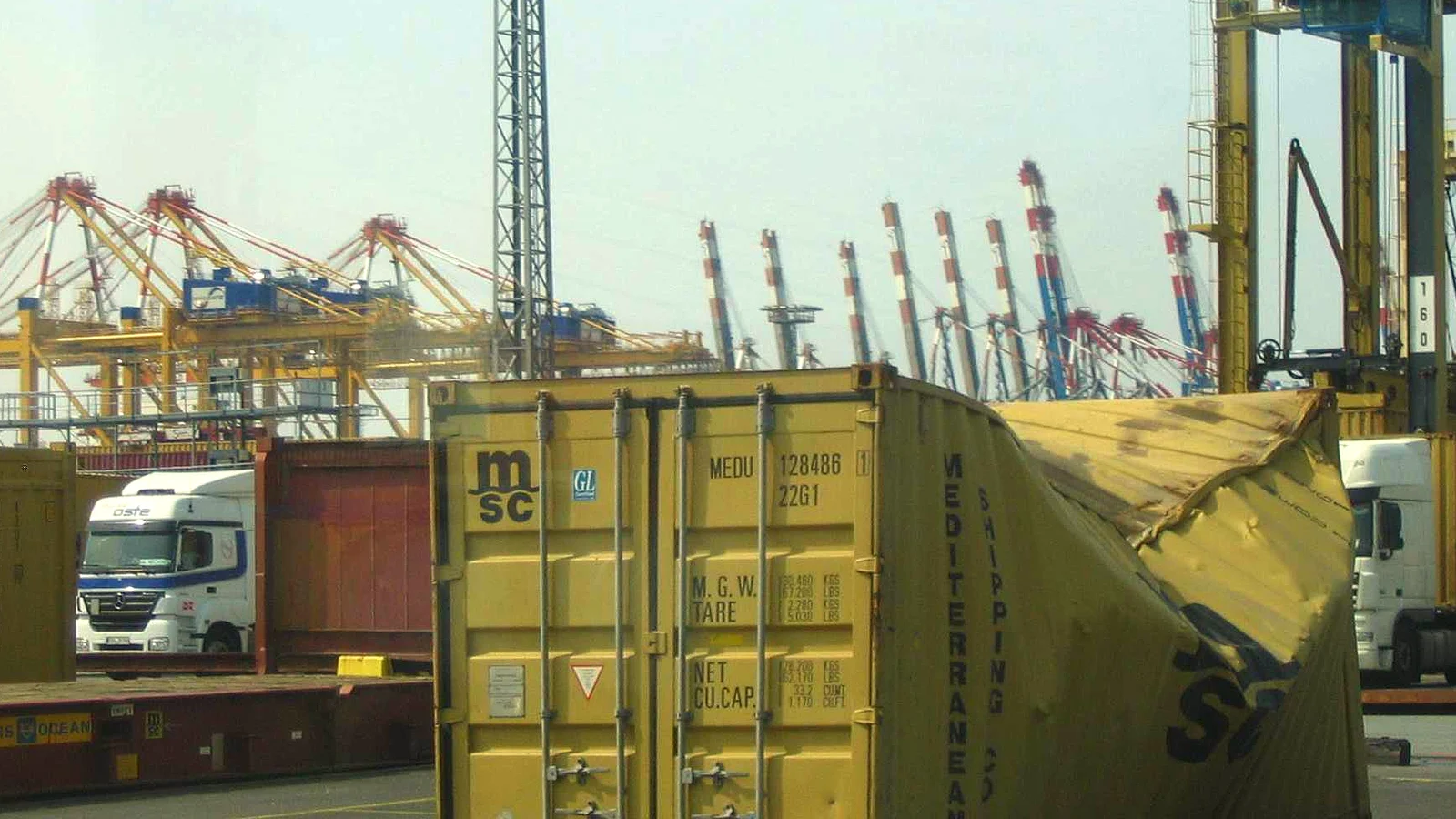
A container comes off the vessel with one corner caved in like a dented soda can. Nobody saw it happen. Between the shipper’s warehouse and the consignee’s dock it passed through a truck bed, a terminal yard, a ship’s hold, and another terminal, and the damage happened somewhere in that relay. Deciding who pays on a cargo damage claim rarely comes down to legal argument. It comes down to which party’s camera caught the dent first. In freight, a photograph isn’t paperwork to file and forget. It’s usually what actually settles the claim.
A cargo claim is a written demand to the carrier, forwarder or insurer for compensation when goods are lost or damaged in transit. On road and rail freight the same thing is usually called a freight damage claim. A container damage claim can also be about the box itself, not only what was inside. The evidence question is the same in all three: what condition was the cargo in when it changed hands?
Custody and Liability
A shipment changes hands repeatedly, and each handoff shifts who’s responsible if something goes wrong. The container’s condition at each point fixes where a loss lands. Container inspection at gate-in and gate-out, condition reports, seal checks, and stuffing photographs all exist to pin that condition down at the moment it changes hands. Take a reefer unit that shows a temperature excursion on delivery: whether the carrier, the trucker, or the shipper eats that loss usually turns on whether anyone photographed the setpoint and the door seal at gate-in. The bill of lading rarely settles it on its own.
When the records around a handoff are thorough, resolving a container damage claim is close to reading a file cover to cover. When they’re thin, it becomes two sides arguing from partial information.
The clock matters too. Under the Hague-Visby Rules, Article III rule 6, written notice of loss or damage is due at the time the goods are handed over, or within three days if the damage is not apparent. Without that notice, delivery counts as prima facie evidence that the goods arrived as described on the bill of lading. Suit has to be brought within one year of delivery. Photo evidence for freight claims taken at discharge is what turns that short notice into something a carrier has to take seriously.
Worth a detour here: under the IMO’s FAL Convention, every member state has been required to run a Maritime Single Window for port-call data since 1 January 2024, so ship-to-port information now moves electronically. Operations that already keep timestamped, tagged photos in a searchable system are most of the way to what that shift requires. Companies with images scattered across phones, email threads, and shared drives will eventually have to label all of it anyway, just later, in one batch, under deadline pressure.
The Volume Problem
A single shipment can generate two dozen images without anyone trying: the container’s exterior at pickup, the seal, the stuffing sequence, lashing and securing, close-ups of any damage, delivery condition, a signed proof of delivery. Scale that up to a mid-sized forwarder’s yearly volume and the total runs into six figures. Most of it ends up named whatever the phone assigned, sent through a messaging app, dropped into folders that only make sense to whoever created them. The photos exist. Eighteen months on, once a dispute lands on someone’s desk, almost nobody can find the one that matters.
One photo in that pile can settle a dispute in an afternoon. Finding it fast is the hard part. A photo needs to be tied to the booking number, the container it shows, and the timestamp and location the moment it’s taken. In practice that means a handful of fields attached automatically at the moment of capture: booking reference, container number, GPS coordinates, a timestamp. Someone typing a filename from memory during a coffee break doesn’t produce that. The goal is simple to state: make images findable by what’s actually in them, no matter which folder they landed in. The same container number that ties a photo to a box also ties it to the box’s tracking timeline, so the gate-in photo and the gate-in event sit side by side.
Making Capture Easy
Anything that adds a step at the moment of capture gets skipped. The person taking the photo is usually holding a phone and a clipboard on a working quay with a line of trucks waiting. An app tied to the booking reference that tags location and timestamp automatically, and uploads on its own once there’s signal, gets used without anyone thinking about it. Telling a driver to rename files later or fill out a form after the fact rarely works.
Training for this doesn’t need to be elaborate. A fifteen-minute session covering three habits does most of the work: frame the container number and the damage together in one shot, place something recognizable, a pen, a boot, a hand, next to the dent for scale, and take a wide shot of the whole container before moving in close. Skip those three steps and the folder fills up with tight, zoomed-in shots of a puncture with nothing around it to prove which container it came from.
Checklist: Photos to Take at Every Handoff
A cargo damage claim is only as strong as the weakest handoff in the file. These are the shots worth taking every time the box changes hands:
- Exterior, wide: all four sides and the roof line, with the container number readable in at least one frame.
- Container number and check digit: close-up on the door end, matched against the booking.
- Seal: the seal number in focus, on the closed doors, before anyone cuts it.
- Doors open: the cargo face as first seen, before anything is moved.
- Stuffing sequence: each layer during loading, plus lashing, blocking and bracing. The CTU Code packing checklist lists what a correct stow looks like.
- Damage close-ups: each dent, hole or wet patch, with an object for scale and one wider shot showing where it sits on the box.
- Reefers: the controller display with setpoint and supply temperature, and the door seal at gate-in.
- Delivery: the condition on arrival and the signed proof of delivery, with any remarks written on it.
Secondary Uses of the Same Photos
Searchable photos get used for more than settling one dispute. Pattern analysis on damage records can flag that a specific trade lane, terminal, or packing method keeps producing the same failure: crushed corners on palletized ceramics running through one particular transshipment port, say, or torn cartons after a specific stevedore crew’s shift. Condition records give cargo insurance conversations something concrete to point to. Delivery images head off consignee disputes before they start. A full record built while cargo is still moving carries more weight with a surveyor or underwriter than evidence assembled after a claim has already been denied.
Setting Rules in Advance
The forwarders and carriers with the cleanest claims record settled a short list of questions beforehand. What gets photographed at each stage, and whose job is it? How does each image get tied to a specific shipment? Where does it live, who can access it, and how long is it kept? That retention question needs real thought: claims in this trade often drag on well past the point where anyone would think to clear out an old file.
None of this is complicated to set up on a quiet afternoon. It gets a lot harder the moment a container shows up with a smashed corner and the gate-in photo can’t be found. There’s a project cargo claim still open three years after delivery, stuck because the two sides can’t agree on liability for a cracked flange nobody photographed at the right moment, and somewhere along the way the phone that held the original gate-in shots got replaced and the photos never made it off it. That kind of detail is what actually kills a claim.
It also helps to agree on a common format with regular partners: a shared naming convention, the same minimum shot list, and one drive that every regular partner can actually reach. When both sides already trust the paperwork, a claim usually closes fast, often inside a week. Disputes over formatting are what stretch things out, and the legal fees on both ends can end up costing more than the cargo itself.
Frequently asked questions
Who is liable for damage to a shipping container?
The party that held the container when the damage happened. Liability usually follows custody, so the deciding evidence is the condition record at each handoff: gate-in and gate-out inspections, seal checks and stuffing photos. If one side photographed the box intact and the next side cannot show it arrived damaged, the loss lands with the second side.
How long do I have to file a cargo damage claim?
Under the Hague-Visby Rules, Article III rule 6, written notice is due at the time the goods are handed over at the port of discharge, or within three days if the damage is not apparent. Suit against the carrier must be brought within one year of delivery unless both sides agree to extend it. These rules cover many sea carriage contracts but not all of them. Road, rail and air shipments follow other regimes with their own limits, so check the contract and the convention that applies.
What photos support a cargo damage claim?
A wide shot of each side with the container number visible, the seal number before it is cut, the cargo face when the doors open, close-ups of each damaged spot with an object for scale, reefer controller readings, and the signed proof of delivery with remarks.
How should cargo damage photos be stored?
Tag each photo at capture with the booking reference, container number, timestamp and GPS location, and keep them in one searchable place that regular partners can reach. Keep them at least until the one-year time bar has passed, and longer for project cargo or open disputes.
Who pays for a damaged container?
The party that had custody when the damage happened, as far as the contract and the evidence show. Condition records at each handoff usually decide this more than legal argument does, which is why gate-in and gate-out photos matter.
What is a cargo damage claim?
A written demand for compensation when goods are damaged or lost in transit, made to the carrier, forwarder or insurer. It is backed by the condition record at each handoff: photos, inspection reports, seal records and signed receipts.