





















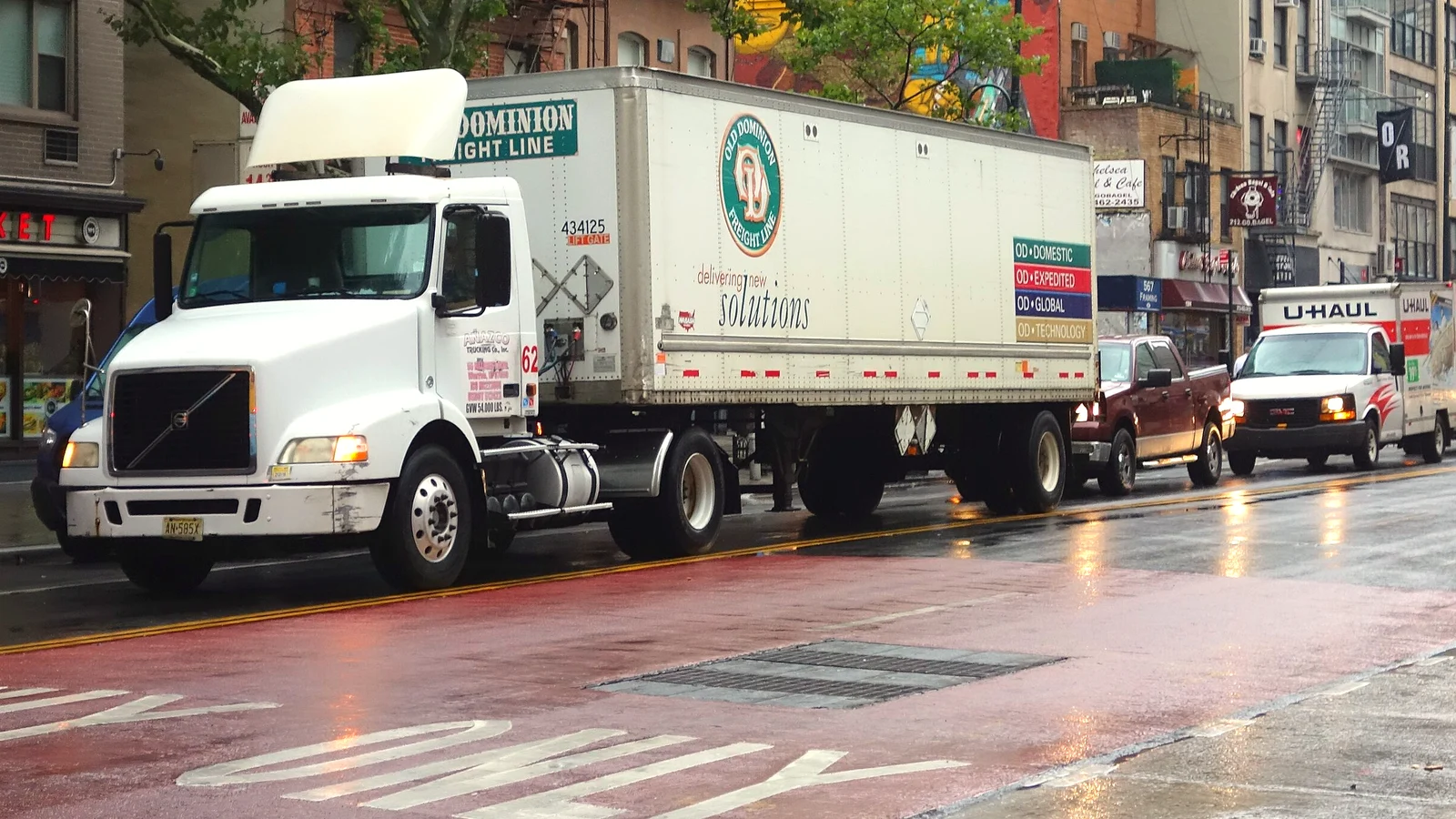
A bill of lading that looks wrong gives an LTL carrier room to check it. Old Dominion Freight Line’s tariff, ODFL 100-Q, lets the carrier or its agent reweigh, inspect or recompute density. An LTL reweigh and reclass that changes the classification adds $25 per shipment, and freight, fuel surcharge and accessorials are re-rated.
The tariff clause that allows a recheck
Old Dominion’s tariff, effective April 14, 2025, spells out the triggers in Item 367. A weight increase of 20 pounds or more over the bill of lading costs $25. A missing weight costs $25 too, and the carrier weighs the shipment. Item 162 adds a $25 verification fee that the carrier may apply when the shipper fails to give the correct description, density or weight on the bill. The payor of the freight charges bears the Item 367 charge. That makes an LTL reweigh and reclass a cost the payor sees on the freight bill.
On scales, the tariff says the carrier verifies that they are “for trade” and accurate within 1% tolerance of actual weight. The April 14, 2025 text exempts shipments priced at a capacity load minimum charge or a cubic capacity and density minimum charge. Tariffs get updated, so check the live text before relying on it.
July 19, 2025: classes begin to follow density
NMFTA announced that on July 19, 2025 the National Motor Freight Classification would reclassify more than 2,000 items, many of them moving to density-based classes. It also replaced the 11-sub density scale with a 13-sub scale. Old Dominion summarizes the shift as a move from commodity-based to density-based classes under Docket 2025-1. Density is pounds per cubic foot, from weight and dimensions. The same page says Docket 2025-2 came out in fall 2025 with more item cancellations. NMFTA’s own Docket 2026-1 was issued on February 6, 2026, with a public meeting in Savannah on March 10, 2026 to discuss proposed amendments. The system still sorts freight into 18 classes, from 50 to 500, using density, stowability, handling and liability.
Old Dominion’s own LTL guide says correct density calculations help prevent reclassifications and invoice discrepancies. The tariff lists computations to confirm density among the actions a carrier may take when a bill looks incorrect.
What a shipper can put on file before tendering
Old Dominion’s guide asks shippers for precise pallet counts, certified weights and exact dimensions, including any overhang or Do Not Stack cones. The reason is billing. Correct numbers prevent costly discrepancies. Keep that set next to the bill of lading, with the density worked out. A terminal may reweigh or recompute. The tariff says the carrier or its agent will take necessary actions to determine the correct information. A shipper’s own record of weight, dimensions and density is what it can set beside those actions.
Where the FTL line sits
LTL is priced per unit of space from weight, mileage, dimensions and freight class, while FTL is priced for the entire trailer, according to Old Dominion’s guide. Amazon Freight adds that a truckload shipper gets the trailer exclusively. Fewer stops, less handling. LTL freight shares the trailer, stops several times and may be unloaded and reloaded.
The boundary moves with the source. Old Dominion puts LTL at typically one to six pallets, roughly 150 to 15,000 pounds. Amazon says 100 to 10,000 pounds, and some carriers go higher. The tariff’s own definition is typically under 20,000 pounds or 20 linear feet of trailer. The tariff is an LTL rulebook. No source here says how an FTL carrier handles a disputed weight. Ask the truckload carrier for its terms.
If the pallets arrive in an ocean container, Navo’s container tracking covers 240+ carriers and shows where the box stands before the LTL pickup is booked.
Frequently asked questions
How many pallets fit in a 53-foot trailer?
Amazon Freight says a 53-foot dry van holds about 26 to 30 pallets in a single layer, depending on their size and weight. It also cites NMFTA for an LTL limit of six pallets per shipment at most companies.
Why are LTL delivery dates less certain than FTL?
Old Dominion's guide says LTL freight is consolidated with other shipments and may pass through multiple terminals, so transit times are generally longer than FTL. Amazon adds that LTL delivery dates are often estimates.
Does LTL freight need extra packaging?
Amazon Freight says LTL freight is combined with other shipments, so it could need extra packaging to reduce damage risk. It adds that fragile or perishable products may not suit LTL because of longer transit times and more touch points.