



















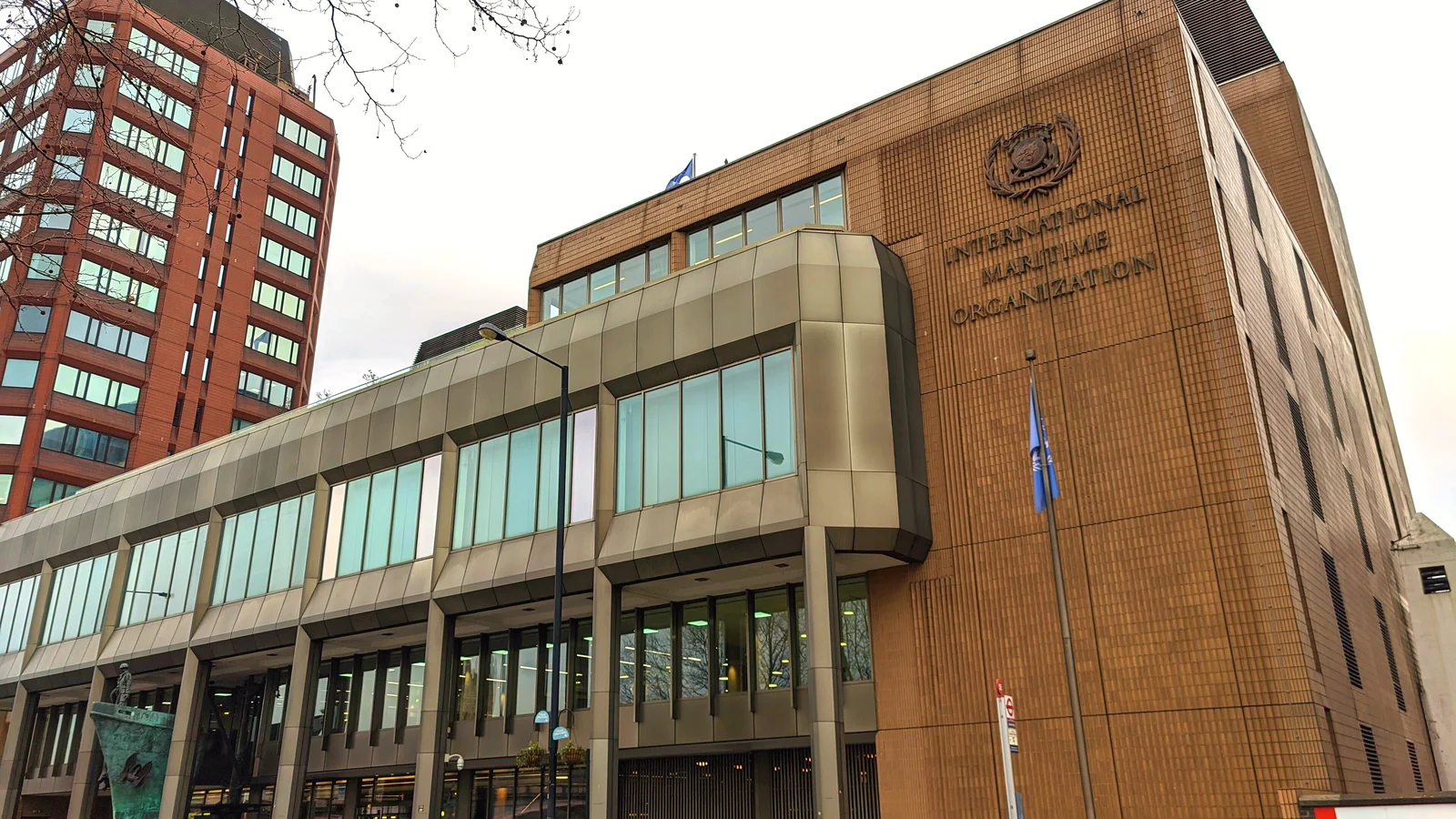
Three IMO meetings in twelve days will shape the IMO net-zero framework. First, the working group ISWG-GHG 23, 23 to 27 November. Then MEPC 85, 30 November to 3 December. The extraordinary session that would decide on adoption is set to resume on 4 December. That date is subject to discussions at MEPC 85. The IMO summary of the September group gives the other two dates.
A vote that went to a delay
In April 2025, 63 countries voted to approve the draft text, after the US withdrew from negotiations. In October 2025, 57 voted to delay adoption. The September working group drew nearly 1,200 registered participants and its chair saw real willingness to progress, but time ran short, so the implementation guidelines and the life-cycle documents were pushed to November.
Nothing in the draft is in force.
Edmund Hughes speaks for the International Bunker Industry Association at the IMO, and on 12 November he told Platts that states broadly agree on the need for a marine fuel standard. What they have not agreed on is the financial mechanism attached to it. The United States opposes that element and calls it “a global carbon tax” on shipping. A growing number of member states have proposed revisions in search of a compromise, per the Platts report carried by Apeks.
Who pays for the dearer fuel
The draft, not adopted, would set greenhouse-gas intensity thresholds for marine fuel that tighten over 2028 to 2035, and a ship that misses one pays. Supporters say the payment would promote low-carbon fuels, which remain much more costly, per Platts. The Platts calculator put delivered bunkers in Singapore for October at $22.78 per gigajoule for 0.5%-sulfur fuel oil, $27 for the B24 bioblend, $28.48 for LNG and $48.47 for 100% sustainable methanol.
Methanol costs more than twice as much as the oil.
Hughes, speaking of a mechanism that closes the price gap, said no shipping company will keep buying the dearer fuel while its competitors do not. As the draft stands, the thresholds start in 2028, so the IMO net-zero framework belongs in contracts that run past that date. A quote for next spring, read against ocean spot rates, is unlikely to need it priced in.
What Maersk bills in Q4
Carbon cost is billed today, and it comes through Europe’s rules, not the IMO’s. Maersk’s Q4 2026 emissions surcharge runs from 1 October to 31 December and rests on an average EU allowance price of EUR 78.97, taken over 16 May to 15 August. It covers EU ETS and FuelEU Maritime costs for any booking with a load or discharge port in an EU or EEA country. Far East Asia to North Europe costs USD 170 per 40ft dry container, and the way back USD 114. UK ETS costs are not passed on. Maersk calls the impact minimal.
Spot bookings and contracts of up to 31 days carry the name ESS. Longer contracts get EMS.
China bookings read differently. Bookings from China, excluding Hong Kong and Taiwan, get the surcharge added to the base freight rate “for regulatory reasons”, so a quote may show no separate carbon line. A quote that itemises the charge and one that folds it in do not compare until the carbon cost sits in the same place on both. Only the all-in figure compares fairly.
Q4 holds to 31 December. Maersk adjusts the China base rate quarterly, up or down, to follow the updated surcharge.