





















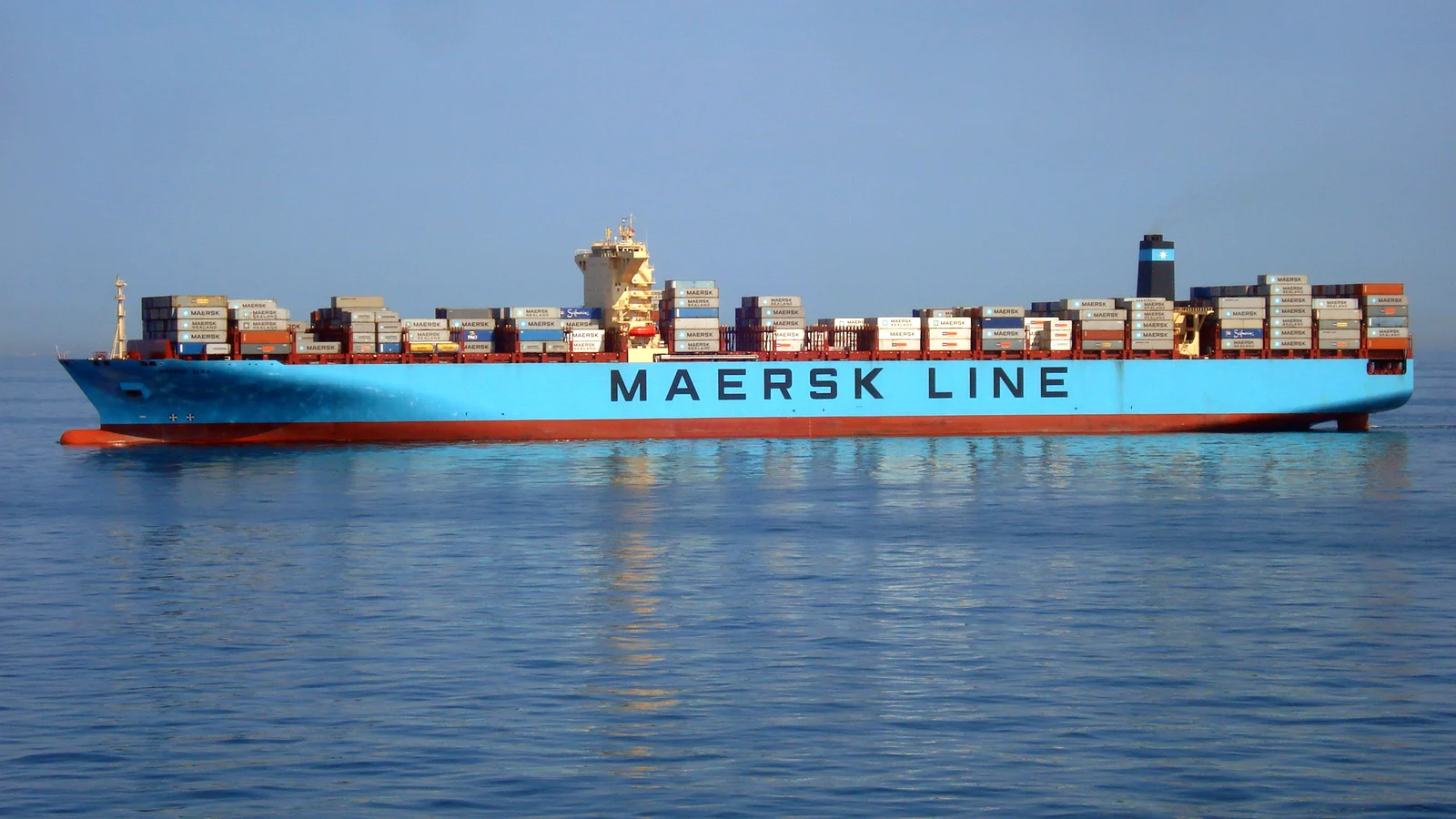
A shipper with boxes booked on the Gemini AE1, AE2 or AE3 string after 4 December has one question to settle before the cargo reaches a gate: which road will that vessel take. The Gemini Suez return, announced by Maersk and Hapag-Lloyd on 16 November, puts Gemini’s last three Cape-routed Asia-Europe strings back on the Suez Canal, one loop at a time.
The three loops
Maersk’s customer advisory names AE1, AE2 and AE3. Hapag-Lloyd’s notice, as Phaata reproduces it, gives the same strings under the codes NE1, NE2 and NE3 and adds the eastbound voyages that follow: 703E, 708E and 705E.
| Maersk / Hapag-Lloyd | First vessel, voyage | First load port | Berthing (ETB) |
|---|---|---|---|
| AE2 / NE1 | Mary Maersk, 650W (18,300 TEU) | Ningbo | 4 December |
| AE3 / NE3 | Alette Maersk, 652W | Shanghai | 20 December |
| AE1 / NE2 | Damietta Express, 702W | Shanghai | 14 January 2027 |
The rotations are published. AE2 runs Ningbo, Shanghai and Tanjung Pelepas, crosses Suez to Rotterdam, Wilhelmshaven and Bremerhaven, calls Rotterdam a second time, then returns through Suez by way of Salalah and Singapore. AE3 starts at Shanghai and Yantian, calls at Tanjung Pelepas, crosses Suez and reaches five North European ports, among them Gothenburg, Aarhus and Southampton. AE1 runs Shanghai, Yantian and Tanjung Pelepas, then Suez, Rotterdam, Hamburg, Antwerp and Tangier, with a UK call in between.
What the date measures
Each date is the first loading port, not the canal. The Hapag-Lloyd table gives them as estimated berthing times, The Loadstar calls the Ningbo date a departure, and FreightWaves says plainly that they are not dates for passage through the canal. Hapag-Lloyd adds that all three are approximate and subject to operational conditions.
The Hapag-Lloyd notice names only these three first voyages.
Maersk promises “more efficient transit times” and gives no number. Anyone quoting a customer a new transit time for these strings is quoting a guess until the first vessel has passed through Suez. Once she has, where the vessel is covered, the sailings can be followed in the vessel schedules.
Fewer ships, more room
Fleet size changes with the route. Xeneta’s eeSea database shows the AE2 string dropping from 14 ships to 13, The Loadstar reports, and ContainerSignal’s 18 November briefing adds AE3 going from 13 to 11. A shorter loop needs fewer hulls. Maersk said, as FreightWaves reports, that shorter voyages can release vessels from longer rotations, giving carriers room to rebalance capacity across their networks. According to Linerlytica, Gemini becomes the first alliance with every Asia-Europe service back on the Suez routing.
Rates and the Red Sea
Views on the price effect of the Gemini Suez return differ. DHL Global Forwarding warned, as FreightWaves reports, that congestion and network adjustments could keep supply chains under pressure into 2027 even as Suez releases capacity, and FreightWaves cautions that U.S. importers should not expect an immediate drop in ocean rates. Xeneta’s chief analyst Peter Sand put it the other way at the company’s annual summit in Munich, telling delegates, as The Loadstar reports: “If there is a full return, freight rates could plummet.” The same speaker named the opposite case, a worsening Red Sea security situation that sends carriers back around the Cape.
Maersk itself ties every change to continued stability in the Red Sea.
What to check on a booking
Ask the carrier for the voyage number along with the date. Voyages 650W, 652W and 702W are the first ones named for the new rotation; for anything booked earlier, get the routing confirmed in writing. For a quote that runs past mid-January, recheck the rotation the week before cut-off.
Hold rate commitments built on the assumption of a full return until at least one of the three strings has completed a round trip. The first test is AE2: Mary Maersk is due at Ningbo around 4 December, and the switch should take the string from 14 ships to 13, per Xeneta’s eeSea data.