





















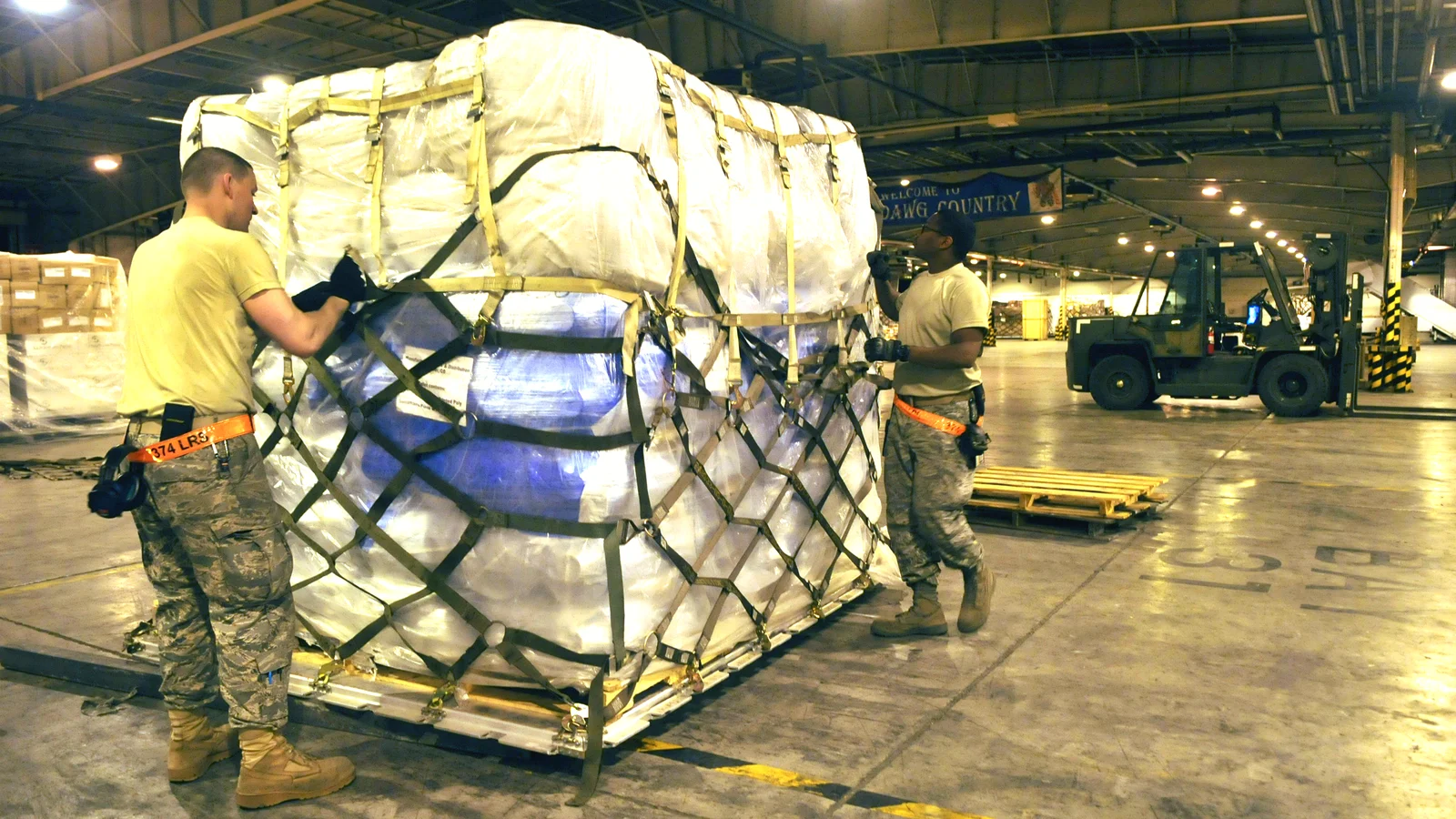
On 17 November Thai Airways announced on its social media accounts that the inbound warehouse backlog at Suvarnabhumi Airport had been cleared. On 18 November The Thaiger reported that several commenters on that post said their shipments remained missing or untraceable.
The Bangkok airport cargo backlog was put at more than 1,000 lots awaiting release and 700 to 800 pallets waiting to be unpacked in the first week of November, in accounts circulating among airlines that The Nation cited from a Thansettakij report of 5 November.
Flooding in late September left the terminal short of hands
FreightWaves traces the trouble to flooding in late September, when many workers could not reach Suvarnabhumi and processing times stretched. Expeditors told clients on 1 October that Thai Airways had lifted a temporary suspension of inbound, outbound and transshipment handling and that significant backlogs remained at both the Thai Airways terminal and the Bangkok Flight Services terminal, known as BFS. The Thaiger puts the airline’s halt on accepting cargo at its warehouse between 30 September and 6 October.
Thai Airways’ cargo unit asked other airlines to cut inbound volumes by 50% between 31 October and 7 November, or to consolidate freight into containers so it took less warehouse space, The Logistic News reported. Singapore Airlines Cargo restricted some categories of cargo that week, and on 8 November the Thai Chamber of Commerce warned in the Bangkok Post that the pile inside the Thai Airways warehouse was now reaching outbound shipments as well.
The warehouse could not find what it was holding
A shipment nobody can locate cannot be released. The flood explains none of that. The Thai Airfreight Forwarders Association (TAFA) said the cargo clearance system, built by Airports of Thailand and Thai Airways together, was not recording where each shipment was stored or what its status was. Some shipments stayed out of reach long after their flights had landed, which added to congestion outside the warehouse in the airport’s free zone. Dimerco gives the mechanical consequence: inbound cargo still sitting on PMC pallets waiting for breakdown ties up the same pallets and loading equipment that exports need, so outbound lots wait for equipment that inbound freight is holding.
Thai Airways apologised on 5 November, added staff and forklifts, and said it would handle shipments that arrived before 23 October first. Airports of Thailand then provided Warehouse 4 in the duty-free zone for storage, and on 9 November the cargo tag system was connected to the airport operator’s Cargo Clearhouse platform. On 16 November the government added five measures, among them 115 extra warehouse workers and 30 more forklifts. The airline’s 17 November announcement said a tracking and search system was now running to locate shipments faster.
TAFA had asked for accurate cargo status in the system, one central channel for updates and a formal explanation from the airline for smaller customers and factories. THAI Cargo had issued no further public statement addressing the complaints as of 18 November.
The two handlers at Suvarnabhumi are recovering at different speeds
Dimerco’s update of 16 November, describing conditions on 11 November, says export acceptance and staffing at BFS are returning to more normal levels, though truck queues at the frontage remain long. BFS has also put up a dashboard for its truck-queue system that alerts when a vehicle has waited more than two hours, The Nation reported on 5 November.
At the Thai Airways terminal, Dimerco’s 11 November conditions are harsher: import collection may take several days to weeks, and exports may roll to flights about two to three days after the booked departure. Dimerco also notes that some airlines have placed temporary limits on Bangkok-bound bookings across the airport, so space can tighten with little warning. It carried no recovery date.
For a shipper dealing with the Bangkok airport cargo backlog, the first question is which terminal handles the airline on the air waybill, and the second is how many days of slack the consignee can absorb. Dimerco sells the workaround: it offers air-truck through Singapore or Hanoi into Thailand, and air-air through Singapore with the second leg on a carrier handled at BFS.
A lookup by AWB returns the latest event on a normalised Cargo-IMP timeline (RCS, DEP, RCF, NFD, DLV), which gives a shipper a status to quote when the airline’s cargo desk is asked about a specific lot.