





















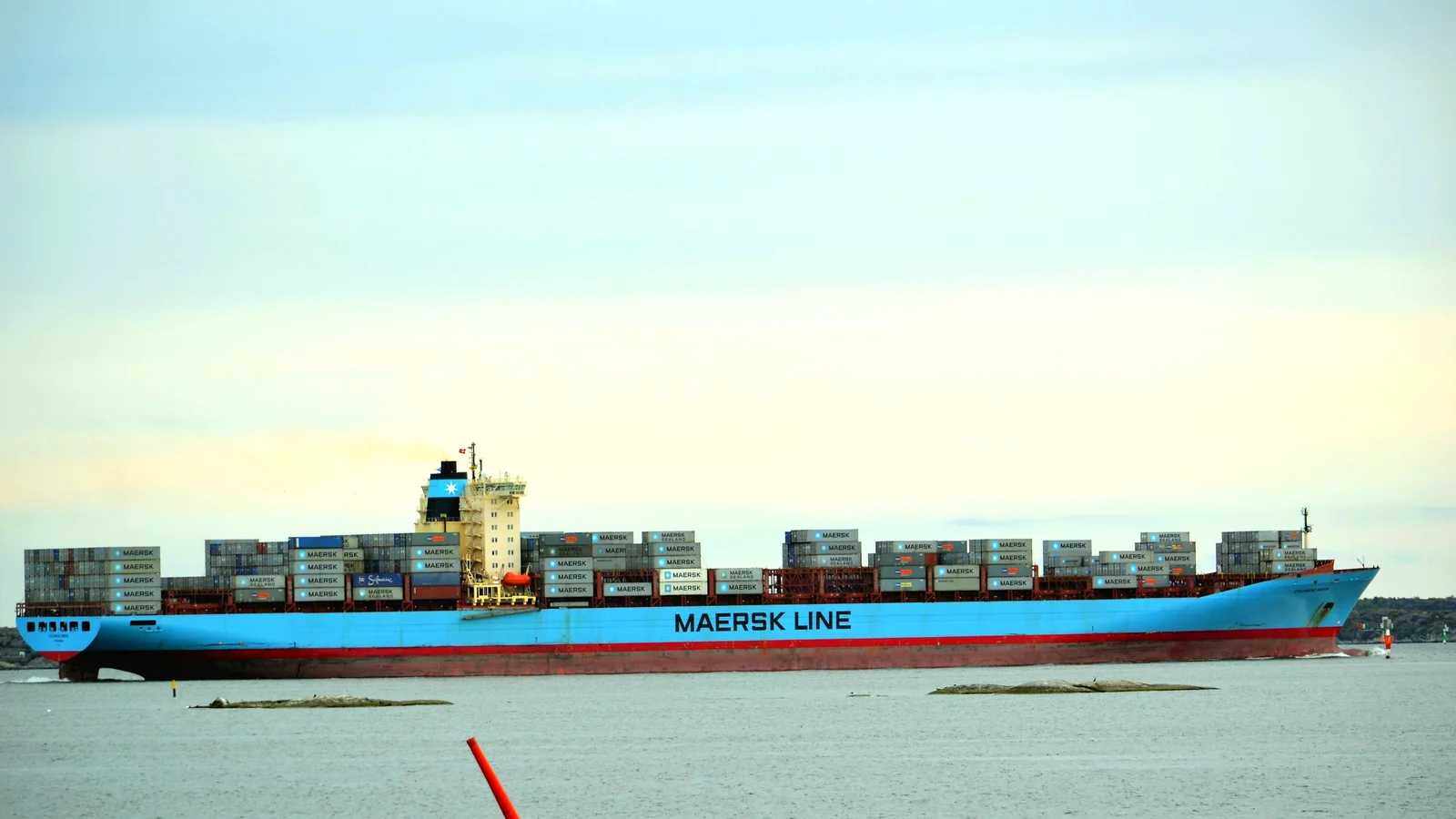
Maersk raised its 2026 underlying EBITDA guidance to USD 14.0-14.5bn on 5 November, according to the company’s results release. Its shares fell about 11% in early Copenhagen trading.
The Maersk Q3 results 2026 explain the gap. Third-quarter EBITDA of USD 4.7bn was up 75% on a year earlier but below the USD 5.04bn mean forecast in an LSEG poll, which the Reuters report carried by Baird Maritime cites. The new full-year range was broadly in line with the USD 14.02bn analysts already expected, which put the consensus at the bottom edge of the range.
Four guidance ranges since May
Each reset came in above the one before.
| Update | Underlying EBITDA, USDbn | Free cash flow, USDbn |
|---|---|---|
| 7 May | 4.5-7.0 | -3.0 or higher |
| 29 June | 8.0-10.0 | -1.5 or higher |
| 13 August | 10.5-12.5 | above 0 |
| 5 November | 14.0-14.5 | above 3 |
FreightWaves counts November as the third profit-guidance upgrade of the year. Analysts it cites from Dow Jones had already marked expectations up after Hapag-Lloyd and Zim raised their own outlooks, so a raise in line with the consensus was priced in before Maersk published it.
Ocean EBIT of about USD 2.6bn, against USD 567m a year earlier, still missed a FactSet forecast of USD 3.07bn.
Where the third-quarter profit came from
Global container demand grew 2% to 4% year on year in the quarter, Maersk says. A severe typhoon season in Asia pushed global average port waiting times to 16.6 hours at the peak, the highest since January 2023, and spot rates on the Shanghai Containerised Freight Index rose 46% on the second quarter. Vessel utilisation stayed at 96%, yet volumes in the main shipping business fell about 1%, FreightWaves reports, so the extra profit came from the price of each box.
CEO Vincent Clerc described the fleet as “operating at full capacity” with “demand exceeding available space on certain routes”.
The Baird Maritime copy of the Reuters report says the guidance jump came from prices and not from cargo. Maersk’s earnings are tied to congestion and disruption that some analysts expect to fade as ships return to the Suez Canal and new vessels arrive. Maersk has started that return: its ME1 service between India and Europe is due to resume sailing through the canal.
The release itself lists the costs of the same conditions. The continued closure of the Strait of Hormuz and network congestion raised bunker, network and container handling costs and affected schedule reliability.
The sensitivity line: USD 100 per FFE is worth USD 0.3bn
The Maersk Q3 results 2026 include a line on how far full-year EBIT moves on four assumptions, all else being equal. A change of USD 100 per FFE in the container freight rate, up or down, moves full-year EBIT by USD 0.3bn. A change of 100,000 FFE in volume moves it by USD 0.02bn.
For a shipper, this shows where the carrier’s profit sits: a rate move of the size Maersk quotes is worth fifteen times a volume move of the size it quotes. A 2027 contract benchmarked on Q3 spot levels is benchmarked on the quarter when global port waiting times hit their highest point since January 2023.
Maersk’s USD 14.0-14.5bn range assumes container market volume growth of around 4% for the full year, the release says.