





















Meta keywords: supply chain security, cargo theft prevention, secure truck parking, red zone stops, trucking cargo security
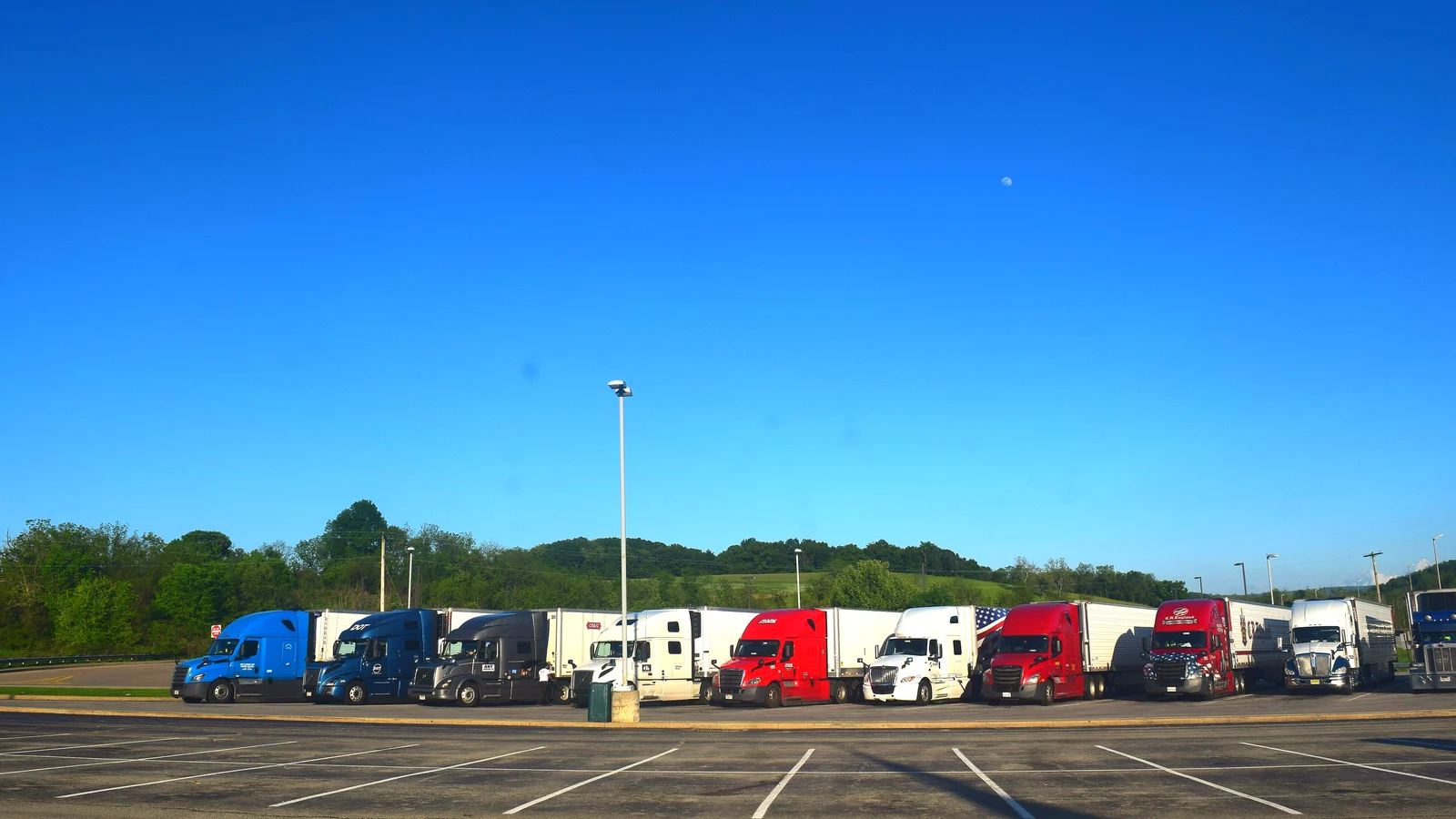
Eight a day. That was the average of reported thefts from unsecure truck parking worldwide in TT Club’s 2019 data. TT Club adds that cargo is most at risk at rest, whether for a short statutory break or a daily or weekly rest period, and that is where supply chain security work on the road begins.
Two releases, two 2019 figures
In the report on 2019 data, BSI and TT Club counted road transport in 87% of reported theft cases (84% in 2018). Another line from the same release: in-transit thefts rose to 37% of incidents. The release on 2020 data then gave 87% as the 2019 in-transit share and 71% for 2020. It never explains the gap between its 87% and the earlier 37%, so check the label before quoting either number.
What the 2020 release does show is a change of place. In Europe, rest areas and parking sites accounted for 54% of reported incidents in 2019 and 19% in 2020. Warehouses and production facilities went from 18% to 48%. Worldwide, storage facilities rose to 25% of losses.
TT Club called 2020 an atypical year, and tied the shift to the pandemic: radical changes in consumer buying patterns disrupted supply chains. In Europe, the stockpiling of goods put inventories under particular threat. Mike Yarwood, TT Club’s Managing Director of Loss Prevention, said bottlenecks at ports and warehouses raised the risk, and “Temporary overflow storage facilities added to the dangers in loosening the grip of existing security systems.”
North America looked different in 2020. Theft there still came almost entirely in transit: hijackings, or loads taken straight from a parked vehicle. Mexico had its own problem that year. Protesters blocked the rail tracks, cargo backed up across the country, and TT Club put estimated losses from the disruption at close to US$4.4 billion. Ocean shippers caught in a backlog like that can look up where a container is instead of waiting for a call.
The same count, a bigger bill
In 2025, CargoNet recorded 3,594 supply chain crime events across the United States and Canada, against 3,607 in 2024. The incident count barely moved.
Confirmed cargo thefts rose 18%, from 2,243 to 2,646. Estimated losses rose 60% to nearly $725 million, and the average theft climbed from $202,364 to $273,990. Keith Lewis, vice president of operations at Verisk CargoNet, called it a shift: “Criminal enterprises are becoming more selective and sophisticated, targeting extremely high value shipments rather than relying on opportunistic theft.”
California stayed first with 1,218 incidents, yet Los Angeles County fell 11% while Kern County rose 82% and San Joaquin County 44%. New Jersey rose 50% and Indiana 30%. Food and beverage thefts reached 708, up 47%. Meat and seafood were heavily targeted in the Northeast, tree nut thefts were more common on the West Coast, metal theft rose 77% on demand for copper, and criminals increasingly targeted enterprise computer components and cryptocurrency mining hardware.
The two datasets cover different regions, years and methods, so the figures above are not one series. Each points to its own cause: TT Club to security systems that stopped holding when freight was stored in unusual places, CargoNet to thieves choosing more valuable loads.
Trust is a gate too
CRST, a US trucking company, wrote in August 2023 that many cargo thefts involve inside information or complicity and advises screening drivers, warehouse employees and everybody else who has access to shipping information.
CargoNet’s outlook describes a weakness from outside the company. It expects groups that steal by deception to increase their focus on misdirecting shipments tendered to legitimate carriers, sidestepping compliance controls that have centered on the tendering process itself.
On the road, the August 2023 CRST post advises drivers to avoid stopping and staging cargo within the red zone, the 200 miles around the origin point that attracts high theft. If a stop cannot be avoided, the same post says to monitor the stopping time, keep in contact throughout, and choose a populated, well-lit place.
For cargo theft prevention, the sources leave a question to ask of each shipment: where does it stand still, and who knows it is there? In its outlook published on 21 January 2026, CargoNet expects thieves to keep targeting RAM modules, storage drives and enterprise computing equipment through 2026.
Frequently asked questions
What is a red zone stop, and how should a driver handle one?
CRST defines the red zone as the area within 200 miles of the origin point, which attracts high theft. Its advice is to avoid stopping and staging cargo there. If a stop cannot be avoided, monitor the stopping time and activity, keep communicating throughout, and stop in a populated, well-lit area.
What should a secure truck parking site have?
TT Club and BSI list perimeter fencing that funnels vehicles through one managed access point, a lockable barrier or gate, checks on vehicles and drivers before entry and exit, CCTV covering the perimeter and the access points, trimmed foliage so cameras and patrols keep a clear view, lighting along the perimeter and access points, and signs saying the site is secure and monitored.
What is theft by deception?
CargoNet uses the term for groups that misdirect shipments tendered to legitimate carriers. CRST, quoting Commercial Carrier Journal and CargoNet, reported fictitious pickup and fraud complaints 675% higher in the first 20 weeks of 2023 than in the same weeks of 2022. A verified carrier name on the paperwork does not show who collected the load.