





















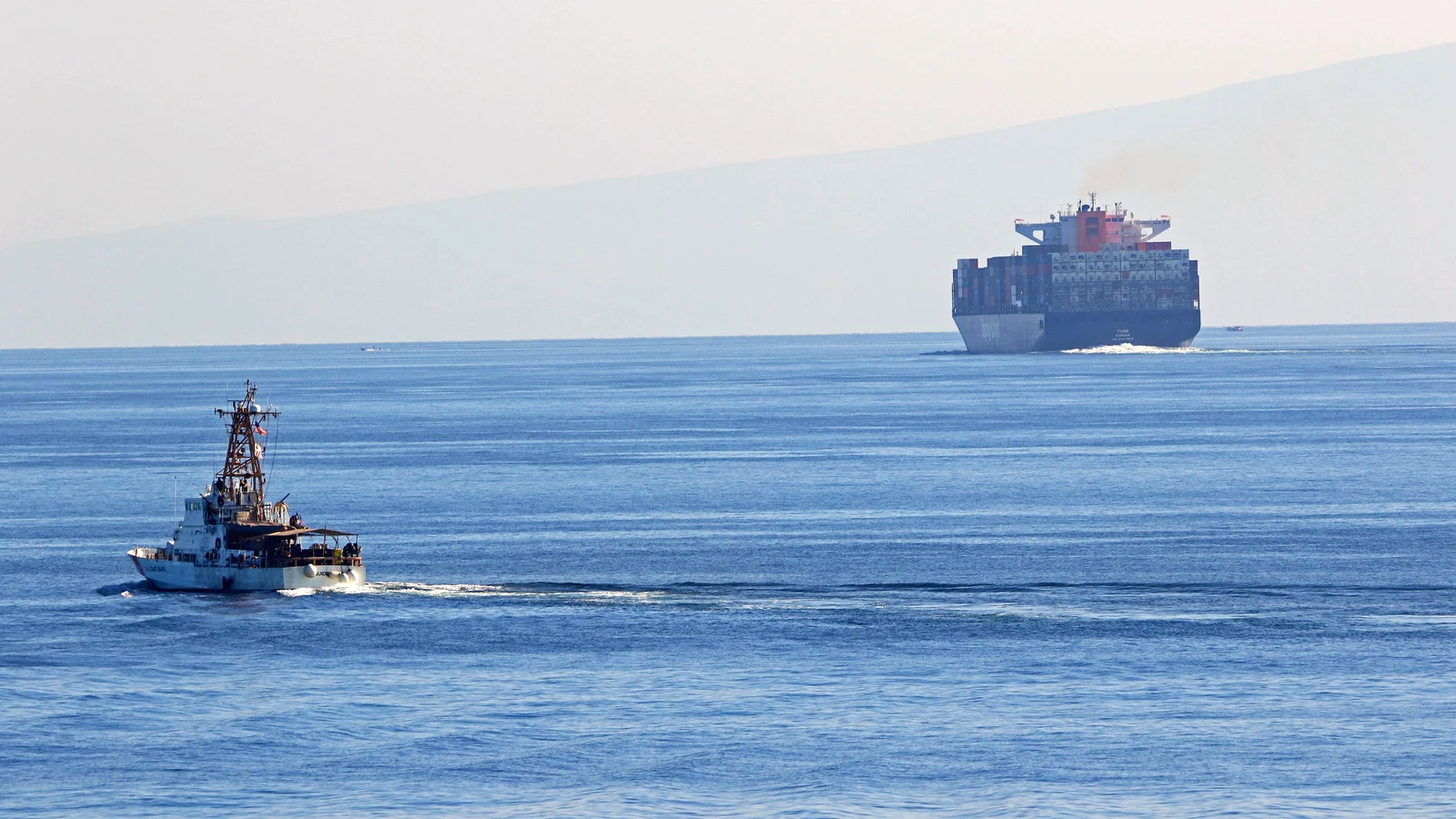
UKMTO’s weekly overview of 16 October lists 12 vessels struck between 9 and 13 October in and around the Strait of Hormuz, and the centre says it cannot establish the true number. Argus quotes the report: “UKMTO is aware via other sources of incidents but constrained on reporting through lack of verification.” Most attacked ships do not report to UKMTO, so incidents it hears about elsewhere stay out of the tally until someone confirms them. Strait of Hormuz transit data has a second gap of its own, because the services that count ships define a “transit” in different ways.
A tally that depends on ships reporting themselves
Argus puts 10 of the 12 incidents in the strait, one in the Gulf of Oman and one in the Mideast Gulf. Six vessels continued or reached port, two were disabled or not under command, three had damage or unconfirmed outcomes, and one was lost.
Waybill Wire separately reports that the Singapore-flagged containership GFS Pride sank on 13 October after a projectile strike, with all 21 crew evacuated.
Attacks keep clustering around the southern lane, the one US-assisted transits use. US Central Command says the United States and regional partners control the strait as commercial vessels “continue to transit despite unwarranted Islamic Revolutionary Guard Corps aggression.”
Only 42 of UKMTO’s 254 transits were seen on AIS
For the seven days to 14 October, Waybill Wire reports that UKMTO logged 254 transits, about 70% below pre-war levels. UKMTO’s overview defines a full transit as an IMO-numbered vessel completing a movement from the Arabian Gulf to the Gulf of Oman by any route in use within a 24-hour period. Forty-two of the 254 were AIS-observed. The other 212 were transits reported by the US, which UKMTO says it could not independently verify, according to Middle East Eye. Adm. Brad Cooper has claimed roughly 400 transits in the same seven days.
The Lloyd’s List Intelligence monitor counts something else: vessels above 10,000 dwt, with dark transits included, and hormuz.now adds that Iranian-linked ships are left out. For 5 to 11 October, a window three days earlier than UKMTO’s, it shows 132 transits, 101 of them dark.
Forty ships or eleven, depending on who counted
On 1 September two American officials told CNN that forty commercial ships had crossed under US military escort in a single day. Kpler counted eleven. The Manifest Archive, which tells the story, puts it plainly: “Forty and eleven are not two estimates of one thing.” Kpler describes its own figures as “confirmed floors” that revise upward as confirmations land.
According to hormuz.now’s methodology page, AIS-only sources such as IMF PortWatch miss ships that switch their transponders off, while Windward adds satellite imagery and radio-frequency detection. On 27 September PortWatch recorded 1 transit and Windward 24, 14 of them with AIS off.
Jamming can add crossings that never happened
Windward reports that of 642 transits logged through the strait in August 2026, 393 (61.2%) never happened. It calls them artifacts of GPS jamming, not ships, and measures vessel activity at 1,635 vessels an hour during jamming and 1,655 an hour in quiet periods. Its conclusion is that raw transit counts out of Hormuz cannot be trusted without verification against independent traffic data.
What a Hormuz figure in a rate notice should carry
Brokers told the Financial Times in early October that war-risk cover for a tanker’s single Hormuz voyage costs about 6% to 10% of hull value, against 0.15% to 0.25% for seven days of Gulf cover before the war, according to The Boston Report’s summary of the FT and Lloyd’s List. Waybill Wire says the UKMTO admission undermines any shipper or underwriter who prices risk in the strait on published numbers alone.
A carrier or forwarder that cites Strait of Hormuz transit data or an incident figure to justify a surcharge, a diversion or a delay notice is using one of these counts, and the notice should say which: the source, whether AIS-off transits are in it, the vessel-size cutoff, the dates. A UKMTO figure and a Lloyd’s List figure cannot be added together. For container shipping the relevant line is containerships, 4 of the 132 transits in the Lloyd’s List week to 11 October. A diversion around the Cape adds its own days, which the transit-day math breaks down.
An incident cited against a specific booking should carry a UKMTO warning number, a vessel name and a date. Waybill Wire counts four such warnings, 170-26 to 173-26, for 13 October alone, covering three containerships and one tanker. For a box already on the water, container tracking shows which vessel it is on and where that vessel last reported.