





















Rotate announced on 27 October 2026 that its air cargo sanctions screening will check routings and cargo descriptions as well as party names. In September 2025 OFAC settled with the forwarder Fracht FWO over a different failure point: the carrier’s name and the aircraft’s tail number were in the contract, and the review that should have read them was skipped. The price was $1,610,775.
Rotate says matching names alone is no longer enough
According to Air Cargo Week, Rotate Compliance is in co-development with cargo teams at several of the world’s largest airlines, with general availability expected in the first quarter of 2027. A major all-cargo carrier is testing it on real air waybill data. The tool screens parties together with shipment descriptions, routings and other attributes, and Rotate says that produces fewer false positives. Fabien Balouzet, the company’s head of product, described what analysts do today: “Most of it went to proving a shipment wasn’t a problem.” Teams have only the window between receiving a booking or its documents and departure, so the product combines live message streaming with due diligence workflows. A version for freight forwarders sits on the roadmap.
No screening engine can replace the legal interpretation of sanctions, export controls and licensing conditions, IN Supply noted in its coverage.
The Fracht record turns on a skipped review
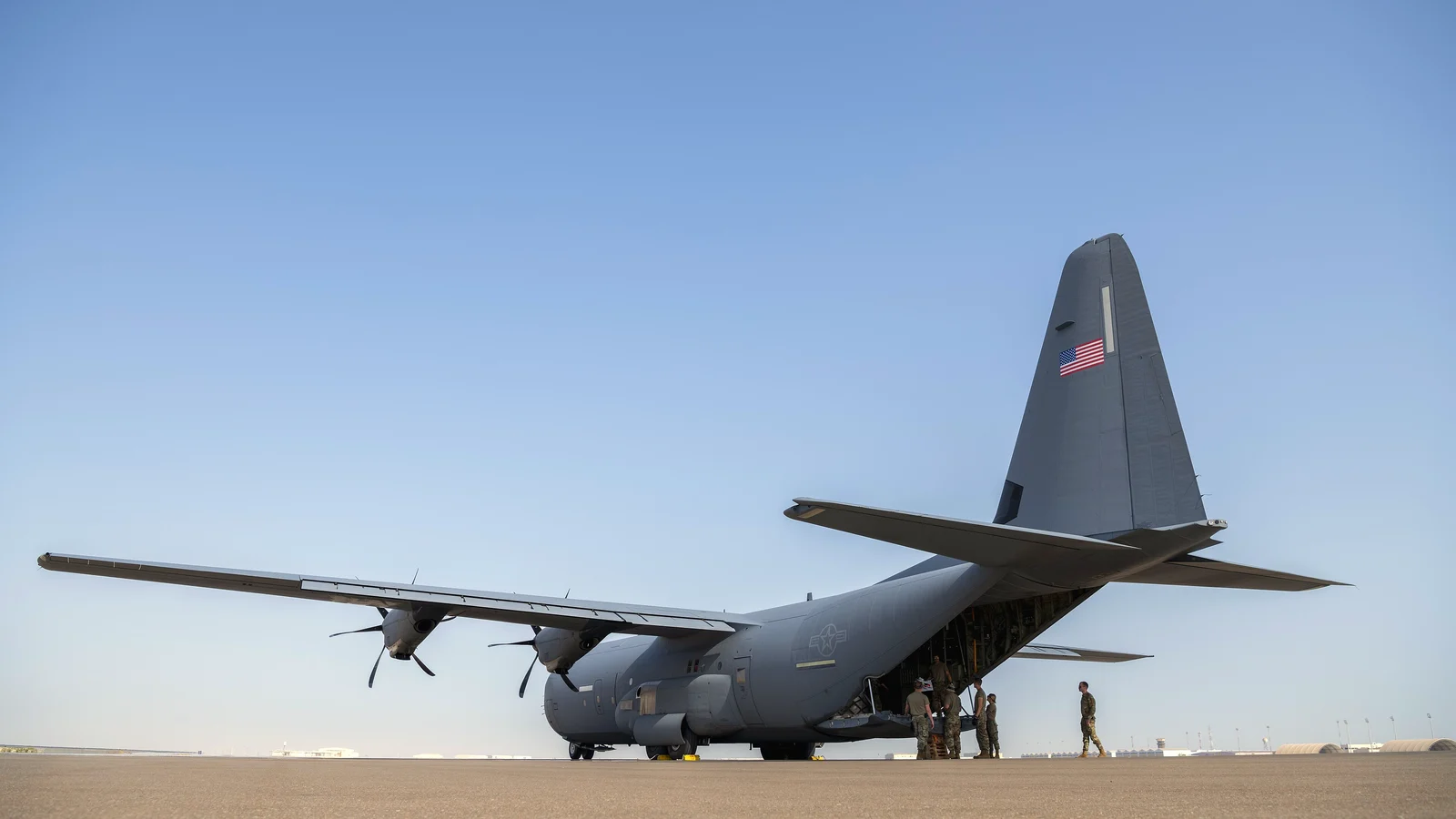
In May 2022 a major manufacturer asked Fracht’s Mexico affiliate to move car parts from Mexico to Argentina on short notice. The affiliate lacked the capacity and passed the job to Fracht in Houston. The charter contract named EMTRASUR as carrier, a wholly owned subsidiary of the Venezuelan state airline CONVIASA, gave EMTRASUR’s address in Venezuela and listed tail number YV-3531. CONVIASA had been blocked since 2019 and was identified on the SDN List on 7 February 2020. The aircraft had its own entry: OFAC listed it in September 2012 as Mahan Air property under tail EP-MND and manufacturer serial number 23413, and after the 2021 transfer to CONVIASA the tail changed while the serial number did not. OFAC’s enforcement release says Fracht contracted “by failing to follow internal compliance procedures.” The Volkov Law Group’s summary adds that Fracht’s Vice President of Airfreight executed the contract without sanctions screening or internal legal review, and that the two payments to EMTRASUR totalled $995,000.
OFAC called Fracht’s apparent violations egregious and not voluntarily self-disclosed, and noted that Fracht filed a submission of its own, while OFAC and other U.S. agencies already knew of the aircraft’s chartering and detention in Argentina.
Two accounts of where screening breaks
Rotate talks about volume: analysts clearing matches that turn out to be nothing, and context checks are its answer, by its own account. OFAC’s file is about one rushed charter where the review that existed was never run. Name screening has not become optional either. The 21 October Treasury action named a Singapore port agency, a Dubai shipping agent and the manager of seven cargo vessels, and Navo covered it in a note on which agents to screen before the next booking.
Look at what Fracht changed afterwards, again per the Volkov Law Group: legal and sanctions review of all new agreements, sanctions representations in contract templates, nine full-time compliance staff and a commitment of more than $1 million a year. The statutory maximum in the case was $2,147,700, and the settlement came in lower after OFAC weighed Fracht’s cooperation and remedial steps.
The settlement was 75% of that ceiling and larger than the $995,000 Fracht paid to EMTRASUR.
Where the forwarder settlements broke
Fracht is not the only freight company OFAC has settled with. C.H. Robinson in December 2024 and Key Holding in July 2025 broke at different points.
At C.H. Robinson, five foreign subsidiaries handled 82 shipments over about three years. In one of them, a China-based subsidiary arranged a shipment whose air waybill named “W5”, the IATA code of Mahan Airlines, as first carrier and Tehran as first destination. Staff reviewed the waybill and failed to recognize either. The settlement was $257,690, 0.9% of the $28,629,270 statutory maximum. OFAC wrote that the vast majority of the apparent violations appear to have occurred because the subsidiaries’ brokerage systems had not been brought into C.H. Robinson’s screening.
At Key Holding, a Colombian subsidiary managed 36 shipments to Cuba worth $3,056,264 after the 2021 acquisition. No sanctions compliance program covered it, and the parent found out in January 2024 during due diligence for a sale. The settlement was $608,825, 15.2% of the $4,007,088 maximum.
The first two were non-egregious and voluntarily self-disclosed. Fracht’s was neither.
At C.H. Robinson the carrier code and the first destination were printed on the waybill, which is the kind of data a routing-aware screen reads. At Key Holding there was no program to run. At Fracht the document with the red flags was a charter contract that never entered the screening path.
Would a waybill screen have seen the Fracht contract?
The reports describe Rotate’s tool as working on live message streams and air waybill data, and IN Supply points out that depending on the handling arrangement, house waybill records can carry more granular shipper and consignee detail than the master record. The Fracht exposure sat in a charter agreement signed by a vice president, and none of the Rotate coverage I could read says charter contracts fall inside the screening.
Forwarder News expects airlines to adopt air cargo sanctions screening of this kind first, so forwarders will meet it as harder questions at booking: a shipment cleared on names can still be stopped by the carrier, and consolidations, where one master AWB covers many smaller shipments, will draw more questions on house-level detail. Its advice is that specific goods descriptions and full routing data clear faster.
None of the coverage I could read gives a false-positive rate for the carrier trial, before or after. Until general availability in the first quarter of 2027, the fewer-false-positives claim is Rotate’s own.