

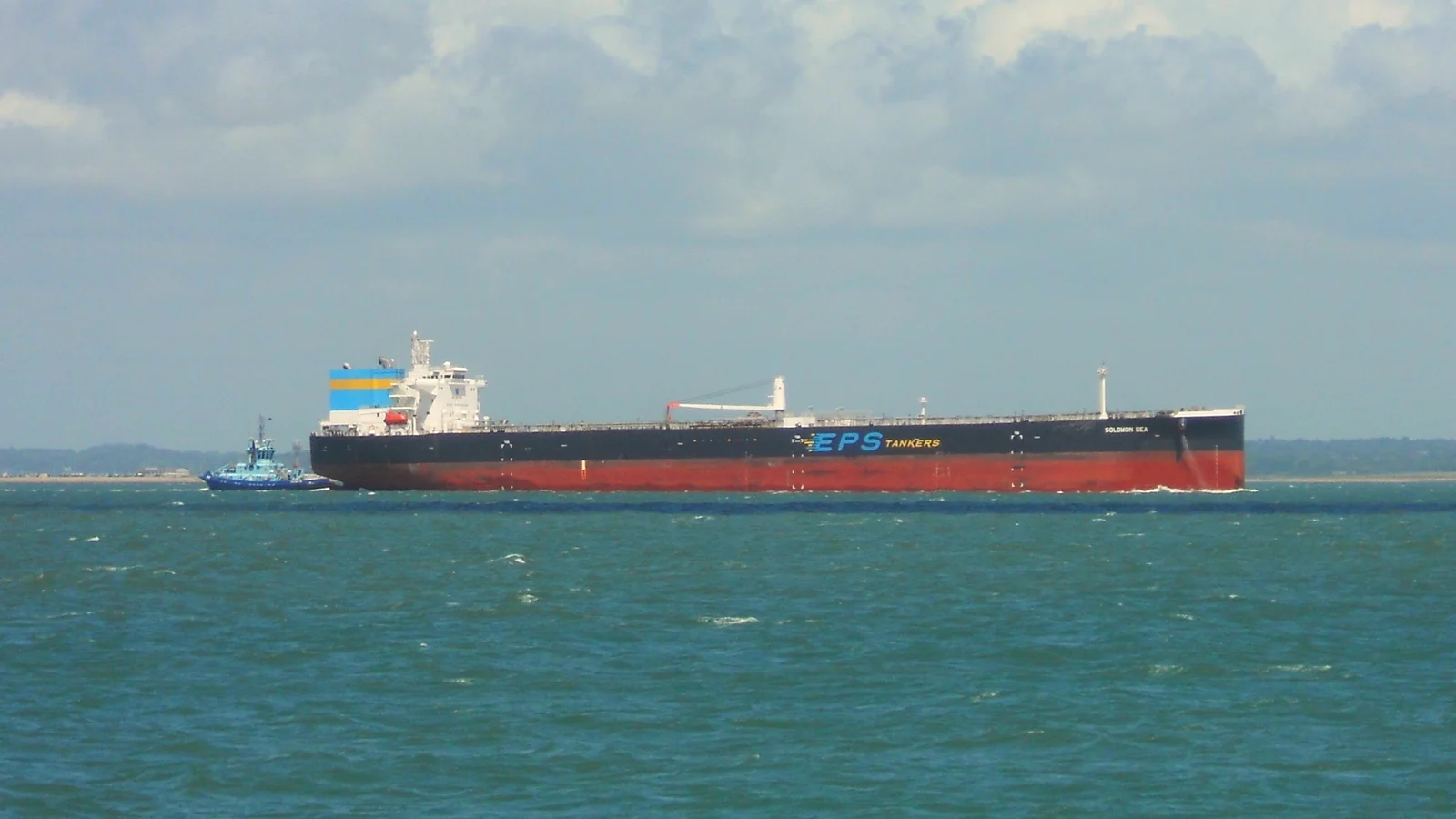
On 21 October 2026 the US Treasury sanctioned a Singapore port agency, a Dubai shipping agent, a Panama and Greece law firm and the manager of seven cargo vessels in a single Iran action. The Treasury press release files these Iran sanctions on shipping agents under Operation Economic Outcast and cites Executive Order 13902 as the legal basis. Nine ships are now blocked property: seven Panama-flagged cargo vessels run by Roxette Maritime Shipping and Trading, and two UAE-flagged support vessels owned by the Dubai agent.
Agents, a law firm and a ship manager sit on the list
Amigoz Singapore, a port agency, acted as agent for a light crude shipment overseen by Sepehr Energy and provided bunkering to the shadow fleet vessel ZIXUAN, according to Treasury. Whales Shipping Line of Dubai acted as shipping agent for Sparrow Trading FZE, a sanctioned front company that organized the purchase of tens of millions of dollars’ worth of Iranian petrochemicals. Karnakis and Karnakis, the law firm, has for years registered shipping companies that own shadow fleet vessels, and its employees act as directors and officers of many of them to obscure the true beneficial owners. Three of the Roxette ships, Anemos, Gloris and Pride, shipped Iranian-origin petrochemicals and steel within the past year, and the other four are managed by the same company.
Forwarder News points out that a port agent in Singapore or a shipping agent in Dubai is a normal counterparty for a forwarder, and so is a ship manager with a handful of bulk carriers that will take steel, bagged cargo or project parts.
“Whether you are conducting illegal oil transfers at sea or sitting in the corner office of a law firm, if you are supporting the Iranian regime, we will find you and sanction you,” Secretary Scott Bessent said in the release.
Dollar payments, the 50 percent rule and the August expansion
Treasury’s release says every entity owned 50 percent or more by blocked persons is itself blocked, that OFAC may impose civil penalties on a strict liability basis, and that non-US persons are barred from causing a US person to violate the sanctions. For a forwarder outside the United States the exposure runs through US banks: the Toll enforcement release, discussed below, concerns a foreign company whose payments for sanctioned jurisdictions were processed by US financial institutions.
The list of covered sectors grew in August. On 24 August 2026 OFAC added shipping to the sectors of the Iranian economy covered by the order, alongside aviation, digital assets, gold and technology, and the West of England P&I Club wrote that anyone providing services in support of those sectors may be designated wherever they are located. The Club added that the line between operating in Iran’s shipping sector and giving incidental services to a vessel with an Iranian link was, at the time of the Club’s note, still to be drawn by OFAC.
Toll Holdings and the payments its own controls missed
Toll Holdings, the Melbourne forwarder, originated or received 2,958 payments between roughly January 2013 and February 2019 that OFAC treated as apparent violations, and in April 2022 it paid $6,131,855 to settle. The OFAC enforcement release says the amount reflects OFAC’s determination that the violations were non-egregious and voluntarily self-disclosed.
Most of the payments, 2,534 of them, were for shipments to, from or through North Korea, Iran or Syria, and they were spread over 23 Toll entities. Toll had grown by buying small regional forwarders and by 2017 ran almost 600 invoicing, data and payment applications. In May 2015 one of its banks restricted a subsidiary’s dollar account after a Syria-related transaction, and an employee in the headquarters treasury office then emailed the UAE and South Korea affiliates to keep the names of sanctioned jurisdictions off invoices.
Toll switched on hard controls in February 2017, disabling the country and location codes of ports and cities in sanctioned countries in its freight management system.
2,853 of the 2,958 payments had already gone out.
A block on country codes stops places, and Whales sits in Dubai while Amigoz sits in Singapore, so neither would trip one.
Screening at appointment and at nomination
Forwarder News advises: re-screen agents, bunker suppliers and vessel IMO numbers on any breakbulk or charter booking. No source in this story makes that a legal duty for a forwarder, and the 2020 State, Treasury and Coast Guard advisory describes its measures as steps a company “may wish to consider” within a risk-based program. The advisory lists freight forwarders among its intended readers. It also explains why the IMO number is the identifier to screen: the number is meant to stay with a ship through changes of owner or name, while vessels in illicit trade have often painted over names and numbers to pass as other ships.
The same advisory treats AIS manipulation as a possible sign of illicit activity, and Navo’s vessel position lookup returns the latest AIS position for a vessel. Treasury printed the IMO numbers of all nine ships on 21 October (Anemos is 9205952), so a nominated vessel can be matched against a published list.
What an agent screen looks like and what comes next
For the agent itself the screen is legal name, owners and address against the SDN list, with the 50 percent rule applied to the owners. That check is a control a forwarder can add at appointment, and the same name should be matched against the invoice before an agent is paid, since the invoice is where Toll’s affiliates were told to hide jurisdiction names. Dealing with the listed parties carries real risk: Treasury’s release says OFAC regulations generally prohibit all transactions by US persons involving blocked persons, and that violations may bring civil or criminal penalties on US and foreign persons. Forwarder News expects the Iran sanctions on shipping agents to widen: Treasury to name at least one more port agent, bunker supplier or ship-services company based outside Iran under Operation Economic Outcast by 30 November. Bessent said in the release that Treasury “will continue to take action.”