





















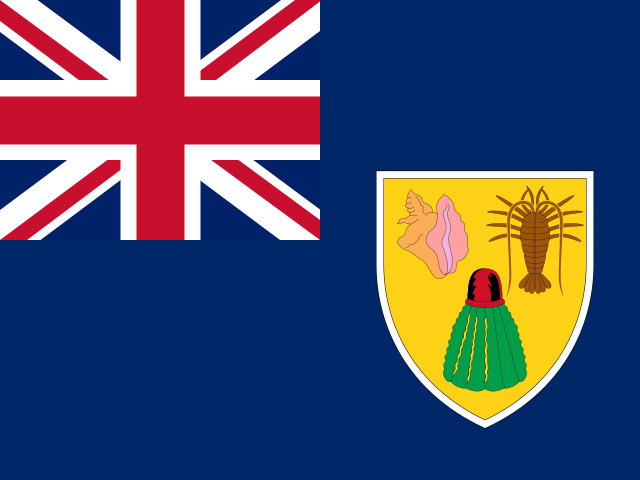
 Logistics services in Turks and Caicos Islands.
Latin America & Caribbean · High income · capital Grand Turk
The World Port Index lists 3 ports here; the biggest is Grand Turk (TCGDT).
Merchandise trade in 2025: $5 million exports and $485 million imports.
Source: World Bank Open Data, latest year reported per indicator; ranks count only countries with data.
Turks and Caicos Islands logistics overview: modes, trade and gateways
Goods move in and out of Turks and Caicos Islands mainly by sea and air. Key seaports are Grand Turk, Cockburn Harbor, and Providenciales, with cargo pier depths at Grand Turk around 4.9 m and Cockburn Harbor around 3.4 m. Airports with scheduled services include Providenciales International Airport, JAGS McCartney International Airport, North Caicos Airport, and South Caicos Airport. Exports are about 5 million USD and imports about 485 million USD, so most logistics activity supports inbound cargo.
There are 3 merchant marine vessels recorded, mainly general cargo and other types. The liner shipping connectivity index is 1.13, indicating limited direct container services, so shipments may rely on regional transshipment. Freight forwarders can arrange FCL and LCL via these seaports and connect air freight through Providenciales International Airport. Road distribution occurs on the islands from these entry points, supporting trade in refined petroleum, cars, furniture, plastic products, and other listed goods.
| Main exports | plastics, shellfish, carbonates, tobacco, garments |
|---|---|
| Export partners | Gabon 27%, USA 25%, Zimbabwe 17%, Czechia 8%, UAE 3% |
| Main imports | refined petroleum, cars, aluminum structures, furniture, plastic products |
| Import partners | USA 73%, Dominican Republic 4%, Italy 3%, Japan 3%, China 2% |
Source: CIA World Factbook, top five goods and partners by value.
Freight forwarders in Turks and Caicos Islands
When selecting freight forwarders in Turks and Caicos Islands, shippers should focus on experience with the three key ports: Grand Turk, Cockburn Harbor, and Providenciales. The liner shipping connectivity index of 1.13 suggests reliance on regional hubs, so confirm that the forwarder has strong transshipment arrangements for both FCL and LCL cargo. For air, look for agents with regular operations via Providenciales International Airport and JAGS McCartney International Airport.
Trade is concentrated with the USA for both exports and imports, alongside partners such as Gabon, Zimbabwe, Czechia, UAE, Dominican Republic, Italy, Japan, and China. Ask forwarders about their track record on lanes to these markets and their ability to manage shipments of plastics, shellfish, carbonates, tobacco, garments, refined petroleum, cars, aluminum structures, furniture, and plastic products. Compare how they handle customs processes and documentation quality, since the world median logistics performance index customs score is 2.6 and efficient handling reduces delays.
FCL and LCL shipping to and from Turks and Caicos Islands
Ocean freight uses three main seaports: Grand Turk, Cockburn Harbor, and Providenciales. Grand Turk (locode TCGDT) and Cockburn Harbor (locode TC9CB) are very small, with cargo pier depths of about 4.9 m and 3.4 m, which limits ship size. Providenciales (locode TCPLS) is also a listed port. There is one oil terminal and a coastline of about 389 km.
Liner connectivity is very low, with a Liner Shipping Connectivity Index of about 1.13 in 2021, ranked between 167 and 169 globally and 40th in the Latin America & Caribbean region. Goods exports are about 5 million USD and imports about 485 million USD, serving a population of about 46,855. Main export goods include plastics, shellfish, carbonates, tobacco, and garments, while imports include refined petroleum, cars, aluminum structures, furniture, and plastic products. Export partners are led by Gabon, the USA, and Zimbabwe, while imports are dominated by the USA, with smaller shares from the Dominican Republic, Italy, Japan, and China.
Seaports in Turks and Caicos Islands
3 ports in the World Port Index:2 very small.
| Port | UN/LOCODE | Size | Harbour type | Cargo pier depth | Rail access |
|---|---|---|---|---|---|
| Grand Turk | TCGDT | Very SmallXS | Open Roadstead | 4.9 m | - |
| Cockburn Harbor | TC9CB | Very SmallXS | Open Roadstead | 3.4 m | - |
| Providenciales | TCPLS | UnknownU | - | - | - |
Source: NGA World Port Index, Pub. 150. Depths are charted values, not today's draft limits. Old names are kept in brackets.
Air freight in Turks and Caicos Islands
Air freight in Turks and Caicos Islands uses 4 airports with scheduled services: Providenciales International Airport, JAGS McCartney International Airport, North Caicos Airport, and South Caicos Airport. There are 9 airports in total across the islands. Providenciales International Airport is the main international gateway and typically the first choice for higher-value or time-sensitive cargo.
With imports around 485 million USD and exports about 5 million USD, air freight is most relevant for small, high-value shipments and urgent consignments linked to trade with partners such as the USA, Gabon, Zimbabwe, Czechia, UAE, Dominican Republic, Italy, Japan, and China. Goods like garments, plastics, shellfish, and selected manufactured products are the more likely candidates for air over sea.
Airports for air cargo
4 airports with scheduled passenger and cargo service.
PLSProvidenciales International AirportProvidenciales · MBPVGDTJAGS McCartney International AirportCockburn Town · MBGTNCANorth Caicos AirportNorth Caicos · MBNCXSCSouth Caicos AirportSouth Caicos · MBSCSource: OurAirports open data.
Rail and road freight in Turks and Caicos Islands
There is no rail network listed for Turks and Caicos Islands, so inland transport relies on road movements across the islands. Cargo arriving by sea through Grand Turk, Cockburn Harbor, and Providenciales, or by air through the scheduled-service airports, is distributed locally by truck.
The islands have about 389 km of coastline, showing the highly maritime nature of the territory. With no land borders, there are no international road gateways, and all cross-border flows depend on sea and air links, with road used only for internal distribution and last-mile delivery.
Customs clearance in Turks and Caicos Islands
Turks and Caicos Islands is not a member of the WTO and no customs authority name is listed. When planning customs clearance, shippers should rely on a commercial invoice, packing list, and transport document as the core paperwork, then follow any additional local requirements through their broker or forwarder.
The world median logistics performance index customs score is 2.6. Shippers should work with agents who understand local procedures and can minimize clearance times, especially given the reliance on maritime ports and airports for all trade. Efficient documentation and pre-alerts are important for both imports and exports given the territory’s trade profile and small market size.
| World Trade Organization | Not a member |
|---|
Every shipment needs at least a commercial invoice, a packing list and a transport document (bill of lading, air waybill or CMR). See Incoterms for who clears customs at each end.
Sources: Wikidata (customs authority, WCO membership), CIA World Factbook (WTO, blocs), World Bank (tariff, LPI, lead times). Rules change; confirm with a licensed customs broker.
Logistics in Turks and Caicos Islands: FAQ
What are the main ports in Turks and Caicos Islands?
By World Port Index harbour size: Grand Turk (TCGDT), Cockburn Harbor (TC9CB), Providenciales (TCPLS). 3 ports in total.
How to choose a freight forwarder in Turks and Caicos Islands?
When selecting freight forwarders in Turks and Caicos Islands, shippers should focus on experience with the three key ports: Grand Turk, Cockburn Harbor, and Providenciales. The liner shipping connectivity index of 1.13 suggests reliance on regional hubs, so confirm that the forwarder has strong transshipment arrangements for both FCL and LCL cargo. For air, look for agents with regular operations via Providenciales International Airport and JAGS McCartney International Airport.
Which airports in Turks and Caicos Islands handle air freight?
Airports with scheduled service: Providenciales International Airport (PLS), JAGS McCartney International Airport (GDT), North Caicos Airport (NCA), South Caicos Airport (XSC).
Logistics services in Latin America & Caribbean
 Brazil · LPI 3.2
 Argentina · LPI 2.8
 Mexico · LPI 2.9
 Cuba · LPI 2.2
 Chile · LPI 3.0
 Venezuela · LPI 2.3
 Peru · LPI 3.0
 Colombia · LPI 2.9
Data built 31 Oct 2026. Text written from these figures and checked against them. Flags: flag-icons (MIT). Something out of date? [email protected].