





















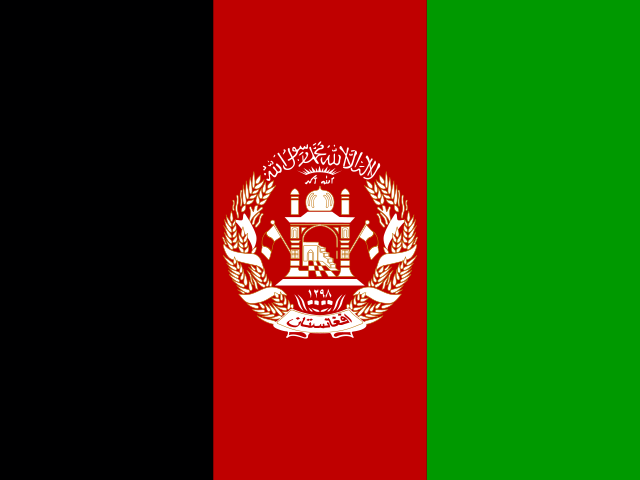
 Logistics services in Afghanistan.
Middle East, North Africa, Afghanistan & Pakistan · Low income · capital Kabul · landlocked
Afghanistan scores 1.9 of 5 on the World Bank Logistics Performance Index 2022, 167th of 169 countries: in the lower third of the world ranking.
It has no sea coast. Ocean cargo moves through ports abroad; the closest by road is Karachi in Pakistan, 1,405 km from Kabul.
Merchandise trade in 2025: $926 million exports and $3.6 billion imports.
Source: World Bank Open Data, latest year reported per indicator; ranks count only countries with data.
Afghanistan logistics overview: modes, trade and gateways
Logistics services in Afghanistan rely on road and air, as the country is landlocked with no coastline. Seaborne imports and exports use foreign seaports such as Karachi in Pakistan, Bandar Abbas in Iran, Khawr Fakkan in the UAE and Ras Laffan in Qatar, then move by truck to and from Kabul.
There are 68 airports overall and 5 main airports with scheduled services, including Kabul, Kandahar, Herat, Mazar-i-Sharif and Khost. Most trade by value is in imports, at about 3.6 billion USD in 2025 versus exports of about 926 million USD, so logistics planning focuses heavily on inbound cargo flows.
| Main exports | coal, grapes, tropical fruits, gum resins, other nuts |
|---|---|
| Export partners | Pakistan 42%, India 40%, China 4%, UAE 2%, Turkey 2% |
| Main imports | wheat flours, tobacco, palm oil, broadcasting equipment, synthetic fabric |
| Import partners | UAE 28%, Pakistan 15%, China 15%, Uzbekistan 12%, Kazakhstan 9% |
Source: CIA World Factbook, top five goods and partners by value.
Freight forwarders in Afghanistan
Freight forwarders in Afghanistan need to manage cross-border trucking to gateway ports such as Karachi, about 1,405 km and 18.9 hours by road from Kabul, and Bandar Abbas, about 1,906 km and 26.1 hours away. Shippers should check that their provider has experience routing via Pakistan, Iran, the UAE or Qatar, depending on service, costs and risk tolerance.
The 2022 Logistics Performance Index shows an overall score of 1.9, below the world median of 2.7, with infrastructure at 1.7 and tracking & tracing at 1.6. When choosing a freight forwarder or customs broker, verify how they mitigate these weak spots, including shipment visibility and coordination at land borders with Pakistan, Iran, Uzbekistan, Turkmenistan, Tajikistan and China. Strong relationships in main trade lanes with Pakistan, India, the UAE, China, Uzbekistan and Kazakhstan are useful, as these are major export and import partners. Membership in SAARC and the WTO also shapes how experienced providers structure routings and tariffs for regional trade.
FCL and LCL shipping to and from Afghanistan
FCL and LCL shipping from and to Afghanistan uses foreign seaports, because Afghanistan has no seaports of its own. Containers typically move FCL or LCL by sea to Karachi in Pakistan, then by road about 1,405 km to Kabul, or via Bandar Abbas in Iran at about 1,906 km. Longer routings through Khawr Fakkan in the UAE or Ras Laffan in Qatar, at about 2,027 km and 2,347 km by road from Kabul, are also options.
Shippers arrange ocean freight with lines serving these gateway ports, then contract cross-border road haulage into Afghanistan. With exports of about 926 million USD and imports of about 3.6 billion USD, seaborne container flows are largely import driven. Route selection between Pakistan, Iran, the UAE and Qatar depends on service levels, transit times and overland haulage conditions.
Gateway seaports for Afghanistan
Afghanistan has no sea coast. Shortest road distances from Kabul to large and medium seaports abroad.
| Port | UN/LOCODE | Country | By road | Drive |
|---|---|---|---|---|
| Karachi | PKKHI | Pakistan | 1,405 km | 18.9 h |
| Bandar Abbas | IRBND | Iran | 1,906 km | 26.1 h |
| Khawr Fakkan | AEKLF | United Arab Emirates | 2,027 km | 28.3 h |
| Ras Laffan | QARLF | Qatar | 2,347 km | 31.9 h |
Road distance: OSRM on OpenStreetMap, car routing, 31 Oct 2026. Truck time is longer.
Air freight in Afghanistan
Airports for air cargo
5 airports with scheduled passenger and cargo service.
KDHAhmad Shah Baba International AirportKandahar · OAKNHEAHerat - Khwaja Abdullah Ansari International AirportGuzara · OAHRKBLKabul International AirportKabul · OAKBMZRMazar-i-Sharif International AirportMazar-i-Sharif · OAMSKHTKhost International AirportKhost · OAKSSource: OurAirports open data.
Rail and road freight in Afghanistan
Rail and road freight in Afghanistan hinges on its land borders with China, Iran, Pakistan, Tajikistan, Turkmenistan and Uzbekistan. Border lengths range from 91 km with China to 2,670 km with Pakistan, plus 921 km with Iran, 1,357 km with Tajikistan, 804 km with Turkmenistan and 144 km with Uzbekistan.
Most international surface freight uses road connections to seaports abroad. Key road corridors link Kabul to Karachi in Pakistan at about 1,405 km and 18.9 driving hours, and to Bandar Abbas in Iran at about 1,906 km and 26.1 hours. Longer road routes connect Kabul to Khawr Fakkan in the UAE at about 2,027 km and Ras Laffan in Qatar at about 2,347 km. These corridors are central for FTL and LTL trucking serving both imports and exports.
| Land borders | China 91 km; Iran 921 km; Pakistan 2,670 km; Tajikistan 1,357 km; Turkmenistan 804 km; Uzbekistan 144 km |
|---|
Source: CIA World Factbook.
Customs clearance in Afghanistan
Customs clearance in Afghanistan operates within the framework of WTO membership and participation in the SAARC bloc. The country has been a member of the World Customs Organization since 10 August 2004, which supports use of common customs standards.
The average applied tariff is about 5.63 percent. Afghanistan’s LPI customs score in 2022 is 2.1, below the world median of 2.6, so choosing brokers with strong border-handling experience is important. Export border compliance historically took about 5 days, while import border compliance took about 4 days. For any shipment, shippers should at minimum prepare a commercial invoice, packing list and the relevant transport document.
| World Customs Organization | Member since 2004 |
|---|---|
| World Trade Organization | Member |
| Trade and economic blocs | SAARC |
| Average applied tariff | 5.6% (2018, weighted mean, all products) |
| LPI customs score | 2.10 / 5 (world median 2.6) |
| Export lead time, port or airport | 5.0 days median (2012) |
| Import lead time, port or airport | 4.0 days median (2010) |
Every shipment needs at least a commercial invoice, a packing list and a transport document (bill of lading, air waybill or CMR). See Incoterms for who clears customs at each end.
Sources: Wikidata (customs authority, WCO membership), CIA World Factbook (WTO, blocs), World Bank (tariff, LPI, lead times). Rules change; confirm with a licensed customs broker.
Logistics Performance Index 2022: Afghanistan
Six survey scores from 1 to 5. The grey tick is the world median. Every LPI component sits at or below the world median; tracking and tracing trails it the most.
Source: World Bank LPI, survey of logistics professionals.
Logistics in Afghanistan: FAQ
Which seaports serve Afghanistan?
Afghanistan is landlocked. By road from Kabul: Karachi, Pakistan (1,405 km); Bandar Abbas, Iran (1,906 km); Khawr Fakkan, United Arab Emirates (2,027 km). Containers continue by truck or rail.
How does customs clearance work in Afghanistan?
Afghanistan has been a World Customs Organization member since 2004. Average applied tariff: 5.6% (2018). LPI customs score 2.1 against a world median of 2.6.
How to choose a freight forwarder in Afghanistan?
Freight forwarders in Afghanistan need to manage cross-border trucking to gateway ports such as Karachi, about 1,405 km and 18.9 hours by road from Kabul, and Bandar Abbas, about 1,906 km and 26.1 hours away. Shippers should check that their provider has experience routing via Pakistan, Iran, the UAE or Qatar, depending on service, costs and risk tolerance.
How good is logistics in Afghanistan?
Afghanistan scores 1.9 of 5 on the World Bank LPI 2022, 167th of 169. Every LPI component sits at or below the world median; tracking and tracing trails it the most.
Which airports in Afghanistan handle air freight?
Airports with scheduled service: Ahmad Shah Baba International Airport (KDH), Herat - Khwaja Abdullah Ansari International Airport (HEA), Kabul International Airport (KBL), Mazar-i-Sharif International Airport (MZR), Khost International Airport (KHT).
Neighbours and Middle East, North Africa, Afghanistan & Pakistan
 China · LPI 3.7
 Iran · LPI 2.3
 Pakistan · LPI 2.4
 Tajikistan · LPI 2.5
 Turkmenistan · LPI 2.4
 Uzbekistan · LPI 2.6
 Libya · LPI 1.9
 Yemen · LPI 2.2
Data built 31 Oct 2026. Text written from these figures and checked against them. Flags: flag-icons (MIT). Something out of date? [email protected].