





















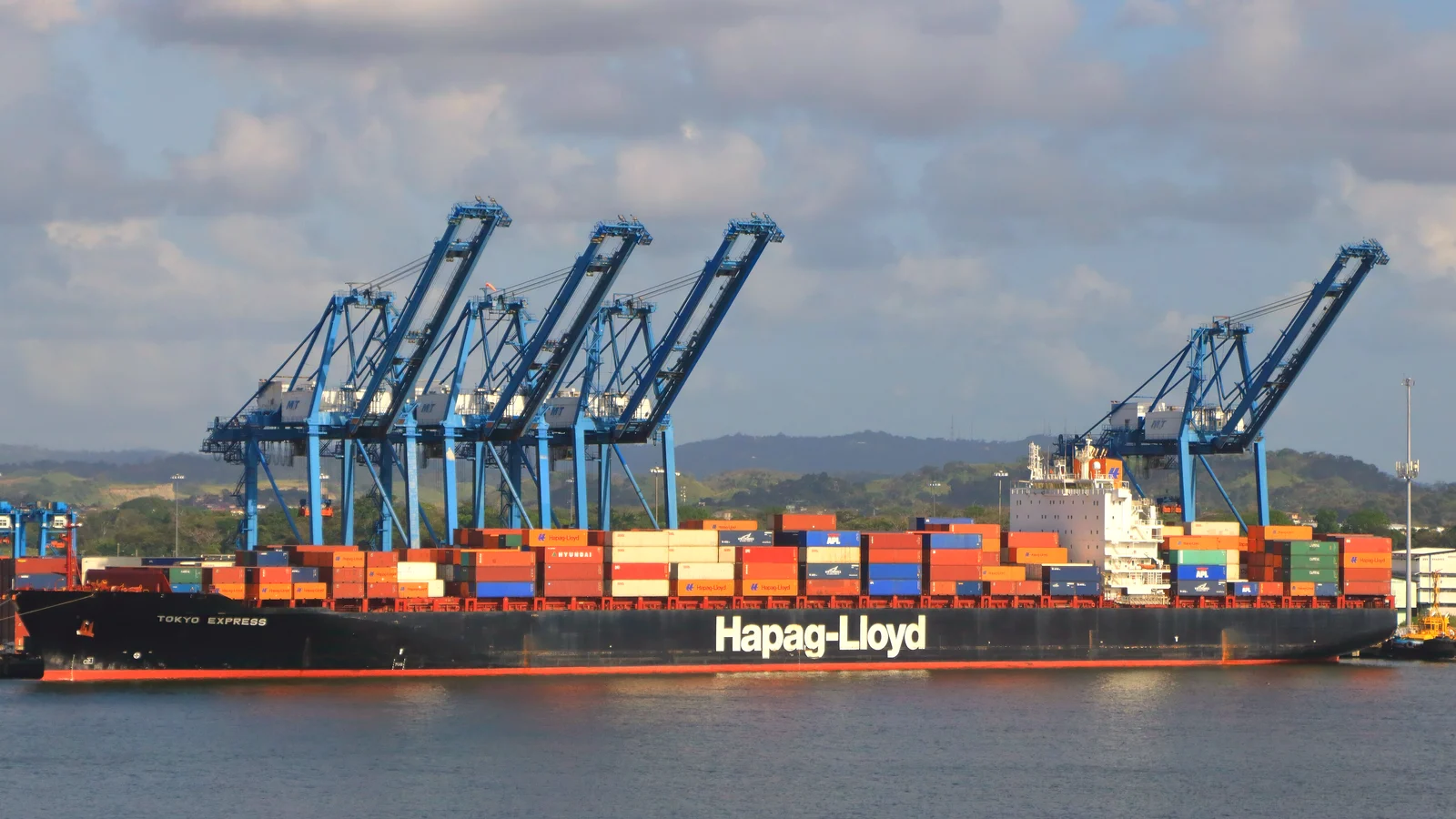
Carriers announced a November container rate increase, and by the last week of October the Loadstar was reporting some of the lowest early-November spot offers coming from Hapag-Lloyd, at $3,000 to $3,200 per 40ft, with Maersk only a little higher.
Under the index
Maersk’s range was $3,200 to $3,400, the Loadstar reported on 27 October. MSC and the Ocean Alliance and Premier Alliance carriers answered with offers around $3,400 to $3,500. The Shanghai Containerised Freight Index put Shanghai to North Europe at $3,557 on 23 October, so the published index sat above what the two Gemini Cooperation partners were offering, and the Loadstar read this as carriers prioritising cargo volume over price.
Linerlytica, the consultancy it quoted, called the plan for a 1 November general rate increase “effectively doomed as the winter slack season kicks in, with the largest shipping lines undercutting each other.”
A buyer holding a notice for the November container rate increase can ask the same carrier, in writing, for its early-November quote on the same lane. The Loadstar’s figures are spot offers for early-November shipments, not commitments, so the written quote is what the buyer holds.
Ships that arrive together
Sea-Intelligence’s 29 October press release says average weekly capacity deployed on Asia to Europe in October and November 2026 broke away from every year it covers, 2012 to 2025, when supply normally tapers after Golden Week. Asia to North America West Coast reached nearly 393,000 TEU a week in October and is slated for 400,000 in November, and Asia to North Europe passed 350,000 TEU.
The release names the cause as “severe vessel bunching, caused by ongoing port congestion and schedule unreliability in Asia”: vessels due to leave in the third quarter were heavily delayed, and the delays cascaded into October and November, which “artificially” inflated deployed capacity.
Typhoon Champi, declared the strongest storm of 2026, and port congestion delayed some ships by up to three days, the Loadstar reports, and half of the Asia to North Europe sailings that had gone round the Cape of Good Hope are back on the Suez route.
For a consignee, the date on a booking confirmation records when the carrier planned the call. Sea-Intelligence says the delayed third-quarter vessels inflate the deployed-capacity figure. Navo’s note argues that a lane’s observed on-time record says more about a November sailing than the timetable does.
What blanking buys
Drewry’s 29 October assessment lists capacity management by carriers among the forces on rates: six transpacific blank sailings were announced for the following week, up from five. Shanghai to Los Angeles still fell 6% to $7,514 per 40ft and Shanghai to New York 5% to $9,631, which pulled the World Container Index down 3% to $4,429. The US National Retail Federation forecasts ocean import volumes to drop 11% month on month in November, and Drewry expects transpacific rates to decrease the following week.
On Asia to Europe, Drewry expects rates to stay stable the following week. Four blank sailings were announced there, down from eight, and Shanghai to Rotterdam rose 1% to $3,686, but Drewry says it is uncertain whether the higher November FAK rates will hold given available capacity and weak demand. Transits through Suez reached 62 vessels in a week, the highest this year.
The Loadstar calls the supply-demand imbalance unresolved. Linerlytica says the bunching, Champi and Suez returns are “temporarily absorbing effective capacity and offering some support to spot rates.”