





















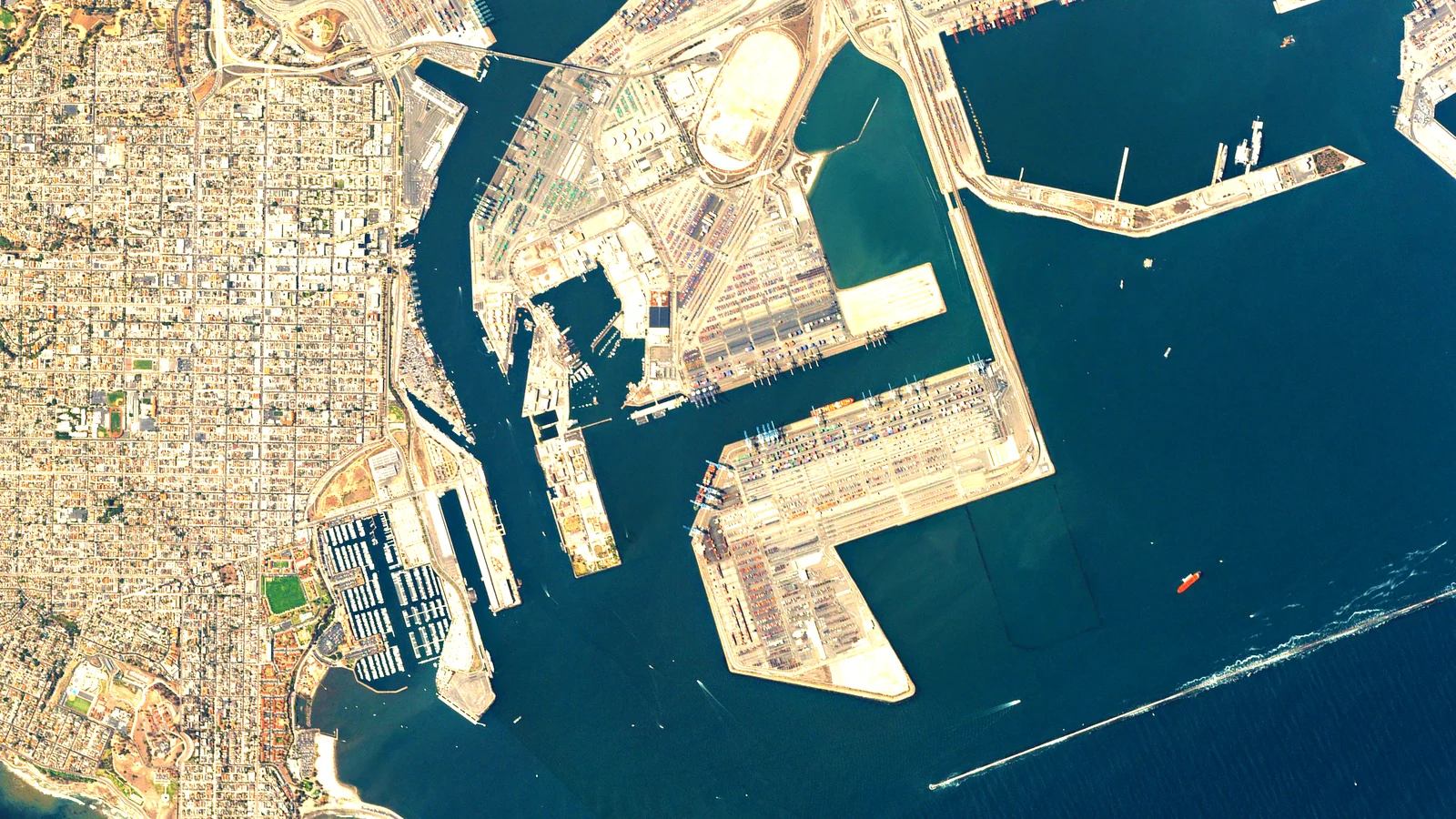
“Nothing of value has resulted.” That is how Luisa Gratz, president of ILWU Local 26, described more than a year of bargaining over the watchmen’s contract, which expired on 1 July 2025 and has run on extensions since. The latest one lapses on Sunday, 1 November, and from 5 p.m. Pacific about 250 watchmen can walk out. A Los Angeles Long Beach port strike by a unit this small would land on a complex that just handled 2.04 million TEU in September, a record month for both ports.
The employers’ side is on the record too. The Pacific Maritime Association (PMA) says it will keep negotiating “through the November 1 deadline and beyond if necessary”. Its offer includes wage increases and pension improvements, and the PMA puts average full-time watchmen pay at more than $170,000 a year plus employer-paid healthcare and pension. The union’s 23 October notice did not set out its economic demands. PMA says significant differences remain and none of its proposals has been resolved, with federal mediators involved. So 5 p.m. on Sunday is the earliest possible start, not a schedule.
Two ports, two different problems
The watchmen are about 2% of the ILWU workforce at the two ports. They work at terminals that handle roughly 85% of Long Beach’s cargo and 33% of Los Angeles’. The PMA expects other ILWU members not to cross their picket line, which could stop vessel, yard and gate work. That expectation comes from the employers, and the reports do not quote the union on it. The coastwide longshore agreement, about 22,000 workers at 29 ports, runs to 2028 and is a separate contract.
How many terminals are in play depends on who counts. The PMA names six of the complex’s 13 container terminals. Gratz’s notice names eight locations, among them APM Terminals, Long Beach Container Terminal, Total Terminals International, Pacific Container Terminal, three SSA sites (C-60, A-90, LB 206) and one labelled OH 55. Why eight against six? The reports leave that open.
Now set that next to the rail backlog, which sits mostly at the other port. FreightWaves, using The Dwell’s tally of the ports’ daily rail reports, counted 35,688 import containers on-dock waiting for a train on 26 October, 10,562 of them for nine days or more. That is a one-day snapshot, not an average wait. Los Angeles held 8,133 of the long waiters out of 19,626 rail-bound boxes, or 41.4%. Long Beach: 2,429 out of 16,062, or 15.1%. Port of Los Angeles director Gene Seroka, as quoted in a Trans-Border Global Freight Systems write-up, puts the nine-day-plus count at about 6,700 boxes, so the number depends on whose tally you use. Averages tell a milder story. PMSA put rail dwell across the complex at 7.19 days for September, up from 6.75 in August, and PMSA tied the rise to the extended peak season and heavy cargo flows. Long Beach chief executive Noel Hacegaba says average rail time at his port remains under five days. The Dwell also logged one ship waiting for a berth in the week of 26 October. Reported railcar shortages and railroad limits on inland-point containers (FreightWaves and Trans-Border, respectively) are what slow the exit.
What 2002 cost
In 2002 the PMA locked out ILWU workers on 27 September, and all 29 West Coast ports went dark for 11 days. A federal judge ordered work to resume after a Taft-Hartley request on 8 October, and the ports reopened the next day. HistoryLink records that clearing the cargo backlog took several weeks after that.
That is the one precedent in the sources, and a poor match in size: every West Coast port then, a handful of terminals now. No source says how long a watchmen’s strike would last or how long a restart would take. What 2002 does show is that reopening a gate and emptying a yard are two separate dates. Rising dwell at a discharge port can move the real arrival date before any schedule admits it, and a picket line would land on dwell figures that are already high.
Which boxes should worry before Sunday?
The berth matters more than the port name. A container on a vessel booked to one of the named locations carries the exposure, whatever “Los Angeles” or “Long Beach” says on the booking. Ask the carrier which terminal the box is going to. Get the free-time rule in writing too, specifically whether the clock stops when a gate closes. That is my advice and not a regulator’s rule.
The calendar is the second check. Consultants quoted by Trans-Border Global Freight Systems put 1 November as the usual last departure date from Southern California for holiday boxes bound for Chicago, St. Louis and Columbus, Ohio. That deadline and the strike deadline fall on the same day. On 8 October NRF’s Jonathan Gold said most holiday merchandise had arrived, and an industry note on iamovers.org reports an NRF forecast that imports at major U.S. ports ease from 2.25 million TEU in October to 2 million in November. Read together, the freight with the most to lose is the tail of the season: late replenishment orders, and anything already sitting on dock waiting for a train.
If a Los Angeles Long Beach port strike would cost you the sale through a missed date, re-plan that cargo this week. Trans-Border notes that some retailers are already shipping earlier or trying Seattle-Tacoma and Vancouver, where congestion appears less severe. Cargo with no hard date can stay where it is.