





















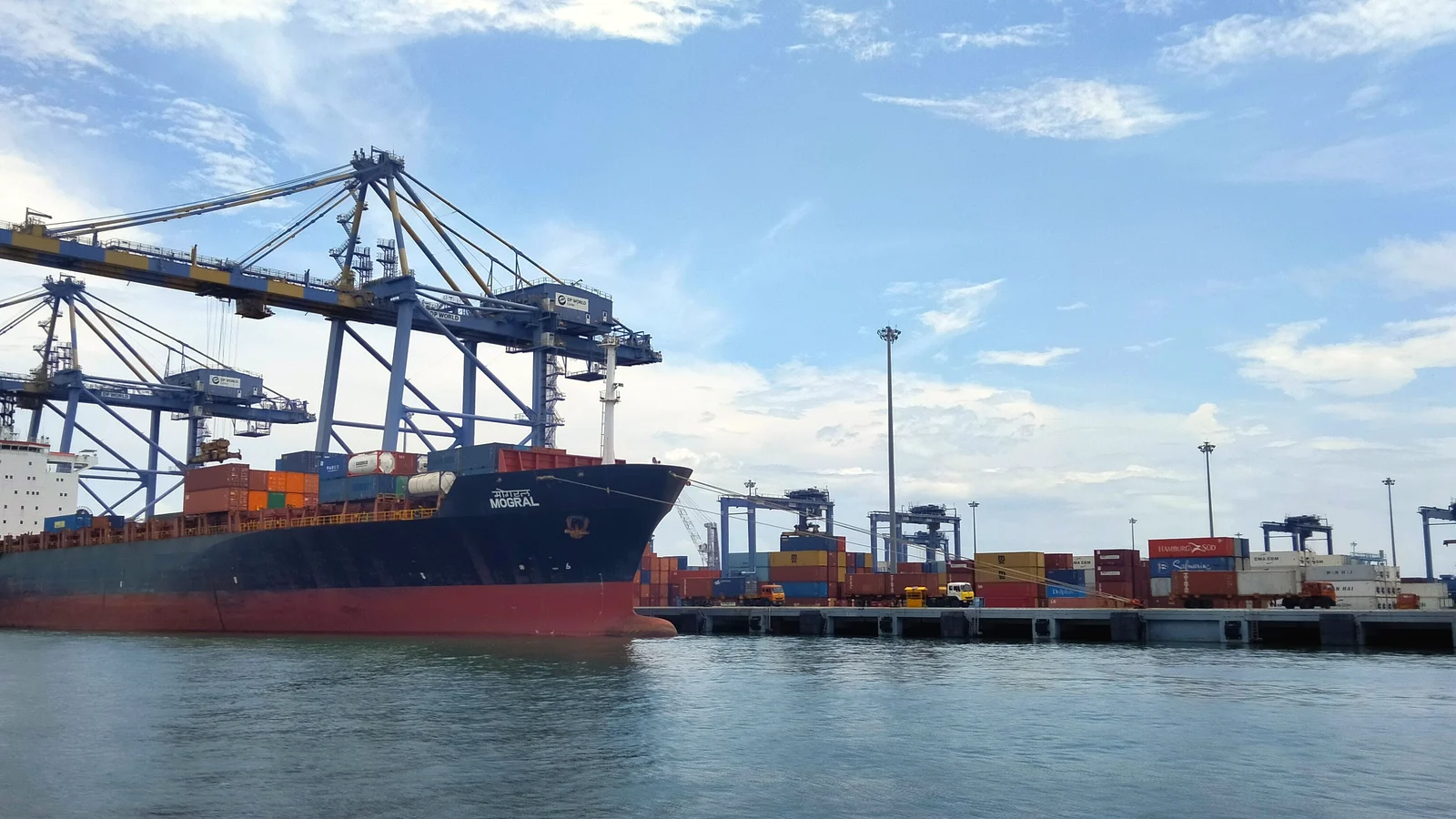
Containers transshipping at Mundra now wait 10.6 days to move onto the next vessel, against 6.7 days before the Strait of Hormuz disruption began. The project44 Hormuz Week 34 report, published on 29 October, puts that gap at 59%, the same as at Hambantota, where the wait is 17.4 days against 11.0. The disruption is nearly eight months old. Diversions have fallen from their peak, yet Hormuz port dwell at the transshipment hubs project44 tracks is still above normal, and Maersk, which announced a Khor Fakkan relaunch in October, is already narrowing what the port can take.
23 March: diversions peak at 8.4 times normal
Diversions from Middle East ports peaked in the week starting 23 March at about 8.4 times the pre-conflict weekly level and fell through the summer. The latest four-week average, 28 September to 25 October, is about 2.4 times the baseline, and it edged up from the four weeks before. Capacity of ships arriving at the Cape of Good Hope ports peaked later, at 80% above baseline in the week starting 6 April, and is now 6.2% above it. The two measures count different things, but both say the rerouting has eased without ending.
Export dwell shows where the waiting landed hardest. At Jebel Ali it averaged 26.8 days across the conflict against 8.5 days before it, a rise of 215%. Dammam went from 5.0 to 9.3 days and Jeddah from 7.3 to 9.2.
The Jebel Ali figure is an average across the conflict, so it measures accumulated damage and says little about this week’s queue.
13 and 18 October: Maersk relaunches FM1, MSC calls at Khor Fakkan
Maersk and Hapag-Lloyd announced on 13 October that the FM1 service returns on the Gemini network, rotating Qingdao, Ningbo, Tanjung Pelepas, Khor Fakkan, Singapore and back to Qingdao. The first sailing, Maersk Athabasca voyage 642W, was scheduled to leave Qingdao on 17 October and to reach Khor Fakkan on 16 November. Existing booking restrictions and cargo acceptance guidelines stay in force, and Maersk says any change to services within the Gemini Cooperation remains subject to developments in the region.
MSC got there first. Linerlytica reported on 29 October that MSC extended its Shikra service to Khor Fakkan and Sohar, and the 24,346 TEU MSC Micol made the first Khor Fakkan call on 18 October. The carrier is capitalising on high demand and freight rates to the Middle East “despite severe congestion at these ports”, in Linerlytica’s wording. The loop calls at Nhava Sheva and Mundra on its way there.
26 and 30 October: Maersk narrows what Khor Fakkan can take
Maersk’s Middle East Operational Update 52 of 26 October lists the congestion at the port MSC had just called at and Maersk had just announced a service to: vessel congestion, limited berthing availability, high yard utilisation, road congestion and extended truck waiting times. The final destination of selected shipments booked to Khor Fakkan will change to Jebel Ali, either through discharge at Fujairah and bonded trucking or by direct discharge where the feeder can transit the Strait of Hormuz. Any vessel that does transit the strait carries a surcharge of USD 1,000 per container for insurance premiums and crew risk compensation, billed to the local consignee as ocean freight for Middle East imports. Maersk adds that this fee sits on top of its Emergency Freight Rate.
Four days later Maersk published a notice on temporary booking restrictions covering Khor Fakkan, Fujairah and selected Upper Gulf destinations. New bookings are accepted based on available capacity, and a revised booking should not be treated as automatically transferred to a later sailing.
Cargo already in transit remains subject to delays.
29 October: the dwell table at the hubs before the Gulf
Transshipment dwell is the time a container waits at a port to move onto another vessel. Over the last four weeks project44 measured average dwell of completed shipments at six ports against a baseline of 5 January to 23 February, which ends about a month before the diversion peak. Hambantota and Mundra are 59% above it. Colombo, at 8.6 days against 5.8, is 49% above, Salalah at 6.2 against 4.7 is 33% above, Singapore is 20% above and Port Said, at 5.6 days against 5.0, is 12% above.
Mundra sits on the MSC loop that now reaches Khor Fakkan, and the four-week average for transshipment there is about four days longer than the baseline. A transit time quoted before the disruption has none of those days in it. For a booking that crosses Mundra, where Hormuz port dwell now stands at 10.6 days, the realistic planning number is 10.6 and not 6.7, and container tracking gives the milestone timeline of a specific box, with port congestion data for the port it passed through.