





















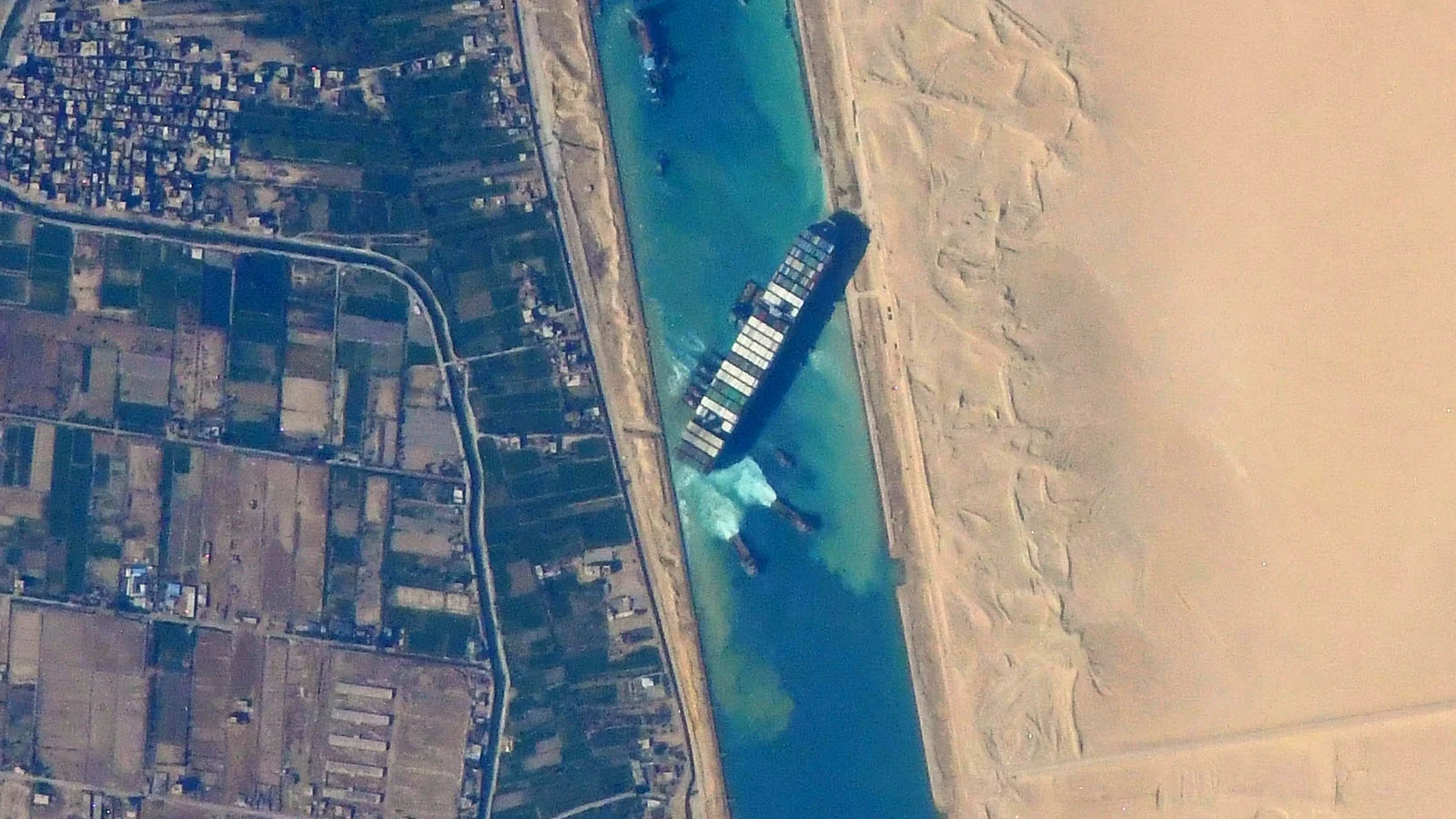
Does cargo insurance cover delays? Under the standard 2009 Institute Cargo Clauses (A), no. Clause 4.5 removes “loss damage or expense caused by delay, even though the delay be caused by a risk insured against”. A blocked canal or a container waiting for a berth does not become a claim. General average is the exception, and it sits in Clause 2.
What Clause 4.5 excludes and what Clause 2 keeps
The exclusion carries a parenthesis: “except expenses payable under Clause 2 above”. Clause 2 is the general average and salvage cover, so the 2009 wording pays nothing for the sales window you missed or for storage that the delay itself causes. It does pay the shipper’s share when a shipowner sacrifices part of the venture to save the rest, unless an exclusion in Clauses 4 to 7 applies. Clause 8.3 keeps the policy in force “during delay beyond the control of the Assured”, subject to the termination rules in Clauses 8.1.1 to 8.1.4 and Clause 9. One of those rules ends cover 60 days after discharge at the final port, so a box still waiting at day 61 is no longer insured under that clause.
All of this is the 1 January 2009 (A) wording. Another set of clauses has to be read from its own schedule.
Ever Given and the general average guarantee
Ever Given ran aground in the Suez Canal on 23 March 2021 and was refloated on 29 March, FIATA recorded. Supply Chain Dive put the time stuck in the canal at six days, and Clause 4.5 excludes loss and expense caused by delay such as that. The ship’s owner declared general average, and Evergreen asked customers to provide deposits or surety bonds before cargo could be released at the discharge ports, Supply Chain Dive reported. When that report ran, the ship was still in Great Bitter Lake. Teams that watch many boxes at once can pull statuses through a container tracking API that covers 240+ carriers.
FIATA warns that shippers without appropriate insurance cover are vulnerable to losing their cargo altogether if they do not pay the required cash bond. Supply Chain Dive notes that a shipper’s insurance will typically cover the guarantee and related fees.
For a sense of the size of such a bond, take the Maersk Honam fire in March 2018. According to an MSC release the same outlet quoted, cargo owners had to put up 54% of cargo value to get containers out: 42.5% as security and 11.5% as a general average deposit. Shippers could pay to release cargo by May. Average adjuster Jonathan Spencer called it surprising how many cargo interests choose to go uninsured when cover is relatively cheap.
Why a customs bond cannot replace cargo insurance
The original SeaRates article called a customs bond “insurance that the government will receive” what it is owed. The regulation is narrower. In the basic bond conditions of the CBP regulations, the principal and the surety agree, jointly and severally, to deposit the duties, taxes and charges due at release and to pay any additional amounts CBP later finds due on the entry. The obligors pay duties “as demanded by CBP”. Nothing in that agreement pays for a delayed or damaged shipment.
CBP also sets the amount. Section 113.13 puts the floor at $100, with exceptions where a law or regulation allows less, and tells CBP to weigh the importer’s record of timely payment and of complying with redelivery demands, together with the value and nature of the merchandise.
Does cargo insurance cover delays caused by a carrier’s cyberattack?
In June 2017 the NotPetya attack hit Maersk’s own systems. The company’s 2017 annual report says it disrupted transport and logistics operations and led to losses “in the order of USD 250-300m”, covering, among other things, lost revenue, IT restoration and extraordinary operating costs. CNBC reported that Maersk Line could take bookings from existing customers two days after the attack, while business volumes stayed affected for a couple of weeks in July.
Neither the report nor CNBC gives a figure for what shippers paid while they waited. A policy on the 2009 (A) wording would not have reimbursed it anyway, since Clause 4.5 excludes delay as the only loss even when a risk insured against caused it.
Frequently asked questions
On what is the general average deposit for a container based?
On the cargo invoice. Average adjuster Jonathan Spencer told Supply Chain Dive that the adjuster has to assemble the invoice information before determining what deposit each cargo interest must put up. Adjusters typically add a margin of safety, so the deposit is likely higher than the expected contribution, and the difference is refunded.
Does it take longer to sort out general average when cargo moved through a freight forwarder?
It can. Spencer told Supply Chain Dive that the process is the same but can be more complicated, because the average adjuster has to ascertain from the forwarder who the ultimate cargo owner is.
Can slow handling by the cargo owner affect a claim under the Institute Cargo Clauses?
Clause 18 of the 2009 Institute Cargo Clauses (A) makes it a condition of the insurance that the Assured act with reasonable despatch in all circumstances within their control.