





















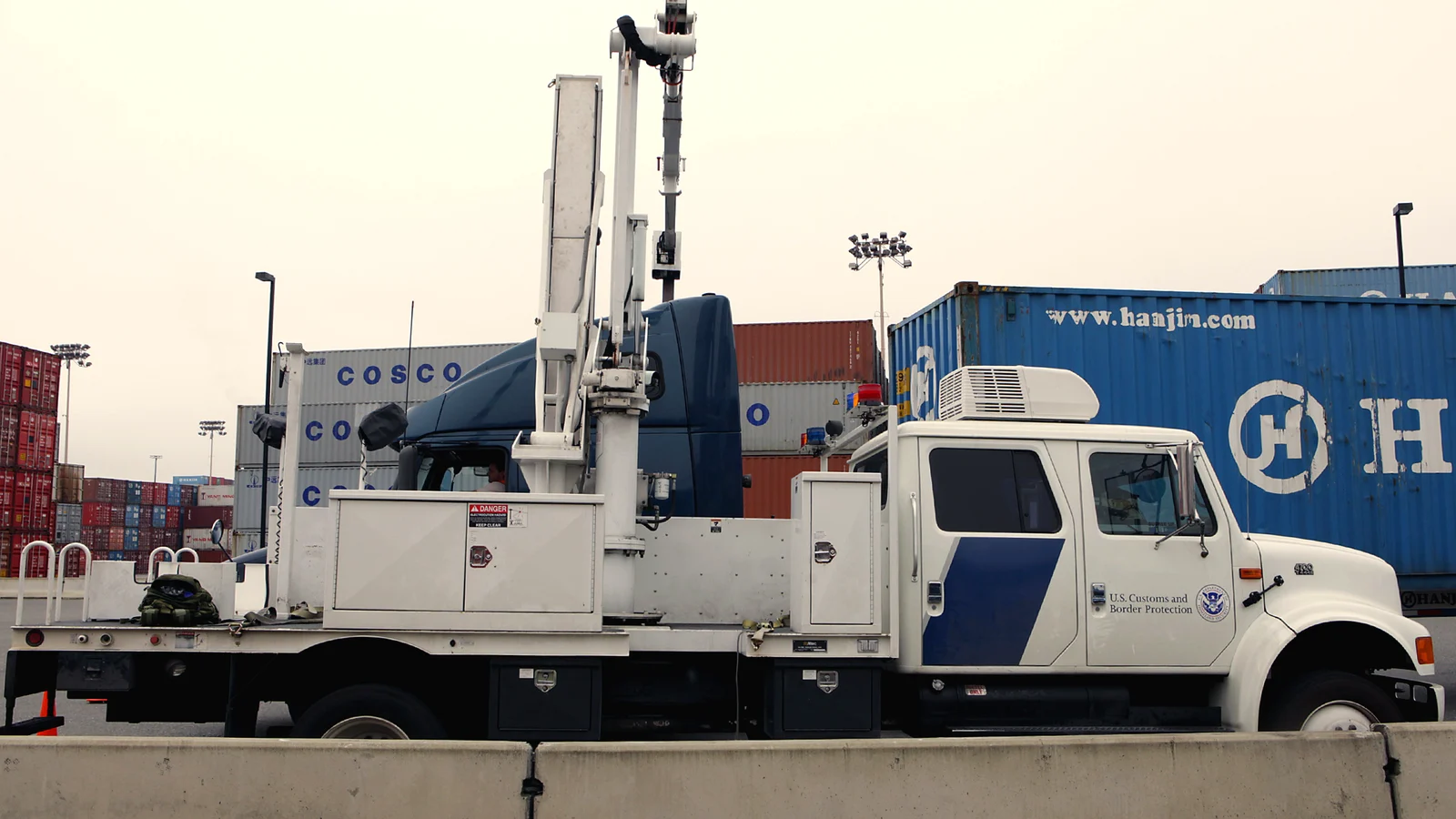
A “cleared” status makes the file look closed. Under US rules it can stay open for up to a year after entry, longer if CBP grants an extension, because customs clearance and the final calculation of duty are separate acts.
The World Customs Organization defines clearance as “the accomplishment of the Customs formalities necessary to allow goods to enter home use, to be exported or to be placed under another Customs procedure”. Release is narrower. It is the action that lets goods undergoing clearance be placed at the disposal of the persons concerned, as set out in the general annex of the Revised Kyoto Convention. A “released” status tells you the cargo can move. It does not make the duty final.
Entry deadlines: 15 days, then 10 working days
The US customs clearance process starts with the entry. The entry documentation needed to secure release consists of CBP Form 3461 or its electronic equivalent, evidence of the right to make entry, a commercial invoice, a packing list where appropriate, and any other documents CBP or another agency requires for that shipment (19 CFR 142.3).
Entry is due within 15 calendar days after the goods land from a vessel. The documents may also go in before arrival, and the entry summary with estimated duties follows within 10 working days of entry unless it was filed together with the entry (19 CFR 142.12) (19 CFR 142.2). Ask the broker which date started the clock, and keep the discharge date from your container tracking next to it.
| Step | Rule | Time limit |
|---|---|---|
| Entry | 19 CFR 142.2 | 15 calendar days after landing; may be filed before arrival |
| Entry summary with estimated duties | 19 CFR 142.12 | 10 working days after entry, unless filed together with the entry |
| Liquidation | 19 CFR 159.11 | Deemed liquidated if not done within one year of entry, unless extended |
| Protest of a protestable liquidation | 19 U.S.C. 1514, as cited in the Costco complaint | 180 days |
The year after release
Liquidation is the final computation or ascertainment of duties on an entry (19 CFR 159.1). Unless an extension applies, an entry not liquidated within one year from the date of entry is deemed liquidated at the duty rate, value, quantity and amount the importer asserted (19 CFR 159.11).
Costco Wholesale’s complaint at the Court of International Trade (Court No. 25-00316, filed 28 November 2025) says CBP tries to liquidate duties 314 days after the date of entry and will usually post a notice on its website. Costco had paid duties imposed under IEEPA tariff orders. Its entries would in general begin to liquidate as early as 15 December 2025, and one already had. CBP had refused on 18 November 2025 to extend liquidation for those entries. Costco went to court to be relieved from the impending liquidations so that its right to a full refund would not be jeopardized.
The complaint describes the position at filing. On 20 February 2026 the Supreme Court held in Learning Resources v. Trump that IEEPA does not authorize the President to impose tariffs, and, according to the Congressional Research Service, that opinion did not address refunds.
The complaint also says an importer has 180 days after a protestable liquidation to protest it, although not every liquidation is protestable. CBP’s own IEEPA refund page describes the route it set up, CAPE, which consolidates IEEPA duty refunds with interest instead of processing them entry by entry. The first phase covers certain unliquidated entries and certain entries within 80 days of liquidation, and later phases add more entry types.
The colour channels differ by country
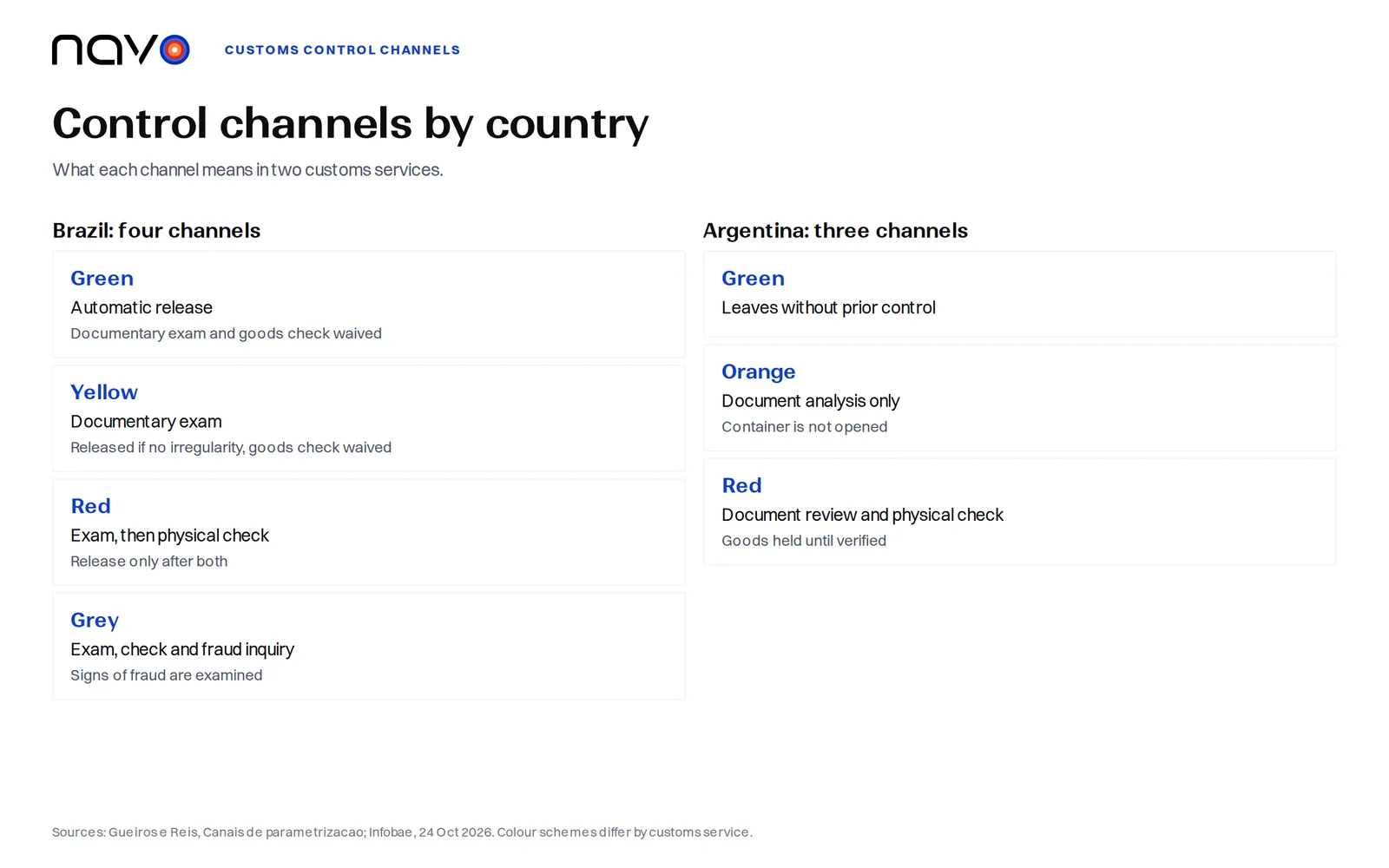
Brazil and Argentina both route a declaration to a level of control chosen by risk, but the colour schemes differ. The explainer by the Brazilian law firm Gueiros e Reis lists four channels for an import declaration in Brazil: green (automatic release, documentary exam and goods check waived), yellow (documentary exam, release if no irregularity), red (release only after documentary exam and physical verification) and grey (exam, verification and inquiry into signs of fraud).
Argentina has three, according to Infobae’s October 2026 explainer: green lets cargo leave without prior control, orange needs only a document analysis without opening the container, and red means document review plus physical verification. The same piece says the middle level is called yellow by other customs services in the region.
Ask the broker for the entry date of each open shipment and whether the entry has liquidated. The complaint’s 314-day date is what CBP tries for, and the one-year limit counts from entry.
Frequently asked questions
Can the one-year liquidation limit be moved?
Yes. According to the Costco complaint, CBP has discretion to extend the liquidation deadline for up to one year on an importer's request and a showing of good cause, citing 19 U.S.C. 1504(b)(2) and 19 CFR 159.12. In Costco's case CBP denied such a request on 18 November 2025.
Can a Brazilian green-channel declaration still be stopped?
Yes. The Gueiros e Reis explainer says a declaration selected for the green channel can be redirected to another channel during the tax review when signs of irregularity are found.
My import in Argentina got a red channel. Does that mean customs suspects a violation?
Infobae describes red as risk-based selection: it says the customs service wants the red channel limited to cases with concrete risk indicators, and that red also works as a sanction tool. Under Resolution 56/2026, an importer who does not answer market-surveillance requests, or repeatedly fails to comply, moves temporarily to red with control before entry.