





















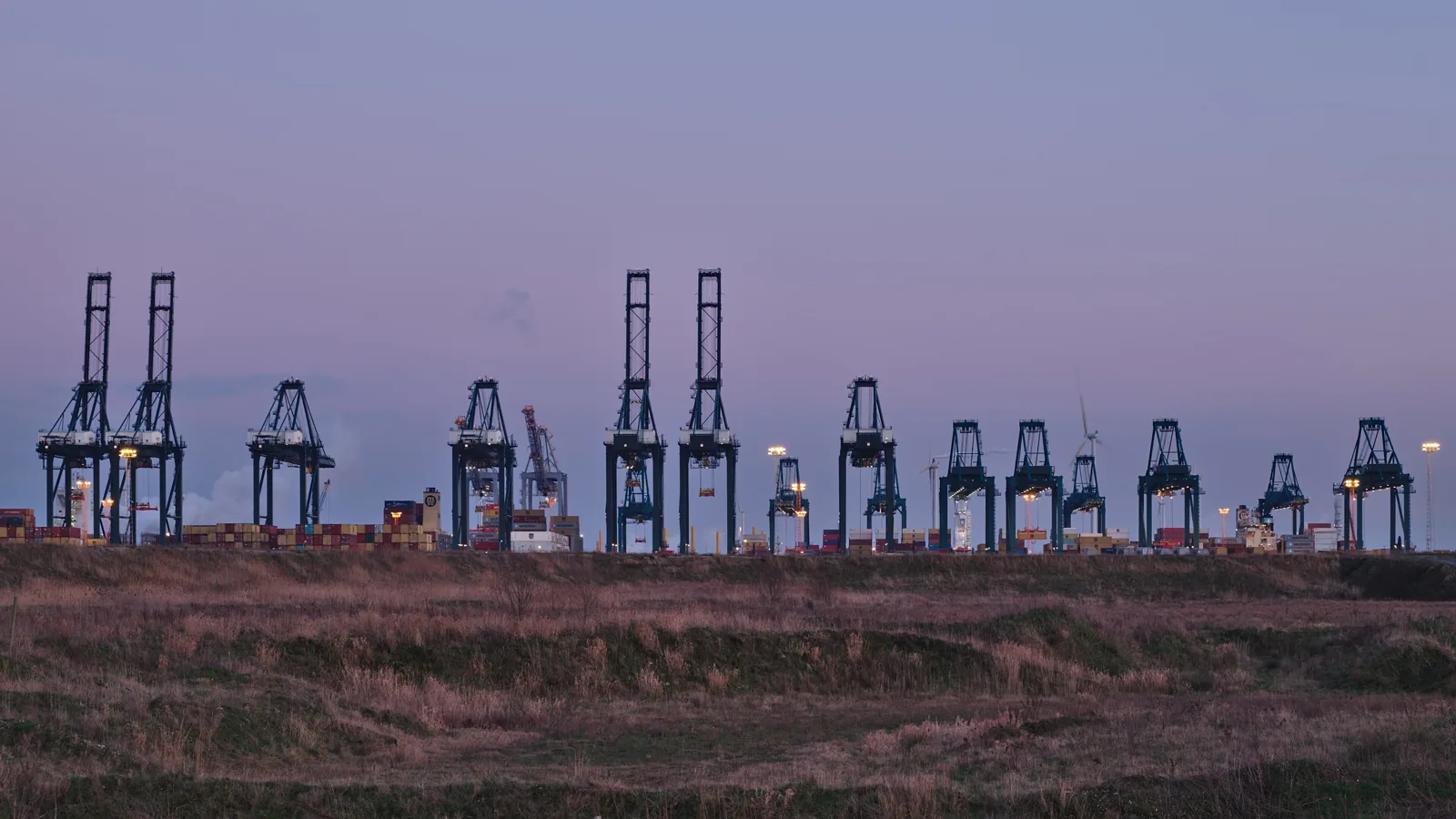
Maersk and IBM announced on 29 November 2022 that TradeLens, their blockchain-enabled shipping platform, would be discontinued, with the intent that the platform goes offline by the end of the first quarter of 2023. The two companies that ran the project were the ones that ended it.
TradeLens closed on collaboration and commercial viability
TradeLens was announced in 2018 and developed jointly by IBM and GTD Solution, a division of Maersk. Maersk’s press release gives the reason in two sentences: the need for full global industry collaboration had not been achieved, and TradeLens had not reached the commercial viability needed to continue as an independent business.
The statement also says Maersk and IBM “successfully developed a viable platform”. What it found missing was the second half: the industry-wide collaboration and the business case.
Token deposits and a Rotterdam microgrid were pilots
One early blockchain in shipping trial, reported by Maritime Executive in March 2018, involved the Hong Kong firm 300cubits and a Brazilian textile importer, LPR, which booked space for two 40-foot high cube boxes on a vessel operated by the Malaysian liner West Port. Shipper and liner both paid a deposit in “TEU” tokens. The booking was confirmed on 8 March, the deposits went in on 9 March and came back on 15 March once loading was complete. 300cubits says the tokens can solve the no-show and rolling problems that cost the industry billions of dollars a year. Its co-founder Johnson Leung told ThirtyK he expected the token to replace the cash deposit for bookings eventually.
Rotterdam’s energy experiment was a pilot too. S&P Global Platts and Blocklab Rotterdam announced on 5 October 2020 that their Distro microgrid trading platform, which combines AI and a distributed ledger, had been successfully piloted. According to the release, a trial that began in August 2020 with commercial energy consumers at Rotterdam’s innovation dock saw local energy prices lower the cost for energy users by 11% and improve revenues for local producers of renewable energy by 14%. The same release calls Distro a platform at mature beta stage.
Electronic bills of lading reached about 11 percent in 2025
The 2020 article called it the “smart bill of lading”. The numbers on the electronic version now come from DCSA, the non-profit founded by major ocean carriers. DCSA states that around 11 percent of bills of lading were issued electronically as of 2025, against a target of 100 percent by 2030. The FIT Alliance, which groups ICC, BIMCO, DCSA, FIATA and Swift, published a 2026 survey of 190 respondents. 51.1% use eBLs at least in part and 11.2% use them exclusively. That counts respondents, not bills of lading, so it does not contradict DCSA’s 11 percent. Among bank respondents, 22.2% report at least partial eBL use, essentially unchanged from 21.1% in 2024.
DCSA’s May 2025 announcement of the first standards-based interoperable eBL transaction names the obstacle. Adoption was hindered by siloed platforms that required every party in a transaction to use the same solution provider, and the 2026 survey still names interoperability as the most-cited concern. DCSA also cites McKinsey’s estimate that eBLs could bring $6.5 billion in direct cost savings and $40 billion in additional trade.
Paper or electronic, the bill of lading number is what tracking a container by bill of lading starts from.
Antwerp replaced PIN codes in the container release step
A Port of Antwerp estimate, cited in a Hapag-Lloyd explainer on blockchain in shipping, says that when a container leaves the Belgian port, roughly 30 companies exchange data some 200 times, often on paper.
For the final step of that chain, a driver used to need a unique PIN code. The Certified Pick up FAQ says the system now replaces it: a container is collected on the basis of identity. The FAQ describes Certified Pick up as a neutral, central data platform and does not call it a blockchain. Port of Antwerp-Bruges develops it with its subsidiary NxtPort. It is mandatory for all supply chain partners in the release of a container on the Antwerp platform. At the CSP Zeebrugge terminal it starts on 3 November 2026, and the FAQ says there are no concrete plans to make it generally mandatory in Zeebrugge.
T-Mining, an Antwerp company that builds applications on decentralized technology such as blockchain, offers Secure Container Release, which it positions against PIN code fraud, the kind criminals use to smuggle drugs through the port, according to its website.
From 1 January 2026, Transfennica charges 5 euros for every container discharged in Antwerp-Bruges to cover its additional costs. The notice asks every chain partner to register and to enter its EORI as the unique identifier.
Frequently asked questions
Who pays for Certified Pick up in Antwerp?
Ship agents, forwarders, release parties and terminals pay a yearly subscription fee, and for a transport operator the fee depends on the yearly number of containers it handles through the system. The fee is reduced for companies that use the web interface only. An additional contribution per container is charged on top and divided over the terminal, the ship agent and the first release party.
What happens to a company that already has a C-point account?
Transfennica's notice says such a company only needs to connect to the CPu console. Release rights are then transferred, accepted, declined or revoked there, and the notice asks every chain partner to enter its EORI as the unique identifier.
Can an electronic bill of lading move between two platforms?
Yes, if both platforms implement the DCSA standard. DCSA's framework adds a Platform Interoperability (PINT) API for transferring eBLs between solution providers, a multilateral legal agreement and a Control Tracking Registry that logs which platform controls each eBL.