

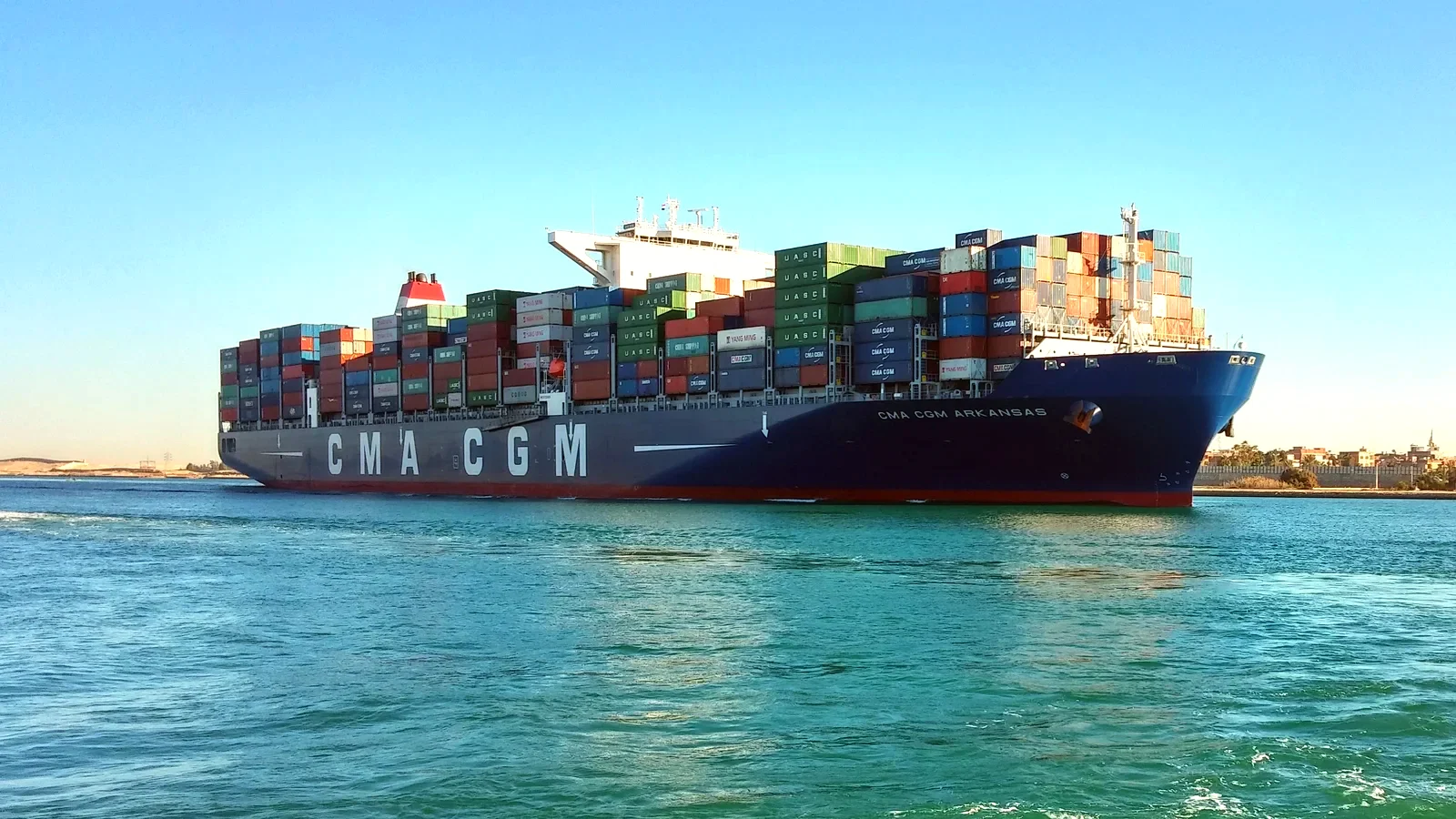
On 4 October the OOCL Spain, a 24,200 TEU ship, passed through the Suez Canal westbound. It was the first westbound Suez sailing for COSCO/OOCL in more than two years, and an early marker of the carriers’ Suez Canal return. The same day, a product tanker about 60 nautical miles south of Mokha reported a series of explosions, one of them roughly 100 metres from the hull. The vessel was undamaged and the crew unharmed. Ocean Freight Japan covered both events in its weekly review. No vessel attacks had been reported in that area in September, it notes, so the resumption of attacks coincided with the start of westbound transits. It also notes that no carrier had been identified as reversing its Suez return because of the incident.
The Premier Alliance moves, partly
The Premier Alliance (ONE, HMM and Yang Ming) was the last of the three big groupings still routing Asia-Europe ships around the Cape of Good Hope. On 1 October it announced that two services, FE1 (Southeast Asia to North Europe) and IOX/INX (Indian Subcontinent to North Europe), would return to Suez. Gemini and the Ocean Alliance were already moving. Ocean Freight Japan’s summary: all three alliances are now on the Suez side.
“On the Suez side” is a generous description. Yang Ming’s MS2 (Asia-West Mediterranean) stays on the Cape in both directions. In the Ocean Alliance, only AEU1/LL1 westbound has moved, while FAL1 and FAL3 still run westbound via the Cape. Zencargo’s 6 October update lists CMA CGM’s OCR, Gemini’s NE4 and AE5 and Premier’s FE1 as officially returning, says other services use the canal case by case, and has Evergreen entirely on the Cape.
The switch vessel on FE1 is ONE Continuity, 8,110 TEU. Ocean Freight Japan gives its departure from Laem Chabang as 19 October and its first westbound Suez transit as 9 November, with Rotterdam on 19 November. The Loadstar puts the departure at 17 October and says only that the transit comes “later this month”. The sources disagree on the dates, and only one gives 9 November. On that service the round trip shortens from 13 weeks to 11.
Reliability is the number to watch
Zencargo reports schedule reliability for July and August at 62.3% on Asia-North Europe and 61.8% on Asia-Mediterranean. The carrier spread is wide: Gemini at 96.2% on the North Europe trade, Ocean Alliance at 44.6%, Premier Alliance at 41.3%. At Shanghai and Ningbo, the same update has reliability at 12% to 17%. It adds that congestion is limiting the transit time benefit of the Suez route.
Rates are sliding and carriers are pushing back
Drewry’s World Container Index slipped 2% to $4,351 per 40ft on 8 October. Per Ocean Freight Japan, Asia-Europe rates have fallen for 13 consecutive weeks, and Drewry names the faster-than-expected return to Suez as the biggest threat to rate support. The Loadstar, citing Linerlytica, quotes the same threat. It also reports nearly 200,000 TEU of new container capacity delivered last month with no vessels demolished.
Carriers want the other direction. MSC announced Asia-North Europe FAK rates from 19 October of $3,150 per 20ft and $4,500 per 40ft. Those figures include a $253 per TEU fuel surcharge, and the FAK runs until further notice but no later than 31 October. Ocean Freight Japan adds a Piracy Risk Surcharge of $55 and a Suez Canal Surcharge of $36 per TEU for around 35 Mediterranean and North African ports, so the all-in number needs a line-by-line look.
FreightWaves, citing Freightos data, has both major Asia-Europe trades still above $3,000 per FEU, about 70% higher than October 2025. Its article of 14 October covers the risk on the other side. Houthi missiles hit Aramco’s headquarters, a strike on Riyadh’s King Khalid International Airport killed at least 14 people, and the Houthis have threatened further attacks on Saudi airports and military targets. No broad closure of the Red Sea has been confirmed, and carriers say their routings depend on continued stability there. Annual contract tendering for 2027 is under way.
What we would ask at the next tender meeting
A contract rate for Asia-Europe prices a route as well as a box. In our reading, the useful questions are narrower than the headlines.
- What was the on-time record of this exact service on this lane over the last three months?
- Does the proposed service use Suez in both directions, and what does the carrier commit to if one direction goes back to the Cape?
- How long does the quote hold if the rotation changes?
This is the kind of question Navo is built around. SchedulesMCP covers 72,000+ sailings across 5,000+ lanes and carries reliability scoring, so the track record of a service sits in the same place as the sailing you are about to book. TrackingMCP follows the container itself across 229 carriers, normalised to one standard, with event freshness of 0 to 5 minutes cross-checked across 2 to 3 sources. The tools share the same events, which is why the lane you priced is the lane you track. We covered the cost of the long way round in Cape reroute transit day math.
Our view is that a routing assumption is data, and it should be checked as often as the rate is. Nobody can say how far the Suez Canal return will go or what the Red Sea will look like in the first quarter of 2027. A team can at least keep the schedule, the reliability history and the live container events in one view while carriers sort it out.
The next date to circle is 9 November, the first westbound Suez transit planned for FE1. Ocean Freight Japan also lists Yang Ming’s MS2 decision as an open item. Until then, the routing line on the booking confirmation deserves a read before the rate does.
Frequently asked questions
Are container carriers returning to the Suez Canal?
Partly. By October 2026 all three big alliances had services on the Suez side, but service by service. Premier Alliance moved FE1 and IOX/INX, Ocean Alliance moved only AEU1/LL1 westbound, Yang Ming's MS2 stays on the Cape, and Evergreen was still fully on the Cape according to Zencargo.
How reliable are Asia-Europe schedules now?
Zencargo reports July and August reliability of 62.3% on Asia-North Europe and 61.8% on Asia-Mediterranean, with a wide carrier spread: Gemini 96.2%, Ocean Alliance 44.6%, Premier Alliance 41.3% on the North Europe trade. Congestion at Shanghai and Ningbo limits the transit time gain from Suez.
What does the Suez return mean for Asia-Europe rates?
Drewry names the faster-than-expected Suez return as the biggest threat to rate support. Its World Container Index slipped 2% to $4,351 per 40ft on 8 October, with Asia-Europe rates down 13 weeks in a row, while carriers such as MSC announced new FAK levels for late October.
What should shippers ask in 2027 contract talks?
Ask for the on-time record of the exact service on your lane over the last three months, whether it uses Suez in both directions, what the carrier commits to if one direction returns to the Cape, and how long the quote holds if the rotation changes.