

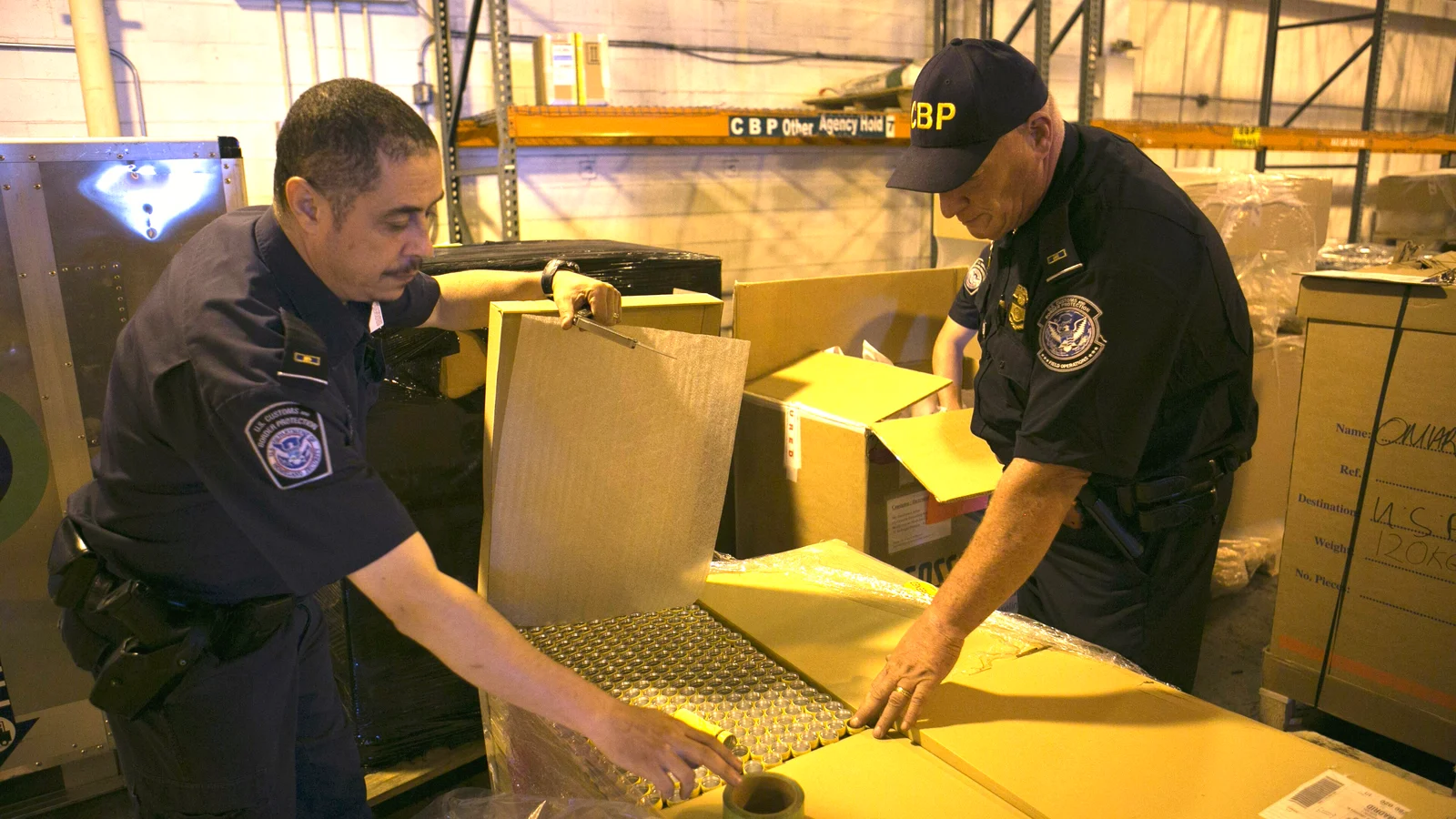
A broker can still file an informal entry up to 15 days after the goods land. The CBP informal entry rule proposed on 8 October 2026 would end that: an entry type 11 filing would be due electronically, upon or prior to the date of importation, with a bond behind it. It is a proposal. CBP published it as the notice “Low-Value Shipments” (91 FR 64532, docket USCBP-2026-0298), comments run to 7 December, and nothing in it binds an entry today.
The CBP low-value shipments rule follows the suspension of the de minimis exemption on 29 August 2025. CBP expects goods that used to ride de minimis to move into informal entry, which covers goods up to $2,500, and it wants the entry data in hand when they arrive. The Federal Register notice adds that the exemption is set to end by statute on 1 July 2027.
The 15-day window is how filing works today
The economic analysis attached to the notice includes a sample. CBP took a random sample of 392,473 type 11 entries (about 3% of the total) filed between September and November 2025 and counted the days from arrival to filing. Only 0.4% were filed before the day of arrival. Another 26.65% went in on the day, 25.03% the day after, and 14.99% after more than 15 days. CBP reads the same-day and next-day groups, just over half of all entries, as needing to move only a day or two earlier. The 0.4% figure alone does not say how many filers would have to change their process, and the notice does not claim it does.
For the rest, CBP says it does not know what the new deadline would cost. CBP staff who know the filing process say the data is usually available before arrival. A filer who reads the package label after the box has landed may need staff abroad to look at the shipment before it leaves. CBP says it cannot quantify this cost and that it could be significant.
The notice also weighs, and does not propose, a deadline of 24 hours before arrival or before departure from the origin country. CBP says either stricter option would exacerbate costs, and that a filer may not know the arrival time a day ahead. The deadline CBP did propose still needs an arrival date. For vessel cargo, the date of importation is arrival within port limits with intent to unlade (the definition the notice takes from CBP’s existing rules). For other cargo it is arrival within the customs territory.
My own reading of the definition: a vessel that reaches port limits ahead of its ETA moves the due date forward with it, and that is the case I would plan for. Navo’s TrackingMCP normalises container events to one standard, and the navo24.com home page quotes event freshness of 0 to 5 minutes. The same page lists a dashboard, a REST API and an MCP server, so a person can read the event or an agent can fetch it. Which event counts as arrival within port limits is a customs question, and a tracker does not settle it.
So the first thing to ask your broker, well before any final rule: what triggers your type 11 filing today, and how many days after arrival does it usually go in? If the answer is “when the goods reach the warehouse”, that process is what has to be rebuilt.
The bond hits unevenly: CBP’s own numbers
CBP says most type 11 entries already carry a bond. GHY reports the agency’s numbers: from August 2025 to July 2026 about 2.3 million type 11 entries were filed without one, which is 3.31% of the projected 2026 volume. They came from 68,701 importers. CBP found a single transaction bond cheaper for 86% of them and a continuous bond cheaper for the other 14%. That 14% filed 96% of the bondless entries.
For the 59,148 importers better suited to single bonds, CBP estimates that, as a group, the bond would have cost 72.66% of the duties, taxes and fees on their type 11 entries. That figure and the earlier deadline are two of the grounds on which CBP says it cannot certify that the rule avoids a significant impact on a substantial number of small businesses (a third concerns the postal environment). The notice puts the added premiums for all bondless importers at $9,276,484 between August 2025 and July 2026, which is only 3.15% of the duties, taxes and fees on those entries, and the average added premium per bondless entry at $3.99. Split by bond choice, the per-entry average is $55.57 for importers who would choose single bonds and $1.95 for those who would choose a continuous bond.
CBP itself says importers with enough volume for a continuous bond to be cheaper would probably not be significantly affected, while some of the 59,148 small-volume importers could see a significant increase. If you sit in the second group, price a single transaction bond against your duty bill now, and put the number in a comment before 7 December. Where a consignee that is not the owner or purchaser has a broker act as importer of record, the notice says the broker’s bond is the one obligated.
Mail, Chapter 99 goods and where the summaries differ
The proposal also creates the entry type 13 mail entry, an electronic informal entry for goods of $2,500 or less sent by post. Carriers would put each article’s foreign postal tracking number on the inward manifest. A mail article with no entry 15 days after importation would be treated as voluntarily abandoned and handled under US Postal Service procedures, which may mean destruction or return. The notice says CBP’s type 13 test was set to start on 22 September 2026. Strix Customs says it has not confirmed the status of that test. The sources also disagree on when it was announced: KPMG says July 2026, Diaz Trade Law says June 2026, and the notice cites the same Federal Register item (91 FR 38007) as July 24 in one footnote and June 24 in another.
One more change touches tariff-measure goods. The proposal removes the $250 cap for goods in Chapter 99, Subchapters III and IV of the tariff schedule, so goods valued above $250 and up to $2,500 could use informal entry. EY’s alert adds that the extra duties still apply.
The summaries differ in what they leave out. On bond default, the notice and KPMG give liquidated damages of the greater of the goods’ value or $1,000 for most bond conditions, and three times the value (with the same floor) for restricted or prohibited goods and alcohol. EY’s summary gives only the first. On carriers, only the notice gives a number: the tracking-number reporting is expected to add about one minute to a carrier’s manifest time, costed at $0.65 per postal entry.
The notice sets no effective date. CBP’s cost model assumes the rule takes effect in 2027, and Strix Customs calls that a modelling assumption that nobody should plan against.
Frequently asked questions
Do I need a bond for an informal entry today?
Not always. CBP says most type 11 entries are already secured by a bond, because a continuous bond is required for importers who pay duties on a periodic monthly statement. From August 2025 to July 2026 about 2.3 million type 11 entries, 3.31% of the projected 2026 volume, were filed without one.
What happens to a mail package if nobody files an entry?
Under the proposal, a mail article valued at $2,500 or less with no entry filed within 15 days of importation would be deemed voluntarily abandoned. The US Postal Service would then process it under its own procedures, which may mean destruction or return to the sender.
Can goods under extra tariff measures use informal entry?
Under the proposal, yes. CBP would remove the separate $250 cap for goods in Chapter 99, Subchapters III and IV of the tariff schedule, so goods worth up to $2,500 could use informal entry. EY notes that the additional duties would still apply.